Leatherleaf Viburnum
Viburnum rhytidophyllum
Overview
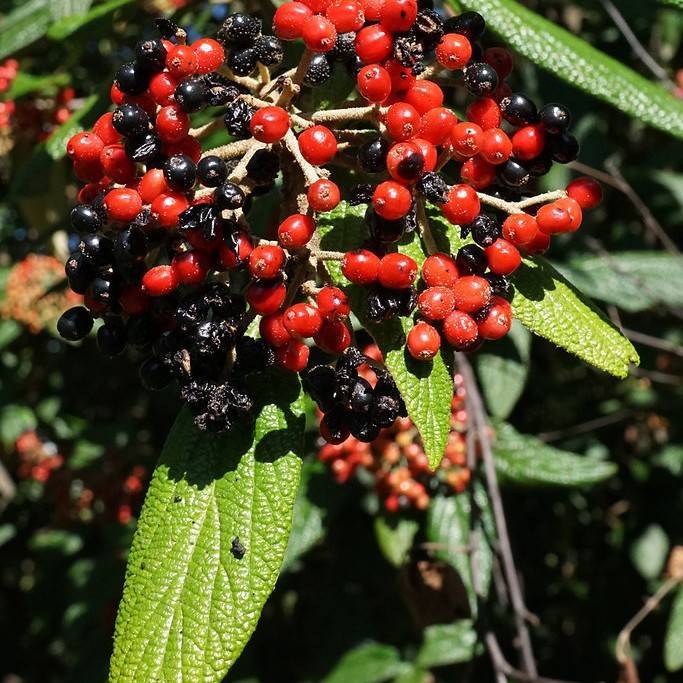
Leatherleaf viburnum is a dense, cold-hardy evergreen shrub valued for its year-round visual interest and low-maintenance nature. Its deeply wrinkled, dark green leaves have fuzzy undersides that give the plant a soft, muted contrast, while rounded clusters of creamy-white, fragrant flowers emerge in late spring. After blooming, the plant produces clusters of bright red berries that ripen to glossy black in fall, persisting well into winter to feed birds and other small wildlife.
Care Guide
Watering
Water newly planted leatherleaf viburnum deeply 1-2 times per week for the first growing season to establish a robust root system, allowing the top 2 inches of soil to dry out between waterings. Once established, the shrub is drought-tolerant, requiring supplemental watering only during extended periods of 2+ weeks without rain to prevent leaf drop. Avoid overwatering or planting in waterlogged sites, as this can lead to root rot and fungal foliage issues.
Light
Leatherleaf viburnum thrives in full sun to partial shade, with at least 4 hours of direct sunlight per day to encourage abundant flowering and berry production. In regions with intense, hot summer sun, it benefits from afternoon shade to prevent leaf scorch and reduce moisture stress. It can tolerate deep shade, though flowering will be sparse and the shrub may develop a more open, leggy growth habit.
Soil
This adaptable shrub grows best in moist, well-drained, loamy soil with a slightly acidic to neutral pH between 5.5 and 7.0, though it can tolerate mild alkalinity and poor, rocky soils as long as drainage is adequate. Amend heavy clay soils with compost or aged leaf mold prior to planting to improve drainage and add organic matter that supports healthy root growth. Avoid soils that remain soggy for extended periods, as this will quickly damage the plant’s root system.
Fertilizer
Feed leatherleaf viburnum once per year in early spring, before new growth emerges, with a balanced, slow-release 10-10-10 fertilizer formulated for woody shrubs, applying it evenly around the drip line of the plant. Alternatively, top-dress the root zone with 2-3 inches of aged compost or well-rotted manure in fall to provide a slow, natural source of nutrients throughout the growing season. Avoid overfertilizing, as this can lead to excessive soft, leggy growth that is more susceptible to pest damage and winter injury.
Temperature
Leatherleaf viburnum is cold-hardy in USDA zones 5 through 8, tolerating winter temperatures as low as -20°F (-29°C) without significant damage when established. It can tolerate occasional summer temperatures up to 95°F (35°C), though it may require extra watering during prolonged heatwaves to prevent foliage wilting. In the colder edge of its range, plant it in a sheltered location away from harsh winter winds to prevent desiccation and browning of evergreen leaves.
Pruning
Prune leatherleaf viburnum immediately after flowering ends in late spring or early summer, as the plant sets flower buds for the next year on old wood, so pruning later in the season will remove future blooms. Remove any dead, damaged, or diseased branches first, then thin out up to one-third of the oldest stems to improve air circulation and encourage new, vigorous growth from the base. You can also lightly shape the shrub to maintain its desired size and form, but avoid heavy shearing, as this will reduce flowering and berry production for the following year.
Propagation
The most reliable method for home gardeners to propagate leatherleaf viburnum is via softwood cuttings taken in early summer, selecting 4-6 inch long stem tips from healthy, current-year growth that has just begun to harden. Remove the lower leaves, dip the cut end in rooting hormone powder, and plant the cutting in a moist, well-drained mix of peat moss and perlite, keeping it in a warm, humid location with indirect light until roots form in 6-8 weeks. It can also be grown from seed, but seeds require a 2-3 month period of cold stratification to germinate, and plants grown from seed may take 3-4 years to reach flowering maturity.
Humidity
Leatherleaf viburnum adapts well to a wide range of humidity levels, thriving in the average 40-60% relative humidity found in most temperate growing regions. It can tolerate drier air common in urban or arid edge zones, though occasional misting during extended dry periods can help keep foliage looking vibrant and reduce dust accumulation on the textured leaves. High humidity levels are generally well-tolerated, as long as the plant is sited with good air circulation to prevent fungal leaf spot diseases.
Repotting
Leatherleaf viburnum is almost exclusively grown as an outdoor landscape shrub, so repotting is only necessary for young plants being grown in containers before being planted in the ground. Repot container-grown specimens every 2-3 years in early spring, moving them to a pot 2-3 inches larger than the current one using a well-drained, loamy potting mix amended with compost. Once the shrub reaches 4-5 feet tall, it is best planted permanently in the landscape, as it becomes too large for long-term container growth.
Uses & Symbolism
Leatherleaf viburnum is widely used in landscape design as a privacy screen, hedgerow, or foundation planting, thanks to its dense evergreen foliage and year-round visual interest. Its fragrant spring blooms attract pollinators such as bees and butterflies, while its persistent winter berries provide a critical food source for native songbirds and small wildlife. It is also planted in erosion control schemes on slopes, as its robust root system holds soil in place effectively, and it tolerates roadside salt spray, making it a good choice for planting along driveways or rural roads.
Diseases & Pests
Leatherleaf viburnum is relatively pest and disease resistant, but it can be susceptible to viburnum leaf beetle, whose larvae and adults feed on foliage, causing skeletonization and defoliation if populations are left unmanaged. Fungal diseases such as powdery mildew, leaf spot, and botrytis blight can occur in overly wet, poorly ventilated conditions, causing spotted or discolored leaves and reduced vigor. Root rot is a common issue in waterlogged soils, so ensuring proper drainage at planting time is the best preventive measure against this fatal condition.
Related plants
Other plants you might like if you grow Leatherleaf Viburnum.
%22%2F%3E%0A%20%20%20%20%20%20%3Ccircle%20cx%3D%22920%22%20cy%3D%22180%22%20r%3D%2290%22%20fill%3D%22%23cfe8d5%22%2F%3E%0A%20%20%20%20%20%20%3Cpath%20d%3D%22M600%20590c-90-180-215-255-310-280%200%20165%20118%20296%20270%20296h40z%22%20fill%3D%22%2379b88e%22%2F%3E%0A%20%20%20%20%20%20%3Cpath%20d%3D%22M600%20590c80-150%20198-212%20302-228-8%20142-123%20255-270%20255h-32z%22%20fill%3D%22%235c9f73%22%2F%3E%0A%20%20%20%20%20%20%3Cpath%20d%3D%22M600%20610V360%22%20stroke%3D%22%234f8c64%22%20stroke-width%3D%2218%22%20stroke-linecap%3D%22round%22%2F%3E%0A%20%20%20%20%20%20%3Ctext%20x%3D%22600%22%20y%3D%22700%22%20text-anchor%3D%22middle%22%20font-family%3D%22Arial%2C%20sans-serif%22%20font-size%3D%2244%22%20fill%3D%22%23365c45%22%3E%0A%20%20%20%20%20%20%20%20Plant%20image%20coming%20soon%0A%20%20%20%20%20%20%3C%2Ftext%3E%0A%20%20%20%20%3C%2Fsvg%3E%0A%20%20)