Japanese Spirea
Spiraea japonica
Overview
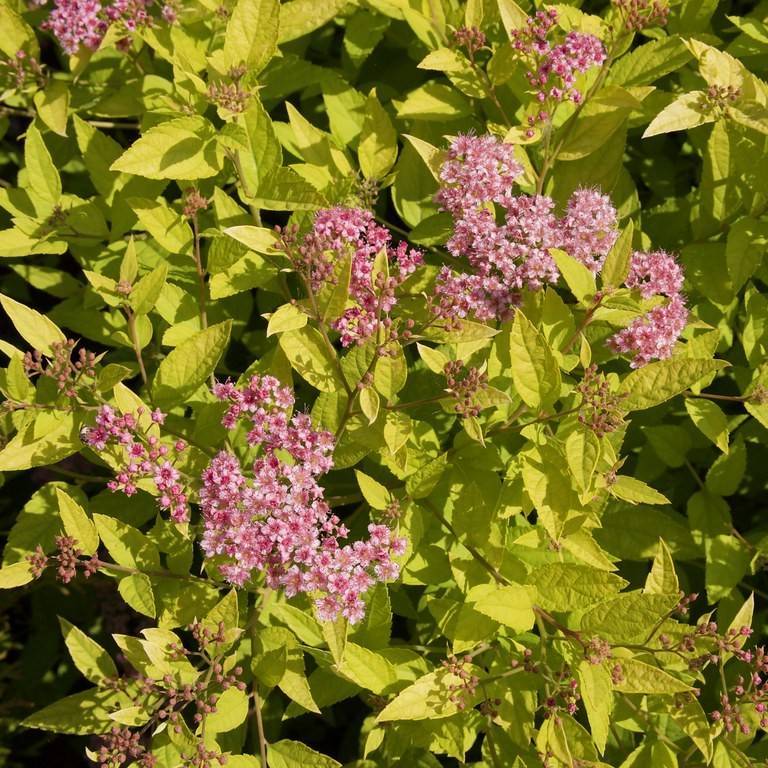
Japanese spirea is a compact, deciduous shrub prized for its vibrant summer flower clusters and vibrant foliage that often turns warm bronze or red in autumn. It is widely cultivated in temperate regions worldwide, with dozens of compact cultivars developed for smaller gardens and varied bloom colors. This adaptable shrub tolerates a wide range of growing conditions, making it a popular choice for foundation plantings, hedges, and mixed borders.
Care Guide
Watering
Water newly planted Japanese spirea regularly to keep soil evenly moist for the first growing season, helping establish a deep root system. Once established, it is drought-tolerant, requiring supplemental water only during extended periods of hot, dry weather. Avoid overwatering or planting in waterlogged sites, as this can cause root rot.
Light
Grow in full sun for the most abundant flower production and densest, most compact growth habit. It can tolerate partial shade, though bloom counts will be lower and the shrub may develop a leggier, less uniform shape. In extremely hot climates, light afternoon shade can help prevent foliage scorch without significantly reducing flowering.
Soil
Prefers well-drained, loamy soil with a slightly acidic to neutral pH, though it adapts readily to poor, sandy, or clay soils as long as drainage is adequate. It tolerates moderate soil compaction and occasional urban pollution, making it suitable for roadside and suburban plantings. Amend heavy clay soils with compost or peat moss at planting time to improve drainage.
Fertilizer
Apply a balanced, slow-release shrub fertilizer in early spring before new growth emerges to support healthy foliage and abundant flowering. Avoid over-fertilizing, especially with high-nitrogen formulas, as this can lead to excessive leaf growth at the expense of blooms and make the shrub more prone to winter damage. Established shrubs may only need fertilization every 2-3 years if grown in moderately fertile soil.
Temperature
Thrives in USDA hardiness zones 4 through 8, tolerating winter temperatures as low as -30°F (-34°C) when fully dormant. It adapts well to summer temperatures up to 90°F (32°C), though extended heatwaves may cause temporary wilting if soil moisture is low. Late spring frosts can damage newly emerged foliage, but the shrub will typically regrow quickly from undamaged wood.
Pruning
Prune in late winter or early spring before new growth begins, removing up to one-third of the oldest, woodiest stems to encourage vigorous new growth and better air circulation. For repeat-blooming cultivars, spent flower clusters can be deadheaded after the first bloom to encourage a second flush of flowers later in the summer. Every 3-4 years, perform a rejuvenation cut by cutting the entire shrub back to 6-12 inches (15-30 cm) above ground to restore its shape if it becomes overgrown or leggy.
Propagation
Most commonly propagated from softwood cuttings taken in early summer, when new growth is still flexible but not fully lignified. Dip cut ends in rooting hormone, plant in moist perlite or potting mix, and keep under high humidity until roots develop in 4-6 weeks. It can also be grown from seed, though cultivars will not come true from seed, and division of mature clumps in early spring is another viable method.
Humidity
Tolerates a wide range of humidity levels, thriving in the moderate humidity of its native temperate range as well as drier continental climates. High humidity combined with poor air circulation can increase the risk of fungal leaf spot diseases, so space shrubs adequately to allow airflow between plants. It does not require supplemental humidity when grown outdoors in appropriate climates.
Repotting
Japanese spirea is primarily grown as an outdoor landscape shrub and rarely kept in containers long-term. If grown in a pot, repot every 2-3 years in early spring before new growth starts, using a well-drained potting mix and a container with ample drainage holes. Choose a container only 2-3 inches larger than the root ball to avoid excess soil moisture that can cause root rot.
Uses & Symbolism
Widely used in residential and commercial landscapes as a foundation planting, low hedge, border shrub, or mass planting for erosion control on slopes. Compact cultivars are well-suited for small gardens, container plantings, and rock gardens, while larger varieties work well as informal screening. Its long-lasting flower clusters are also attractive to pollinators including bees and butterflies, supporting local ecosystem health.
Diseases & Pests
Generally pest and disease resistant, though it can be susceptible to fungal leaf spot, powdery mildew, and root rot in poorly drained, overly moist conditions. Common pests include aphids, spider mites, and scale insects, which typically only cause significant damage to stressed or weakened shrubs. Good air circulation, proper watering practices, and regular pruning to remove dead wood prevent most common issues.
Related plants
Other plants you might like if you grow Japanese Spirea.
%22%2F%3E%0A%20%20%20%20%20%20%3Ccircle%20cx%3D%22920%22%20cy%3D%22180%22%20r%3D%2290%22%20fill%3D%22%23cfe8d5%22%2F%3E%0A%20%20%20%20%20%20%3Cpath%20d%3D%22M600%20590c-90-180-215-255-310-280%200%20165%20118%20296%20270%20296h40z%22%20fill%3D%22%2379b88e%22%2F%3E%0A%20%20%20%20%20%20%3Cpath%20d%3D%22M600%20590c80-150%20198-212%20302-228-8%20142-123%20255-270%20255h-32z%22%20fill%3D%22%235c9f73%22%2F%3E%0A%20%20%20%20%20%20%3Cpath%20d%3D%22M600%20610V360%22%20stroke%3D%22%234f8c64%22%20stroke-width%3D%2218%22%20stroke-linecap%3D%22round%22%2F%3E%0A%20%20%20%20%20%20%3Ctext%20x%3D%22600%22%20y%3D%22700%22%20text-anchor%3D%22middle%22%20font-family%3D%22Arial%2C%20sans-serif%22%20font-size%3D%2244%22%20fill%3D%22%23365c45%22%3E%0A%20%20%20%20%20%20%20%20Plant%20image%20coming%20soon%0A%20%20%20%20%20%20%3C%2Ftext%3E%0A%20%20%20%20%3C%2Fsvg%3E%0A%20%20)