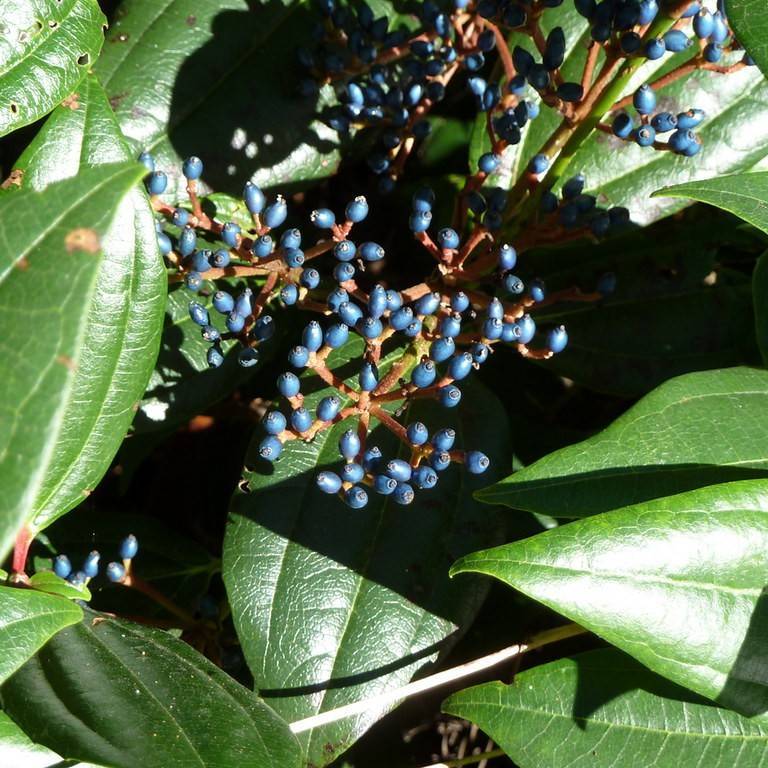
David Viburnum
Viburnum davidii
Overview
David viburnum is a compact, mounding evergreen shrub native to mountainous regions of western China, valued widely in temperate landscaping for its low maintenance and year-round visual interest. It features deeply veined, leathery dark green leaves that hold their color through cold months, followed by flat clusters of tiny, fragrant creamy-white flowers in mid-spring. For abundant berry production, both male and female plants are required, with fertilized female shrubs producing clusters of eye-catching, metallic blue berries that ripen in fall and persist through much of winter, providing food for wild birds.
Care Guide
Watering
Water newly planted david viburnum consistently for the first 1-2 growing seasons to keep soil evenly moist but not waterlogged, helping establish a deep root system. Once established, it is moderately drought tolerant, only needing supplemental watering during extended dry spells of 2 weeks or more. Avoid overwatering, especially in heavy clay soils, as this can lead to root rot.
Light
Thrives in partial shade to full sun, with dappled afternoon shade being ideal in regions with hot, intense summer sun to prevent leaf scorch. It can tolerate deep shade, though flowering and berry production will be significantly reduced in low-light conditions. When grown as a houseplant, place it in a bright location with indirect light, such as near a north or east-facing window.
Soil
Prefers fertile, moist, well-drained loamy soil with a slightly acidic to neutral pH between 5.5 and 7.0, though it can adapt to mildly alkaline soils if amended with organic matter. It will not tolerate consistently waterlogged or heavy clay soils that hold excess moisture around the root zone. Amend planting sites with compost or well-rotted leaf mold before planting to improve drainage and nutrient content.
Fertilizer
Feed established shrubs in early spring before new growth emerges with a balanced, slow-release granular fertilizer formulated for woody landscape plants, applying it according to package instructions around the root zone. A second light application of fertilizer can be made in early summer to support flower and berry development, but avoid fertilizing after mid-summer as this can stimulate tender new growth vulnerable to frost damage. Potted specimens benefit from monthly feeding with a diluted balanced liquid fertilizer during the active growing season from spring to late summer.
Temperature
Hardy in USDA zones 7 through 9, tolerating minimum winter temperatures down to 0°F (-18°C) once fully established. Young plants may require a layer of mulch around the base in late fall to protect roots from extreme cold snaps in the colder end of its growing range. It does not perform well in sustained temperatures above 90°F (32°C) without partial shade and occasional supplemental watering to reduce heat stress.
Pruning
David viburnum requires minimal pruning, only needing the removal of dead, damaged, or diseased branches in late winter before new growth begins. If shaping is desired to maintain a compact form, prune lightly immediately after flowering finishes in spring to avoid cutting off developing berry buds for the current year. Avoid heavy pruning, as this can reduce flowering and fruiting for 1-2 growing seasons as the plant recovers.
Propagation
The most reliable method for home gardeners is semi-hardwood cuttings taken in mid to late summer, using 4-6 inch long stem sections with healthy mature leaves, dipped in rooting hormone and placed in a moist, well-drained propagation medium under indirect light. It can also be grown from seed, but seeds require a period of cold stratification of 2-3 months to break dormancy, and seedlings can take 3-4 years to reach flowering maturity. Named cultivars are only propagated vegetatively to preserve their specific growth and fruiting characteristics.
Humidity
Adaptable to average outdoor humidity levels between 40% and 60% in its native and cultivated ranges, requiring no special humidity adjustments when grown in the landscape. When grown as a potted houseplant, it benefits from occasional misting during dry winter months when indoor heating reduces ambient humidity levels. Avoid placing potted specimens near heating vents or drafty windows that can cause rapid moisture loss from foliage.
Repotting
Potted david viburnum should be repotted every 2-3 years in early spring before new growth emerges, moving it to a container one size larger with drainage holes to prevent waterlogging. Use a well-draining potting mix amended with compost or pine bark to maintain slightly acidic pH levels and good aeration for roots. After repotting, water thoroughly and place in a shaded location for 1-2 weeks to reduce transplant shock before returning to its regular growing spot.
Uses & Symbolism
Widely used in temperate landscape designs as a low hedge, foundation planting, ground cover for shaded areas, or specimen shrub in mixed perennial borders, valued for its evergreen foliage and seasonal interest. Its dense, low-growing habit makes it an effective erosion control plant for sloped sites, and its persistent blue berries provide a food source for songbirds during fall and winter months. It is also occasionally grown as a large potted houseplant or patio shrub for its attractive foliage and low maintenance requirements.
Diseases & Pests
David viburnum is relatively pest and disease resistant, though it can be susceptible to aphids, scale insects, and spider mites, which can be controlled with horticultural oil or insecticidal soap applications at the first sign of infestation. Fungal diseases including powdery mildew, leaf spot, and root rot can occur in poorly drained soils or conditions with high humidity and poor air circulation around foliage, which can be prevented by planting in well-drained sites and spacing shrubs to allow airflow. Viburnum leaf beetle is a more serious pest in some regions, with larvae and adults feeding on foliage that can defoliate shrubs if left untreated, requiring targeted insecticide applications or removal of infested branches in early spring.
Related plants
Other plants you might like if you grow David Viburnum.
%22%2F%3E%0A%20%20%20%20%20%20%3Ccircle%20cx%3D%22920%22%20cy%3D%22180%22%20r%3D%2290%22%20fill%3D%22%23cfe8d5%22%2F%3E%0A%20%20%20%20%20%20%3Cpath%20d%3D%22M600%20590c-90-180-215-255-310-280%200%20165%20118%20296%20270%20296h40z%22%20fill%3D%22%2379b88e%22%2F%3E%0A%20%20%20%20%20%20%3Cpath%20d%3D%22M600%20590c80-150%20198-212%20302-228-8%20142-123%20255-270%20255h-32z%22%20fill%3D%22%235c9f73%22%2F%3E%0A%20%20%20%20%20%20%3Cpath%20d%3D%22M600%20610V360%22%20stroke%3D%22%234f8c64%22%20stroke-width%3D%2218%22%20stroke-linecap%3D%22round%22%2F%3E%0A%20%20%20%20%20%20%3Ctext%20x%3D%22600%22%20y%3D%22700%22%20text-anchor%3D%22middle%22%20font-family%3D%22Arial%2C%20sans-serif%22%20font-size%3D%2244%22%20fill%3D%22%23365c45%22%3E%0A%20%20%20%20%20%20%20%20Plant%20image%20coming%20soon%0A%20%20%20%20%20%20%3C%2Ftext%3E%0A%20%20%20%20%3C%2Fsvg%3E%0A%20%20)