Lavender Cotton
Santolina chamaecyparissus
Overview
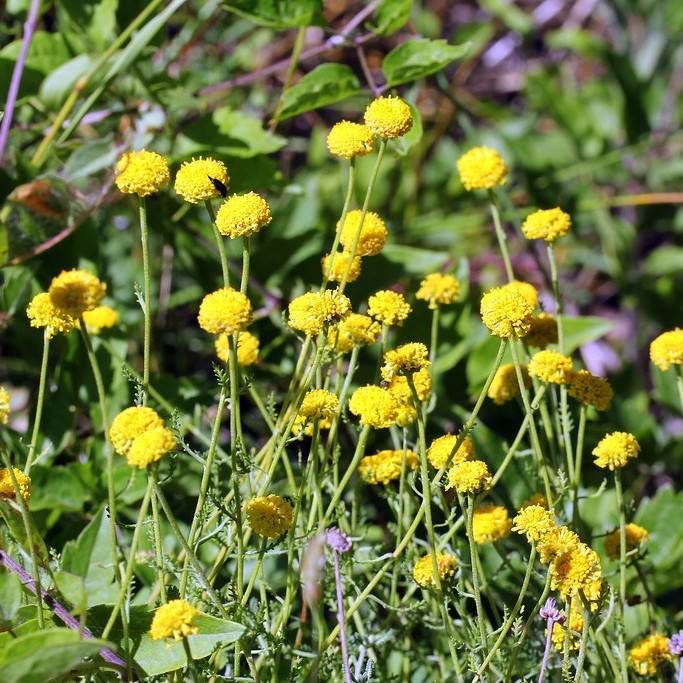
Lavender cotton is a compact, woody subshrub recognizable by its soft, finely divided, silvery-gray foliage that emits a strong, camphor-like scent when crushed. In summer, it produces clusters of small, bright yellow, button-shaped composite flowers that stand out against its pale foliage. Adapted to dry, rocky Mediterranean habitats, it thrives in poor, well-drained soils and full sun, making it a popular choice for low-water gardens and xeriscaping. It is often mistaken for true lavender due to its silvery foliage and aromatic nature, but it belongs to the daisy family rather than the mint family.
Care Guide
Watering
Lavender cotton is highly drought-tolerant once established, requiring only occasional deep watering during extended dry periods; overwatering is the most common cause of decline. Water newly planted specimens regularly for the first 2-3 months to help them develop a strong root system, then reduce frequency significantly, allowing the soil to dry out completely between waterings. Avoid overhead watering and ensure the plant’s crown and foliage stay dry to prevent fungal rot.
Light
This plant requires full, direct sun for at least 6 hours per day to maintain its compact growth habit and vibrant silvery foliage color. It will become leggy, sparse, and prone to disease if grown in partial or full shade, and it will produce very few flowers in low-light conditions. In extremely hot, arid climates, it can tolerate a small amount of afternoon shade, but full sun is still preferred for optimal performance.
Soil
Lavender cotton thrives in poor to moderately fertile, sharply drained soil with a neutral to alkaline pH; it will not survive in heavy, waterlogged clay soils. Sandy, gravelly, or rocky soils that mimic its native Mediterranean rocky slopes are ideal, as they prevent excess moisture from accumulating around the roots. If planting in heavy soil, amend it generously with coarse sand, gravel, or grit to improve drainage before planting, and avoid adding rich compost or manure that can hold too much moisture.
Fertilizer
This low-maintenance plant requires very little fertilization, as excessive nutrients will cause it to grow leggy and lose its compact shape. A light application of a balanced, slow-release fertilizer in early spring is sufficient for plants grown in very poor soil; avoid fertilizing for the rest of the growing season. Skip fertilization entirely if the plant is grown in average or fertile garden soil, as it can obtain all the nutrients it needs from the existing substrate.
Temperature
Lavender cotton is winter-hardy in USDA zones 6 through 9, tolerating minimum temperatures down to -10°F (-23°C) when planted in well-drained soil. It thrives in warm, sunny conditions with summer temperatures between 60-90°F (15-32°C), and it tolerates high heat and dry air very well. In areas with wet, cold winters, protect the plant from excess moisture around the roots by planting it on a slope or raised bed, and cover it with a layer of gravel mulch to prevent soil splash on the lower stems.
Pruning
Prune lavender cotton annually in early spring, before new growth emerges, to maintain its compact shape and prevent it from becoming woody and sparse. Cut back the previous year’s growth by one-third to one-half, making sure not to cut into old, bare wood, as the plant will not resprout from fully woody stems. After flowering finishes in late summer, you can give the plant a light trim to remove spent flower heads and neaten its appearance, but avoid heavy pruning after mid-fall, as this can stimulate tender new growth that will be damaged by winter cold.
Propagation
Lavender cotton is most commonly propagated from semi-hardwood cuttings taken in mid to late summer, when the new growth has partially hardened off. Cut 3-4 inch (7-10 cm) long sections of stem, remove the lower leaves, dip the cut end in rooting hormone, and plant in a well-drained, sandy growing medium, keeping it lightly moist until roots develop in 4-6 weeks. It can also be grown from seed sown in spring, but seed-grown plants may not retain the exact foliage color and growth habit of the parent plant, and they take longer to reach maturity.
Humidity
This plant prefers low to moderate humidity levels, and it is highly tolerant of dry air, making it well-suited to arid and semi-arid climates. High humidity, especially combined with wet soil or poor air circulation, can lead to fungal leaf spot and root rot, so ensure plants are spaced adequately to allow air flow around the foliage. In areas with high summer humidity, avoid planting lavender cotton in low-lying, enclosed spots where moist air can become trapped around the plant.
Repotting
If grown in containers, lavender cotton should be repotted every 2-3 years in early spring, before new growth begins. Use a well-drained potting mix formulated for cacti and succulents, or amend regular potting soil with 50% coarse sand or grit to improve drainage, and choose a pot with multiple drainage holes to prevent waterlogging. When repotting, gently loosen the root ball and remove any dead or rotting roots, and avoid overpotting, as excess soil can hold too much moisture around the roots and cause rot.
Uses & Symbolism
Lavender cotton is primarily used as an ornamental plant in dry gardens, rock gardens, border edging, and xeriscaping, where its silvery foliage provides year-round contrast to green-leaved plants and bright summer flowers. Historically, its aromatic foliage was used in sachets and potpourri to repel moths and insects, and it was also used in traditional medicine as an antiseptic and to treat digestive issues. Its dense, low-growing habit also makes it an effective low hedge or ground cover for sunny, dry areas where other plants struggle to grow.
Diseases & Pests
The most common issues affecting lavender cotton are fungal root rot and crown rot, caused by overwatering or poorly drained soil, which can be prevented by ensuring proper drainage and allowing the soil to dry out completely between waterings. It may also be affected by powdery mildew in humid, poorly ventilated conditions, which can be treated with fungicidal sprays and by improving air circulation around the plant. Common pests include aphids and spider mites, which can be controlled with insecticidal soap or neem oil, though these are rarely a serious problem for healthy, well-grown plants.
Related plants
Other plants you might like if you grow Lavender Cotton.