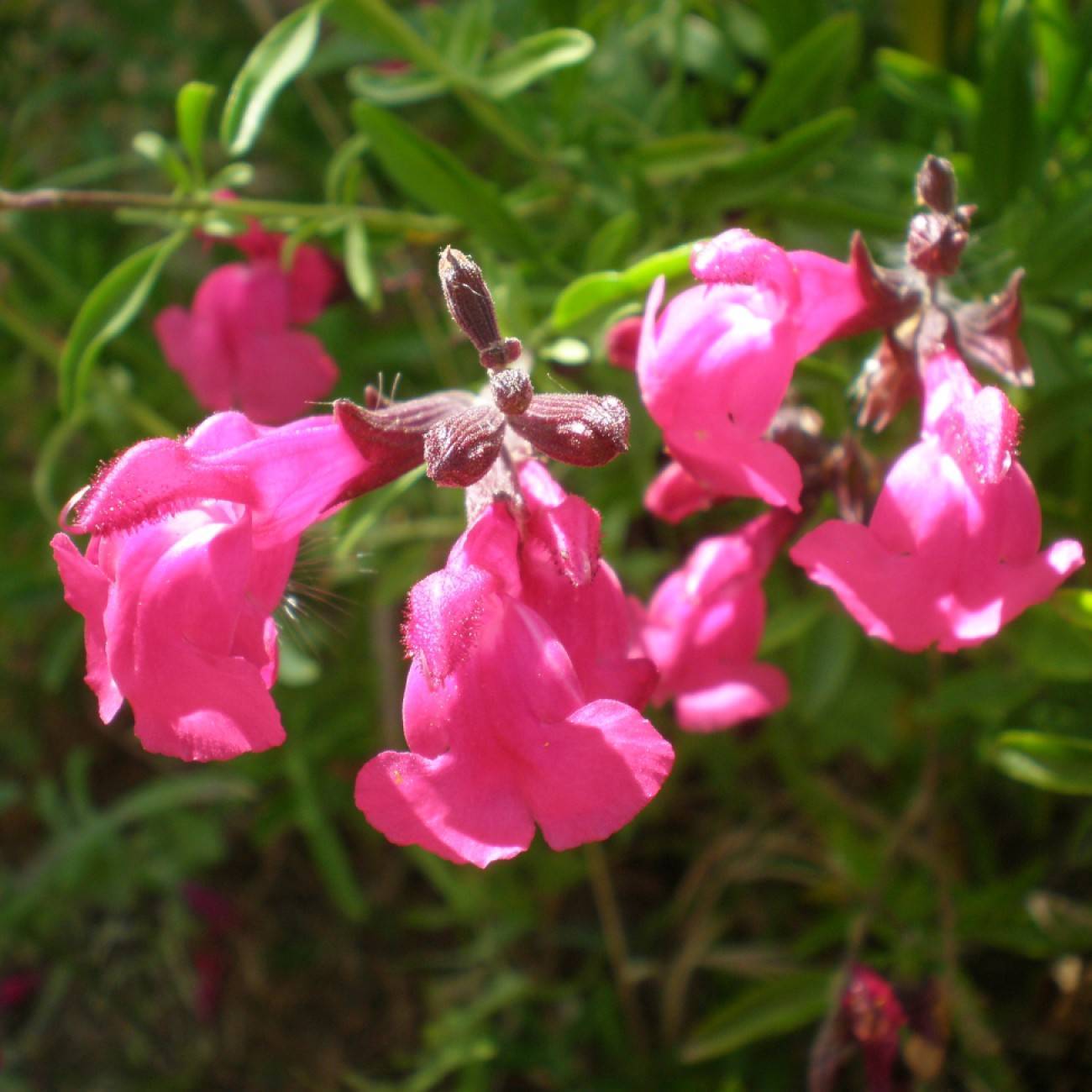
Autumn Sage
Salvia greggii
Overview
Autumn sage is a compact, woody subshrub native to arid, rocky slopes of Texas, New Mexico, Arizona, and northern Mexico, prized for its extended bloom period from early spring through fall. Its small, glossy, oval leaves release a pleasant, herbal fragrance when crushed, and its nectar-rich flowers are a magnet for hummingbirds, butterflies, and native pollinators. It is highly adapted to xeriscaping and warm, dry climates, making it a low-maintenance choice for water-wise gardens.
Care Guide
Watering
Autumn sage is extremely drought-tolerant once established, requiring only occasional deep watering during prolonged dry spells; overwatering will quickly lead to root rot. Water newly planted specimens 1-2 times per week for the first growing season to help roots establish, then reduce frequency to every 2-3 weeks in warm months, and almost no supplemental water in winter.
Light
This species thrives in full sun, requiring a minimum of 6 hours of direct sunlight daily to produce abundant blooms and maintain a compact, bushy growth habit. It can tolerate light partial shade, but too much shade will result in leggy growth, reduced flowering, and increased susceptibility to fungal diseases.
Soil
Autumn sage prefers sharply draining, sandy or gravelly soils with a neutral to slightly alkaline pH, and will not tolerate heavy, compacted clay soils that hold excess moisture. If planting in heavy garden soil, amend liberally with coarse sand, perlite, or crushed granite to improve drainage before planting, or grow in raised beds to avoid waterlogged root zones.
Fertilizer
This low-feeding plant requires very little supplemental fertilization; an annual light application of balanced, slow-release fertilizer in early spring is sufficient to support healthy growth and blooming. Avoid over-fertilizing, especially with high-nitrogen formulas, as this will promote excessive leaf growth at the expense of flowers and reduce the plant's drought tolerance.
Temperature
Autumn sage is hardy in USDA zones 7 through 10, tolerating summer temperatures up to 110°F (43°C) and short periods of winter cold down to 0°F (-18°C) when established. In regions with colder winters, apply a 2-3 inch layer of mulch around the base of the plant in late fall to insulate roots from extreme temperature fluctuations and frost heave.
Pruning
Prune autumn sage back by one-third to one-half its height in late winter or early spring before new growth emerges to encourage a bushy, compact form and abundant new flowering stems. Deadhead spent flower spikes throughout the growing season to promote continuous reblooming, and trim back any leggy or damaged stems as needed to maintain a neat appearance.
Propagation
Autumn sage is most easily propagated from softwood cuttings taken in late spring or early summer; cut 4-6 inch stem tips, remove lower leaves, dip in rooting hormone, and plant in well-draining rooting medium until roots form in 2-4 weeks. It can also be grown from seed, though named cultivars will not come true from seed, and seeds require light to germinate so should be sown on the soil surface without covering.
Humidity
This species is well-adapted to low to moderate humidity levels, thriving in the dry air of its native desert and semi-arid habitats. High humidity, especially combined with warm temperatures and poor air circulation, can increase the risk of powdery mildew and other fungal diseases, so ensure plants are spaced properly for good airflow.
Repotting
If grown in containers, repot autumn sage every 2-3 years in late winter, moving up only one pot size each time to avoid excess soil that holds unnecessary moisture. Use a fast-draining cactus or succulent potting mix amended with extra perlite or coarse sand to ensure optimal drainage, and make sure the container has ample drainage holes.
Uses & Symbolism
Autumn sage is a staple of xeriscape, pollinator, and native plant gardens, where its long bloom period provides consistent color and nectar for hummingbirds, butterflies, and native bees. Its aromatic leaves can be used fresh or dried as a culinary herb, similar to common garden sage, for seasoning meats, soups, and breads, with a slightly milder, fruitier flavor. It is also planted as a low, informal hedge or border plant in dry climates, and works well in containers for patios and sunny outdoor spaces.
Diseases & Pests
Autumn sage is largely pest and disease resistant when grown in optimal conditions, but overwatering or poorly draining soil can lead to fatal root rot and stem rot. In high humidity or shaded conditions, it may develop powdery mildew on foliage, which can be prevented by ensuring proper air circulation and avoiding overhead watering; occasional aphid or spider mite infestations can be treated with insecticidal soap or neem oil.
Related plants
Other plants you might like if you grow Autumn Sage.