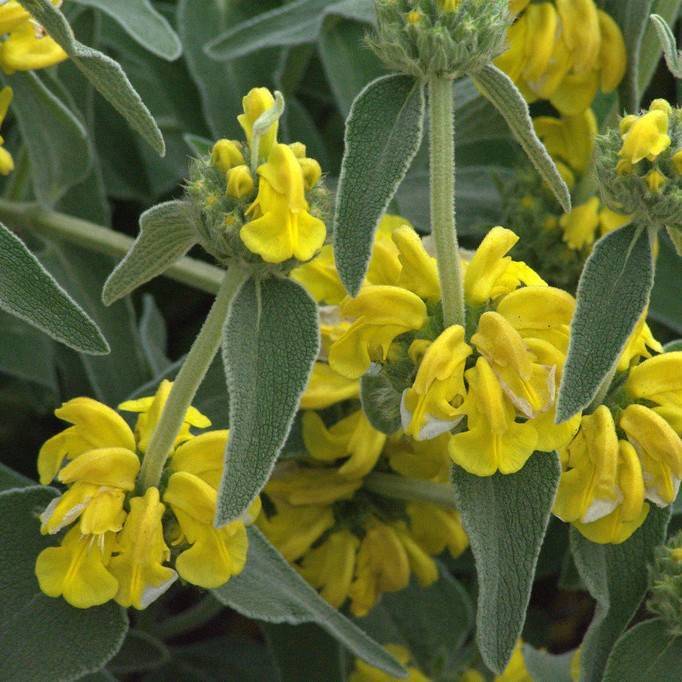
Jerusalem Sage
Phlomis fruticosa
Overview
Jerusalem sage is a woody, evergreen subshrub prized for its soft, velvety, lance-shaped silver-gray leaves that emit a mild herbal scent when crushed. In summer, it produces upright stems lined with dense, spherical whorls of bright yellow, two-lipped flowers that bloom sequentially for months, creating a striking architectural display. Adapted to hot, dry Mediterranean climates, it is a low-maintenance choice for water-wise gardens, holding its foliage year-round in mild winter regions.
Care Guide
Watering
Water newly planted Jerusalem sage regularly for the first growing season to establish a deep root system, letting the top 2-3 inches of soil dry out between sessions. Once established, it is highly drought-tolerant, requiring only occasional deep watering during extended periods of extreme heat or no rainfall. Avoid overwatering or letting the plant sit in saturated soil, as this will quickly cause root rot.
Light
Jerusalem sage thrives in full, direct sunlight, requiring a minimum of 6 hours of unobstructed sun per day to produce dense foliage and abundant flowers. It can tolerate very light partial shade, but too much shade will cause leggy growth, reduced flowering, and loss of the characteristic silver leaf color. In regions with exceptionally intense midday sun, it will still perform well without additional protection.
Soil
This plant prefers well-drained, sandy or loamy soil with a neutral to slightly alkaline pH, though it can adapt to poor, rocky, or low-nutrient soils with ease. Heavy clay soils that hold moisture are unsuitable; amend planting sites with coarse sand or gravel to improve drainage before planting if needed. It tolerates coastal salt spray and poor soil fertility better than many ornamental garden plants.
Fertilizer
Jerusalem sage has very low nutrient needs and typically does not require regular fertilization, as overly rich soil will promote weak, leggy growth. For plants growing in extremely poor soil, apply a thin layer of compost around the base in early spring to provide gentle, slow-release nutrients. Avoid high-nitrogen fertilizers, which will encourage foliage growth at the expense of flowering.
Temperature
It is hardy in USDA zones 8 to 11, thriving in hot, dry summer temperatures up to 100°F (38°C) and tolerating light winter frosts down to 10°F (-12°C). In areas with colder winters, it may die back to the ground in winter but will regrow from the root crown in spring if mulched heavily for insulation. Prolonged exposure to temperatures below 10°F (-12°C) without protection will kill the plant.
Pruning
Prune Jerusalem sage in late winter or early spring before new growth emerges, cutting back woody stems by up to one-third to encourage dense, bushy growth and remove any winter-damaged foliage. Deadhead spent flower stems after the first bloom flush to promote a second round of flowering later in the summer. Every 3 to 4 years, perform a harder rejuvenation pruning, cutting all stems back to 6 inches above the ground to refresh overgrown, woody plants.
Propagation
Jerusalem sage is most easily propagated from semi-hardwood cuttings taken in late summer, rooting stems in well-drained propagating mix under bright, indirect light with consistent light moisture. It can also be grown from seed sown directly outdoors in fall or started indoors 6 to 8 weeks before the last frost date, though seed-grown plants may take 2 to 3 years to reach full flowering size. Established clumps can be divided in early spring before new growth begins, though the woody root system can be difficult to split cleanly.
Humidity
This Mediterranean native prefers low to moderate humidity levels, thriving in the dry air of arid and semi-arid regions. It tolerates average indoor humidity if grown as a container houseplant, but will suffer if exposed to prolonged high humidity and poor air circulation, which increases the risk of fungal leaf diseases. Ensure good airflow around the plant in humid climates to prevent foliage issues.
Repotting
Container-grown Jerusalem sage should be repotted every 2 to 3 years in early spring, moving it to a pot only one size larger than the current container to avoid excess soil that holds unnecessary moisture. Use a fast-draining succulent or cactus potting mix amended with coarse sand or perlite to ensure proper drainage. After repotting, water lightly and place the plant in full sun to reduce transplant stress.
Uses & Symbolism
Jerusalem sage is a popular ornamental choice for xeriscaping, rock gardens, Mediterranean-style landscapes, and pollinator gardens, as its long-blooming flowers attract bees, butterflies, and hummingbirds. Its durable, aromatic foliage and long-lasting cut flower stems make it a common addition to fresh and dried floral arrangements, while its dense growth habit works well as a low informal hedge or border plant. Historically, it has been used in traditional Mediterranean folk medicine to treat minor respiratory and digestive ailments, though it is not widely used for medicinal purposes today.
Diseases & Pests
Jerusalem sage is largely pest and disease resistant when grown in suitable conditions, with the most common issue being root rot caused by overwatering or poorly draining soil. In high humidity or overly shaded locations, it may develop fungal leaf spots or powdery mildew, which can be prevented by ensuring good air circulation and avoiding overhead watering. Rarely, it may be affected by aphids or spider mites, which can be treated with insecticidal soap or a strong spray of water to dislodge the pests.
Related plants
Other plants you might like if you grow Jerusalem Sage.