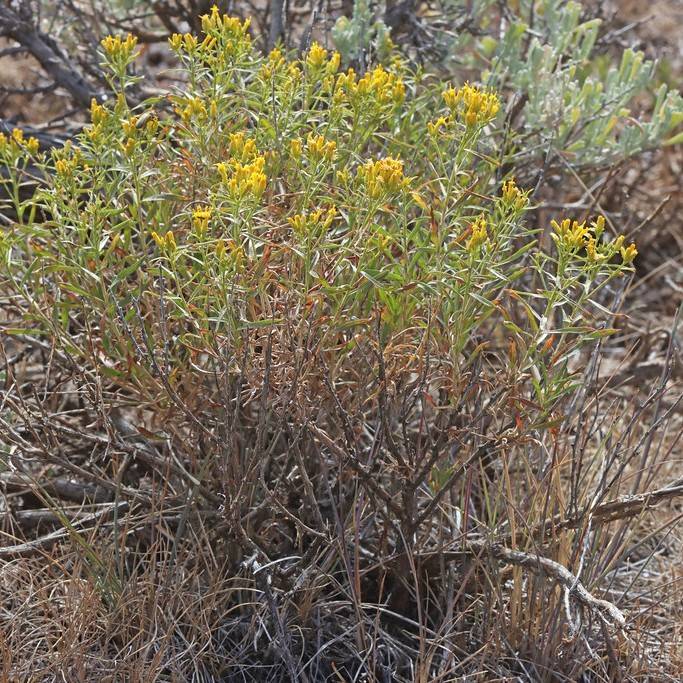
Greenleaf Rabbit Brush
Ericameria teretifolia
Overview
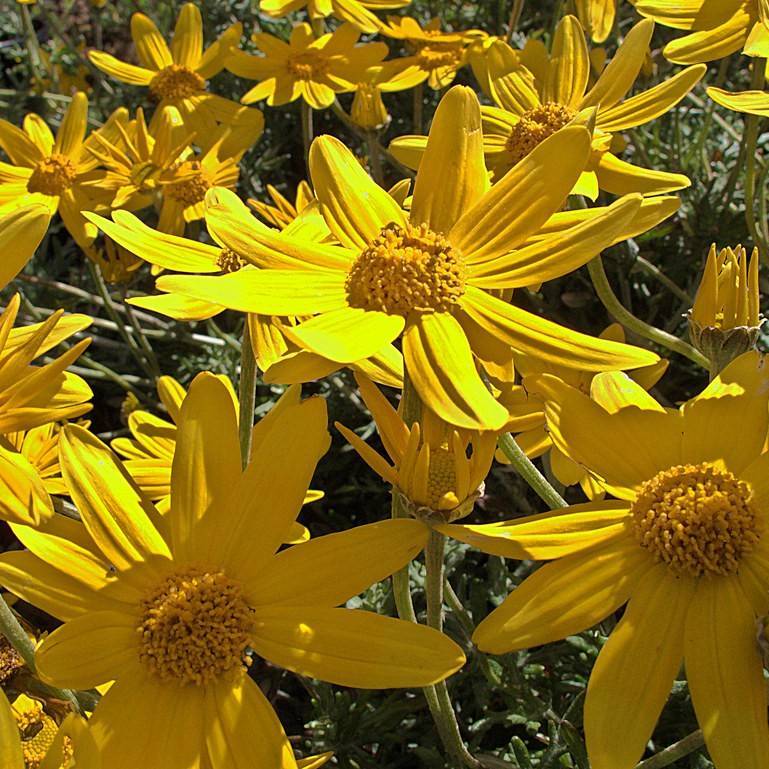
Greenleaf rabbit brush is a hardy, woody shrub adapted to dry, semi-desert and sagebrush ecosystems across the western United States. It produces dense clusters of small, vivid yellow composite flowers in late summer to fall, creating a striking golden display when many other landscape plants are fading. Its narrow, needle-like green leaves give it a fine, airy texture year-round, and it is well-adapted to poor, rocky soils and low rainfall conditions.
Care Guide
Watering
Greenleaf rabbit brush is extremely drought-tolerant once established, requiring only occasional deep watering during extended periods of no rainfall in summer. Overwatering is the most common cause of health issues, so allow the soil to dry out completely between waterings, and avoid supplemental irrigation in winter when the plant is dormant. Newly planted specimens need regular, light watering for the first 2-3 months to help roots establish, but reduce frequency quickly after that.
Light
This shrub thrives in full, direct sunlight, requiring a minimum of 6 hours of unobstructed sun per day to produce dense foliage and abundant blooms. It will not tolerate shaded conditions, which lead to leggy growth, sparse flowering, and increased susceptibility to fungal issues. For indoor cultivation, which is very rare, place it in a south-facing window with maximum light exposure.
Soil
Greenleaf rabbit brush prefers well-drained, sandy, loamy, or rocky soils with a neutral to slightly alkaline pH, and it tolerates poor, nutrient-deficient soils extremely well. Heavy clay soils that hold moisture will cause root rot quickly, so amend dense planting sites with coarse sand or gravel to improve drainage before planting. It does not require rich, organic soil, and excessive organic matter in the growing medium can lead to overly lush, weak growth.
Fertilizer
This plant is adapted to low-nutrient environments and rarely requires fertilizer, as excess nutrients can cause leggy growth and reduce flowering. If planted in extremely poor soil, a single application of a balanced, slow-release fertilizer in early spring, applied at half the recommended strength, is sufficient to support healthy growth. Avoid fertilizing after mid-summer, as this can stimulate new, tender growth that will be damaged by cold fall and winter temperatures.
Temperature
Greenleaf rabbit brush is highly cold-hardy, tolerating winter temperatures down to -20°F (-29°C), and it thrives in hot, dry summer conditions common to its native range. It is well-adapted to extreme temperature fluctuations between day and night that occur in arid western regions, and it does not perform well in humid, temperate climates with prolonged cool, wet weather. Avoid planting in low-lying areas where cold air can pool, as this can increase the risk of frost damage to new growth in spring.
Pruning
Prune greenleaf rabbit brush in late winter or early spring before new growth emerges to remove dead, damaged, or leggy branches and encourage dense, compact growth. You can cut the shrub back by up to one-third of its total height each year to maintain a neat shape and promote more vigorous flowering, as blooms form on new season growth. Avoid heavy pruning after mid-summer, as this will remove developing flower buds and reduce the fall display.
Propagation
Greenleaf rabbit brush is most easily propagated from seed, which can be sown directly outdoors in fall or cold-stratified for 30 days and sown in spring after the last frost date. Softwood cuttings taken from new growth in early summer can also root successfully if planted in well-drained, sandy medium and kept lightly moist until roots develop, usually within 4-6 weeks. Wild specimens often self-seed readily in suitable growing conditions, producing new volunteers around the parent plant.
Humidity
This shrub is adapted to low-humidity arid and semi-arid environments, tolerating humidity levels as low as 10% without issue. It does not perform well in high-humidity climates, where prolonged moisture on foliage can lead to fungal leaf spot and powdery mildew infections. For any indoor cultivation, ensure good air circulation around the plant and avoid misting to keep foliage dry.
Repotting
Greenleaf rabbit brush is almost exclusively grown outdoors as a landscape plant, so repotting is rarely required. If grown in a container, use a coarse, well-drained cactus or succulent potting mix, and repot only every 3-4 years when the plant becomes root-bound, preferably in early spring before new growth starts. Choose a pot with ample drainage holes, and avoid overpotting, as excess soil will hold unnecessary moisture and increase the risk of root rot.
Uses & Symbolism
Greenleaf rabbit brush is a popular choice for xeriscaping, native plant gardens, and erosion control projects in dry western regions, as it requires minimal irrigation and thrives in poor soils. Its late-season yellow blooms are a critical nectar source for bees, butterflies, and other pollinators at a time when few other flowering plants are in bloom, making it a valuable addition to pollinator gardens. Historically, Indigenous peoples of the American West used parts of the plant for medicinal purposes, including treating coughs and skin irritations, and the flexible branches were used for basket weaving.
Diseases & Pests
Greenleaf rabbit brush has very few pest or disease issues when grown in suitable conditions, but overwatering and poor drainage are the primary causes of root rot, which is usually fatal if not addressed quickly. In high-humidity conditions or with poor air circulation, it can develop fungal issues such as powdery mildew and leaf spot, which can be managed by pruning overcrowded branches to improve air flow and avoiding overhead watering. Aphids and spider mites may occasionally infest new growth, but these can be controlled with a strong spray of water or insecticidal soap, and rarely cause significant damage to healthy, established plants.
Related plants
Other plants you might like if you grow Greenleaf Rabbit Brush.