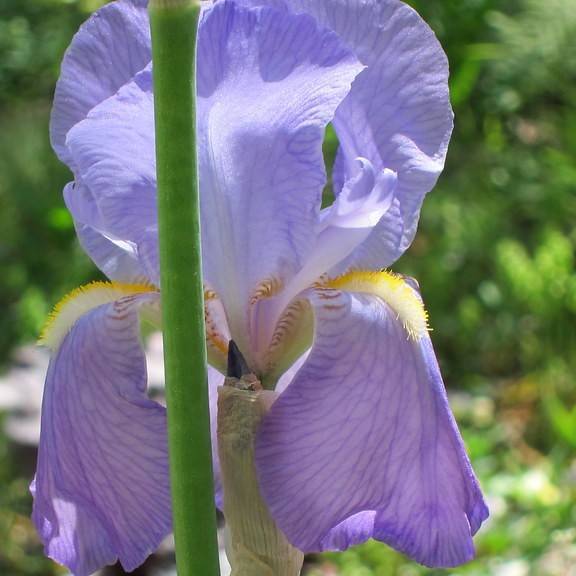
Dalmatian Iris
Iris pallida subsp. pallida
Overview
Dalmatian Iris is a clumping, herbaceous perennial distinguished by its striking, pale lavender-blue bearded flowers and sword-shaped, blue-green foliage that forms dense evergreen mounds. The plant’s thick, fleshy rhizomes develop a sweet, violet-like scent as they cure, making them a historically prized ingredient in potpourris, sachets, and high-end fragrances. Hardy in temperate climates, it naturalizes readily in well-drained, sunny sites, making it a popular low-maintenance choice for perennial borders and rock gardens.
Care Guide
Watering
Water newly planted rhizomes regularly to keep soil evenly moist but not saturated for the first 2-3 months until established. Mature plants are highly drought tolerant, requiring only occasional watering during extended dry periods; overwatering is the leading cause of rhizome rot. Reduce watering in fall and winter to allow rhizomes to enter dormancy in drier soil.
Light
Dalmatian Iris thrives in full sun, requiring a minimum of 6 hours of direct, unfiltered sunlight daily to produce abundant blooms. It can tolerate very light, dappled shade, but too much shade will result in sparse flowering and weak, floppy foliage. In extremely hot, arid climates, light afternoon shade can help prevent leaf scorch without impacting bloom production.
Soil
This species prefers sharply draining, gravelly or sandy loam soil with a neutral to slightly alkaline pH between 6.5 and 7.5. Heavy clay soils that retain moisture will quickly cause rhizome rot, so amend heavy sites with coarse sand, perlite, or gravel to improve drainage before planting. Rhizomes should be planted with their top third exposed above the soil surface to prevent rotting.
Fertilizer
Apply a balanced, low-nitrogen 5-10-10 granular fertilizer in early spring, spreading it around the base of the clumps and working it lightly into the top layer of soil to avoid direct contact with rhizomes. A second light application of the same fertilizer can be applied immediately after flowering to support rhizome development for the next growing season. Avoid high-nitrogen fertilizers, as they promote excessive foliage growth at the expense of flowers and increase susceptibility to rot.
Temperature
Dalmatian Iris is cold hardy in USDA zones 4 through 9, tolerating winter lows as low as -30°F (-34°C) when planted in well-drained soil. It thrives in average summer temperatures between 65°F and 85°F (18°C to 29°C), and its thick, waxy foliage can tolerate short periods of temperatures above 100°F (38°C) with occasional supplemental watering. Winter wetness is far more damaging to the plant than cold temperatures, so ensure proper drainage in regions with heavy winter precipitation.
Pruning
Remove spent flower stalks at the base immediately after blooming to redirect energy back to rhizome growth and prevent seed formation, which can reduce next year’s bloom. Trim back any yellow, brown, or damaged foliage in late fall to 6-8 inches above the soil line to remove overwintering sites for pests and fungal pathogens. Avoid cutting back healthy green foliage, as it continues to photosynthesize and store energy in the rhizomes throughout the growing season.
Propagation
The most reliable propagation method is division of mature rhizome clumps, performed every 3-4 years in late summer, 4-6 weeks after flowering has finished. Dig up the entire clump, gently separate healthy, firm rhizomes with at least one fan of foliage attached, discard any soft, rotted, or shriveled sections, and replant the new divisions with their tops exposed, spaced 12-18 inches apart. Dalmatian Iris can also be grown from seed, but seeds require 2-3 months of cold stratification to germinate, and seedlings will take 2-3 years to reach flowering size, often exhibiting slightly different flower characteristics than the parent plant.
Humidity
This Mediterranean native prefers low to moderate humidity levels between 30% and 50%, and is highly tolerant of dry air common in coastal and inland arid regions. High humidity, especially combined with warm temperatures and poor air circulation, increases the risk of fungal leaf spot and rhizome rot, so space plants adequately to promote airflow around foliage and rhizomes. Indoor potted specimens do not require misting or supplemental humidity, and should be kept away from humid areas like bathrooms to prevent moisture-related issues.
Repotting
Potted Dalmatian Iris should be repotted every 2-3 years in late summer after flowering, or when rhizomes begin to crowd the edges of the pot and push above the soil surface. Use a shallow, wide pot with multiple drainage holes, and fill it with a fast-draining cactus or succulent mix amended with a small amount of garden lime to raise pH if needed. When repotting, divide overcrowded clumps if desired, and ensure the top third of each rhizome remains exposed above the soil to prevent rot.
Uses & Symbolism
Cured Dalmatian Iris rhizomes, known commercially as orris root, are a key ingredient in high-end perfumery, providing a soft, powdery, violet-like base note that enhances other floral scents, and are also used to flavor gins, liqueurs, and traditional confections in European cuisine. Ornamentally, this iris is a popular addition to xeriscape gardens, perennial borders, and rock gardens, where its fragrant spring blooms and evergreen foliage provide year-round interest. Historically, dried orris root was used in traditional medicine to treat coughs, sore throats, and digestive issues, and was a common component of scented sachets and potpourris to repel moths from clothing.
Diseases & Pests
The most common issue affecting Dalmatian Iris is rhizome rot, a fungal disease caused by overwatering, poor drainage, or planting rhizomes too deeply, which presents as soft, mushy, foul-smelling rhizomes and yellowing, wilting foliage. Fungal leaf spot and rust can occur in humid, poorly ventilated conditions, causing small brown or orange spots on foliage, which can be managed by removing infected leaves, improving airflow, and applying a copper-based fungicide if needed. Common pests include iris borers, whose larvae tunnel into rhizomes and cause wilting and rot, and aphids, which feed on new growth and can spread viral diseases; both can be controlled with insecticidal soap, neem oil, or by removing and destroying infested rhizome sections.
Related plants
Other plants you might like if you grow Dalmatian Iris.