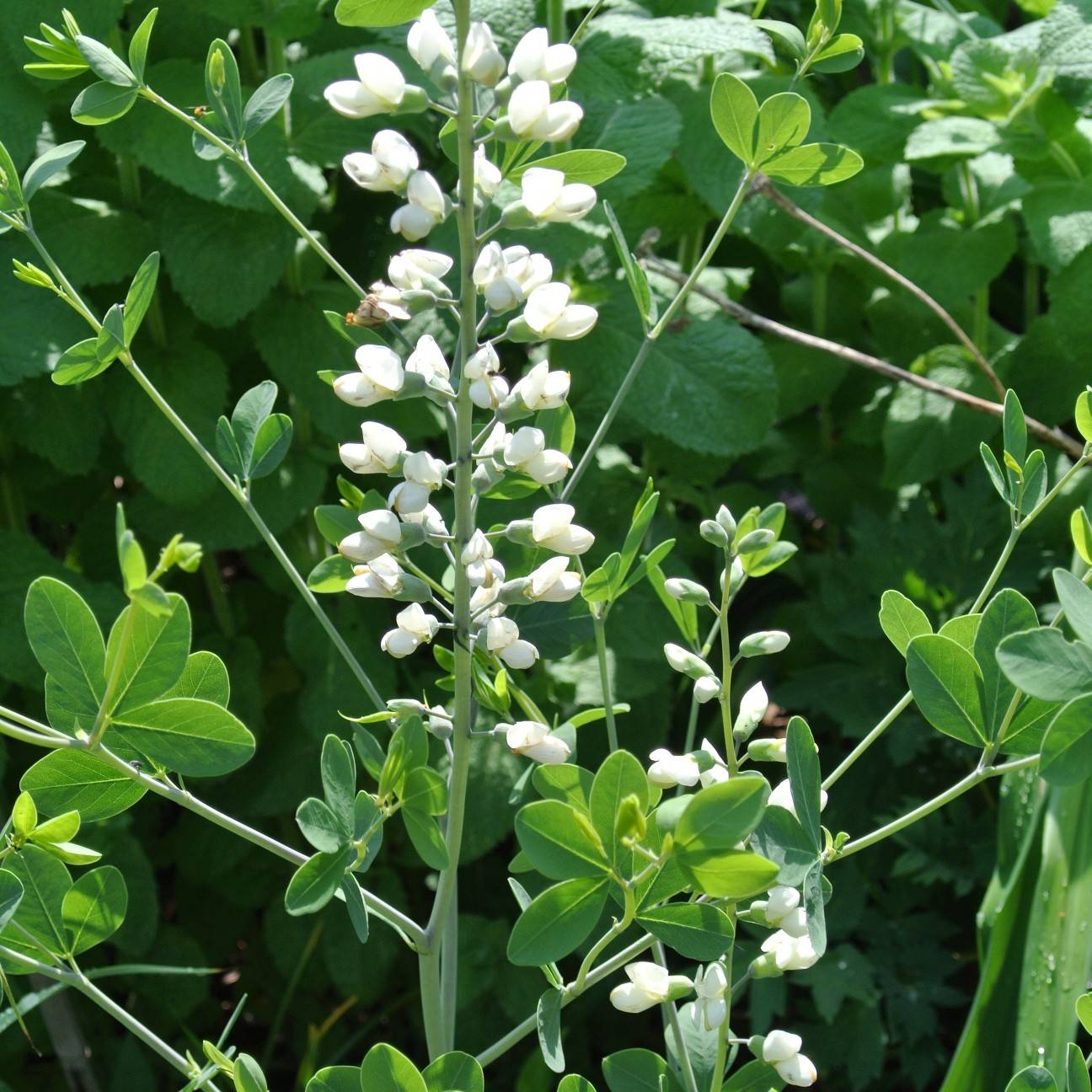
Largeleaf Wild Indigo
Baptisia macrophylla
Overview
Largeleaf wild indigo is a robust, clump-forming legume that develops a deep, woody taproot once established, making it exceptionally drought-tolerant and long-lived in the landscape. In mid to late spring, it produces upright, 6-12 inch spikes of pea-like creamy white blooms that attract bumblebees, native bees, and butterfly pollinators. Its large, three-parted blue-green leaves remain attractive throughout the growing season, rarely succumbing to pest or disease pressure, and turn a soft yellow before dropping in autumn.
Care Guide
Watering
Water newly planted largeleaf wild indigo regularly for the first growing season to help it establish a deep root system, keeping soil consistently moist but not waterlogged. Once established, it is highly drought-tolerant and only requires supplemental watering during extended periods of extreme heat or drought, as overwatering can cause root rot. Avoid frequent shallow watering, as this encourages weak, shallow root growth that reduces the plant’s natural hardiness.
Light
Grow largeleaf wild indigo in full sun for the most abundant flowering and sturdiest growth, as plants grown in full sun will develop denser foliage and more upright bloom spikes. It can tolerate partial shade, particularly in hotter southern climates, but plants in shadier conditions may become leggy, flop over, and produce significantly fewer flowers. Ensure it receives at least 6 hours of direct sunlight daily for optimal performance.
Soil
This adaptable plant thrives in well-drained, neutral to slightly acidic soil, though it tolerates a wide range of soil types including clay, sandy loam, and poor, low-nutrient soils. It is tolerant of occasional short-term flooding, making it suitable for rain garden plantings, but will not survive prolonged standing water around its root zone. Amending heavy clay soil with compost prior to planting will improve drainage and support healthier root development.
Fertilizer
Largeleaf wild indigo is a nitrogen-fixing legume that produces its own nitrogen, so it rarely requires supplemental fertilization, especially when grown in average garden soil. Over-fertilization, particularly with high-nitrogen formulas, will encourage excessive soft foliage growth at the expense of blooms and may cause the plant to become leggy and flop. If grown in extremely poor, depleted soil, a single light application of balanced, slow-release fertilizer in early spring is sufficient to support growth.
Temperature
This cold-hardy perennial thrives in USDA zones 3 through 8, tolerating winter temperatures as low as -40°F (-40°C) without additional protection once established. It adapts well to summer heat and humidity across its native range, though it may benefit from light afternoon shade in areas with consistently extreme summer temperatures above 95°F (35°C). Frost will kill back above-ground foliage in autumn, but the root system remains dormant through winter and resprouts vigorously in mid-spring.
Pruning
Pruning is rarely required for largeleaf wild indigo, though you can cut back spent flower spikes after blooming if you prefer a neater appearance, though this will prevent the development of ornamental seed pods. If plants become leggy or flop over, particularly in partial shade, you can cut back foliage by one-third after flowering to encourage denser, more compact regrowth for the remainder of the growing season. Cut all dead foliage back to ground level in late winter or early spring before new growth emerges to make way for fresh spring shoots.
Propagation
Largeleaf wild indigo is most easily propagated from seed, which requires cold stratification for 30-60 days to break dormancy, or can be soaked in hot water for 24 hours prior to sowing to soften the hard seed coat. Division is possible but not recommended, as the deep taproot is easily damaged during transplanting, and divided plants often take several years to recover and resume normal growth and flowering. Collect seed pods in late summer once they have turned brown and dry, then plant seeds immediately outdoors in fall for natural stratification, or store them in the refrigerator for spring sowing.
Humidity
This plant is well-adapted to the average humidity levels of its native North American range, tolerating both moderate summer humidity and drier conditions in the central plains. It does not require any supplemental humidity, and high humidity rarely causes issues as long as the plant is grown in well-drained soil and receives adequate air circulation around its foliage. Avoid planting it in overly crowded, poorly ventilated areas where constant high humidity can increase the risk of foliar fungal diseases.
Repotting
Largeleaf wild indigo is rarely grown in containers long-term, as its deep taproot requires significant space to develop, and container-grown plants often become root-bound and fail to thrive after 1-2 years. If grown in a container, use a deep, wide pot at least 18 inches in diameter to accommodate the taproot, and repot only when the plant shows signs of being severely root-bound, such as roots growing through drainage holes or stunted growth. When repotting, handle the root ball very carefully to avoid damaging the fragile taproot, and use a well-drained, loamy potting mix to reduce the risk of root rot.
Uses & Symbolism
Largeleaf wild indigo is a popular native plant for pollinator gardens, prairie restorations, rain gardens, and perennial borders, where its tall bloom spikes add vertical interest and support native bee and butterfly populations. Historically, Native American tribes used small amounts of the root for medicinal purposes to treat colds, fevers, and skin conditions, though its toxic alkaloids make unregulated consumption unsafe. Its dark, inflated seed pods that develop after flowering are often used in dried flower arrangements, and its deep root system helps prevent soil erosion on slopes and in disturbed areas.
Diseases & Pests
Largeleaf wild indigo is highly resistant to most pests and diseases, though it can occasionally be affected by fungal foliar diseases such as powdery mildew or leaf spot if grown in overly shaded, poorly ventilated conditions with constant high humidity. The baptisia weevil may occasionally feed on developing seeds, though this rarely causes significant damage to the overall health of the plant and is usually controlled by removing and discarding affected seed pods. Root rot can occur if the plant is grown in poorly drained soil or overwatered, particularly in the first year after planting, so ensuring proper drainage is the best preventive measure.
Related plants
Other plants you might like if you grow Largeleaf Wild Indigo.