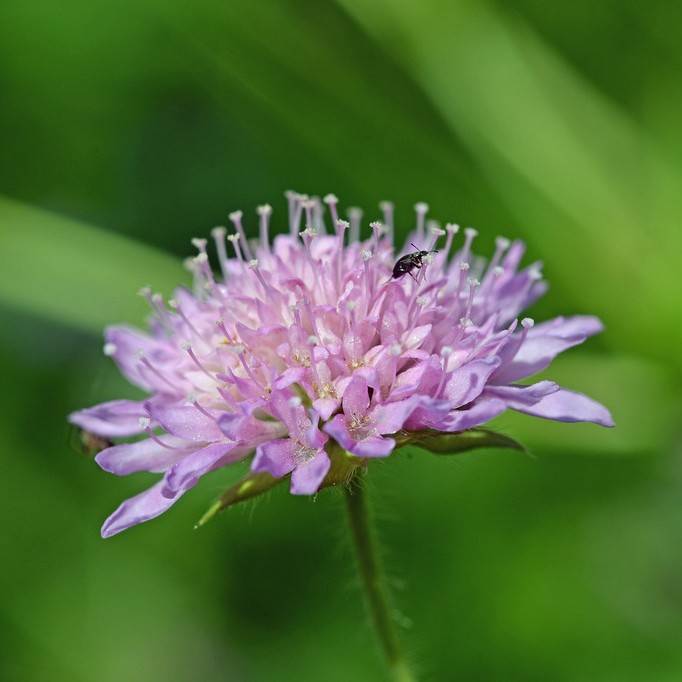
Field Scabious
Knautia arvensis
Overview
Field scabious is a hardy herbaceous perennial recognizable by its domed, thistle-like flower heads composed of tiny, lilac-pink florets that sit atop slender, branching stems from mid-summer to early autumn. Its basal leaves are deeply lobed and hairy, giving the foliage a soft, textured appearance that forms low, spreading clumps before flowering stems emerge. Widely naturalized in meadows, grasslands, and roadside verges across its native range, it is valued for its ability to support a wide range of beneficial insects. While it is sometimes considered a minor invasive weed in regions outside its native range, it is frequently planted in pollinator gardens and wildflower meadows for its long bloom period and low-maintenance nature.
Care Guide
Watering
Field scabious is drought-tolerant once established, requiring only occasional deep watering during prolonged dry spells; avoid overwatering, as soggy soil can cause root rot. Newly planted specimens need regular, moderate watering for the first 2-3 months to help develop a strong root system, after which they can thrive on natural rainfall in most temperate climates. Water at the base of the plant to reduce risk of foliar diseases, and avoid wetting the flowers and leaves during periods of high humidity.
Light
This species thrives in full sun, requiring a minimum of 6 hours of direct, unobstructed sunlight per day to produce abundant blooms and maintain a compact, non-leggy growth habit. It can tolerate very light, dappled shade, but flowering will be reduced and stems may become floppy, requiring staking to stay upright. Avoid planting in heavily shaded areas, as this will lead to sparse growth, increased susceptibility to fungal diseases, and little to no flower production.
Soil
Field scabious adapts to a wide range of soil types, including sandy, loamy, and even poor, low-nutrient soils, as long as the substrate is well-draining. It prefers a neutral to slightly alkaline pH level between 6.5 and 8.0, though it can tolerate mildly acidic conditions as well. Heavy clay soils that hold standing water should be amended with grit, sand, or well-rotted organic matter before planting to improve drainage and prevent root rot.
Fertilizer
This plant is adapted to low-nutrient soils and requires very little fertilization; overfeeding will lead to excessive leafy growth and reduced flowering, as well as weak, floppy stems. In very poor, depleted soils, a single application of a balanced, slow-release organic fertilizer in early spring is sufficient to support healthy growth throughout the growing season. Avoid using high-nitrogen fertilizers entirely, as these prioritize foliage production over bloom development and can make the plant more prone to pest and disease issues.
Temperature
Field scabious is extremely cold-hardy, suitable for USDA hardiness zones 3 through 8, and can tolerate winter temperatures as low as -40°F (-40°C) without additional protection. It thrives in moderate summer temperatures between 60°F and 80°F (15°C and 27°C), and can tolerate short periods of high heat above 90°F (32°C) as long as it is watered occasionally during extended dry spells. Extreme, prolonged heat combined with high humidity may cause stress, so providing good air circulation around plants can help mitigate this risk in warmer parts of its range.
Pruning
Deadhead spent flower heads regularly throughout the blooming period to encourage continued flower production and prevent unwanted self-seeding, if spreading is a concern. At the end of the flowering season, cut back the entire plant to just above the basal foliage to tidy up the garden bed and promote healthy new leaf growth the following spring. If you wish to support local bird populations, leave some seed heads intact through the winter, as they provide a food source for small seed-eating birds during cold months.
Propagation
Field scabious can be easily propagated from seed sown directly outdoors in either early spring or late fall; surface-sow the seeds, as they require light to germinate, which typically occurs within 2-3 weeks under moderate temperatures. Established clumps can also be divided in early spring or late autumn every 3-4 years to rejuvenate older plants, control their size, and create new specimens; divide the root ball into smaller sections, each with several healthy shoots and roots, and replant immediately at the same depth as the original plant. Basal cuttings taken in early spring, when new growth first emerges, can also be rooted in a well-draining propagating mix under high humidity, though seed propagation is far simpler and more reliable for this species.
Humidity
This species prefers moderate to low humidity levels, and is well-adapted to the dry to average humidity conditions found in most temperate grassland and meadow habitats. It can tolerate average household humidity if grown as a container plant, but requires excellent air circulation to prevent fungal leaf spot and powdery mildew in areas with high summer humidity. Avoid overcrowding plants and ensure there is space for air to flow between individual specimens to reduce the risk of humidity-related diseases.
Repotting
If grown in containers, field scabious should be repotted every 2-3 years in early spring, just before new growth begins, to refresh the soil and prevent the root system from becoming root-bound. Choose a pot with multiple drainage holes, and use a well-draining, loam-based potting mix with added grit or perlite to improve drainage, and avoid overpotting, as excess soil can hold unnecessary moisture that leads to root rot. When repotting, gently loosen any tangled roots, and replant at the same depth as it was growing in its previous container, then water thoroughly to settle the soil around the roots.
Uses & Symbolism
Field scabious is a popular addition to wildflower meadows, pollinator gardens, and cottage garden borders, where its long-lasting blooms provide a critical nectar source for bees, butterflies, moths, and hoverflies, including several rare pollinator species. Historically, the plant was used in traditional herbal medicine to treat scabies, eczema, and other skin conditions, as well as to reduce fever and soothe coughs, though these uses are not medically validated today. Its sturdy, long-stemmed flowers also make excellent cut flowers for fresh arrangements, lasting up to a week in a vase with regular water changes.
Diseases & Pests
Field scabious is relatively pest and disease resistant, but can be susceptible to powdery mildew in humid, poorly ventilated conditions, which appears as a white, powdery coating on the leaves; this can be prevented by ensuring proper air circulation and avoiding overhead watering. Aphids may occasionally feed on the soft new growth at the tips of stems, which can be controlled by spraying the plant with a strong jet of water to dislodge the pests, or using insecticidal soap for severe infestations. Root rot can occur in heavy, waterlogged soils, so ensuring proper drainage at planting time is the most effective way to prevent this fatal condition.
Related plants
Other plants you might like if you grow Field Scabious.