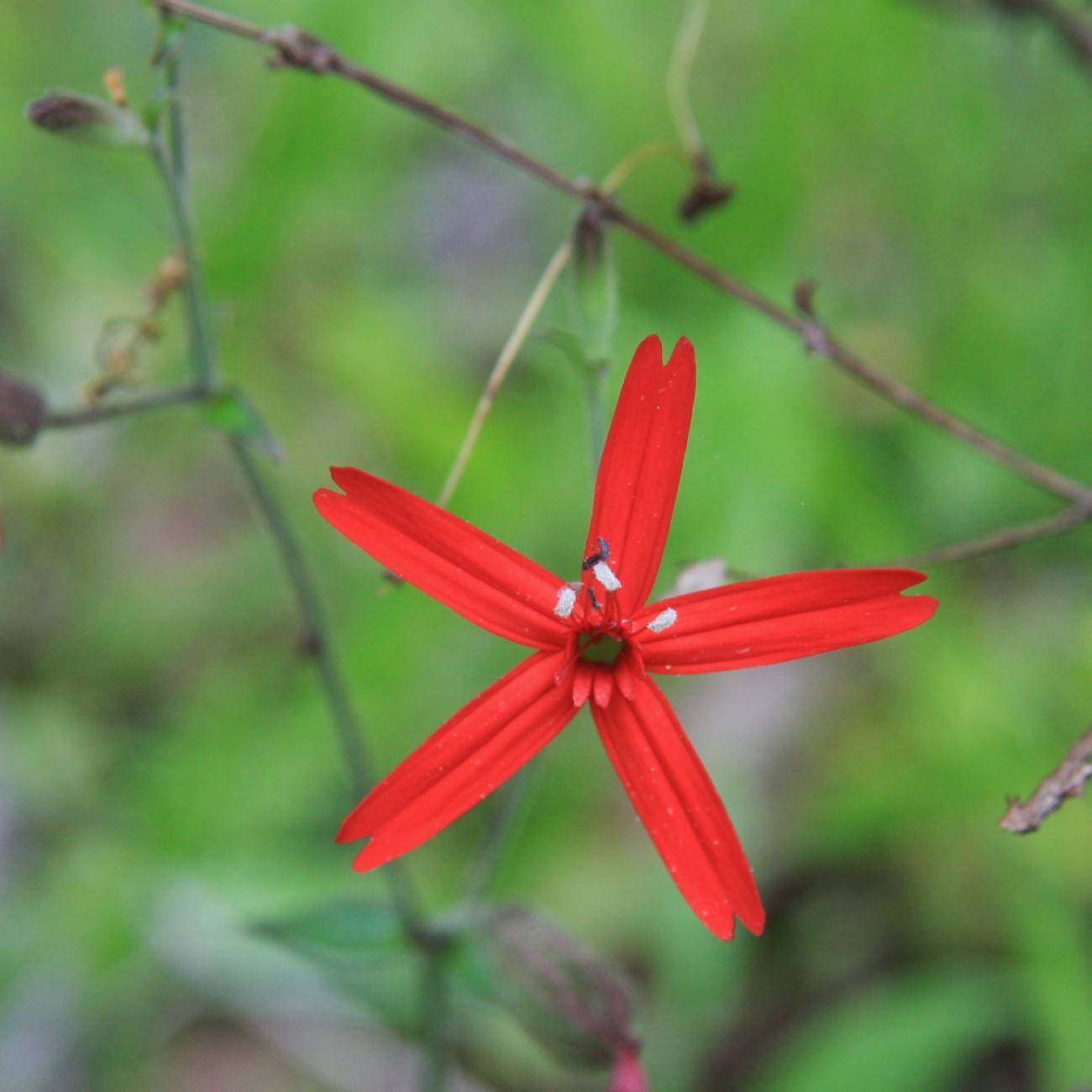
Fire Pink
Silene virginica
Overview
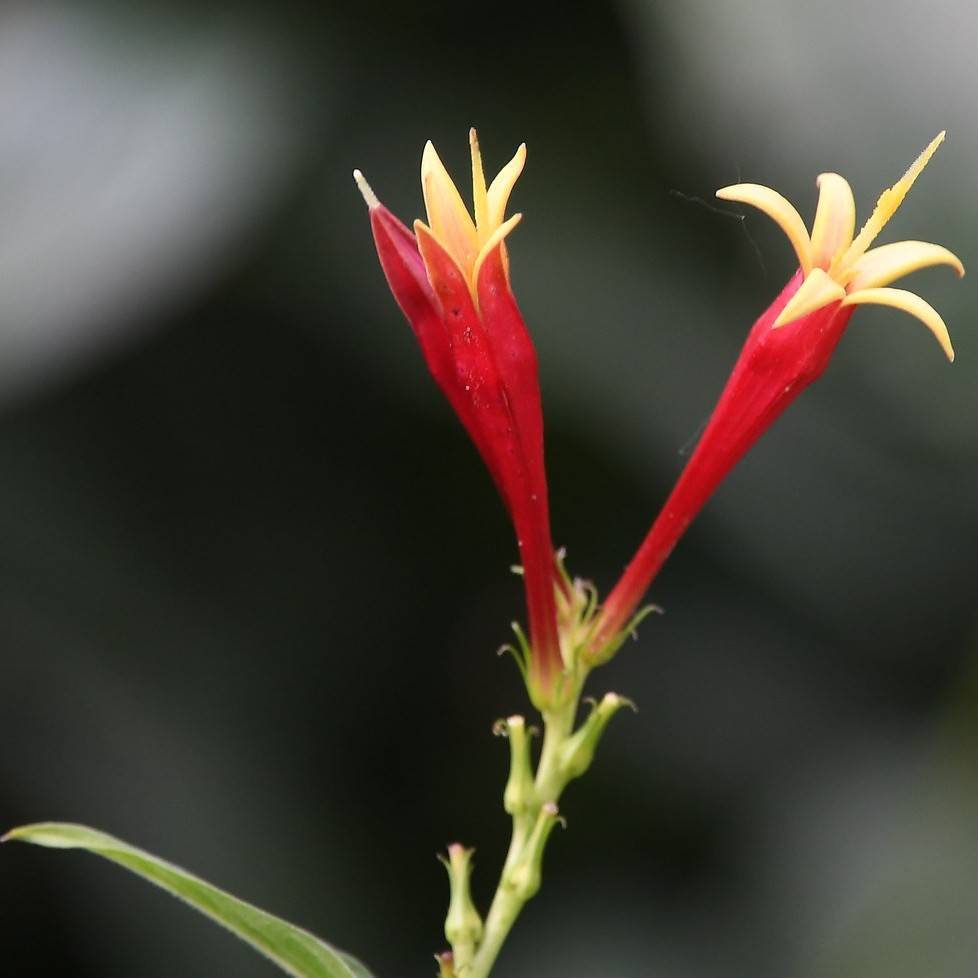
Fire pink is a herbaceous perennial recognized for its striking, five-petaled scarlet blooms that feature distinct notched tips and sticky, glandular stems that deter small crawling insects from stealing nectar. It naturally grows in open woodlands, rocky slopes, and prairies, where its vivid blooms stand out against sparse, well-drained terrain. It is a valuable pollinator plant, primarily visited by ruby-throated hummingbirds that are the primary species capable of reaching its deep nectar reserves.
Care Guide
Watering
Fire pink is drought-tolerant once established, requiring only occasional watering during extended dry periods; overwatering or consistently soggy soil will quickly lead to root rot. In its first growing season, water lightly once a week to help roots establish, reducing frequency once the plant is acclimated. Avoid wetting the foliage when watering to minimize the risk of foliar diseases.
Light
This species thrives in full sun to partial shade, with the most prolific flowering occurring in locations that receive at least 6 hours of direct sunlight daily. In regions with extremely hot summer climates, it benefits from light afternoon shade to prevent foliage scorch and reduce water stress. Too much deep shade will result in leggy growth and reduced bloom production.
Soil
Fire pink prefers well-drained, sandy, gravelly, or rocky soil with a neutral to slightly acidic pH, and it tolerates poor, low-nutrient soils that many other plants cannot survive in. Heavy clay soils that hold moisture are unsuitable, so amend them with coarse sand or gravel to improve drainage before planting. It does not require rich organic matter, as excessive soil fertility can lead to floppy, weak growth.
Fertilizer
Fire pink has very low fertilizer needs, and typically thrives without any supplemental feeding when grown in its preferred rocky or sandy native soil types. If grown in extremely poor soil, a single application of a balanced, slow-release fertilizer in early spring at half the recommended strength is sufficient to support growth. Over-fertilization will encourage excessive foliage growth at the expense of blooms and may reduce the plant’s lifespan.
Temperature
Fire pink is cold-hardy in USDA zones 3 through 8, tolerating winter temperatures as low as -40°F (-40°C) without additional protection when planted in well-drained soil. It tolerates summer temperatures up to 90°F (32°C), but prolonged heatwaves may cause temporary wilting that resolves with cooler evening temperatures. It requires a period of cold winter dormancy to regrow vigorously the following spring, making it unsuitable for tropical or frost-free climates.
Pruning
Deadhead spent blooms throughout the flowering season to encourage continuous blooming and prevent unwanted self-seeding if you wish to limit spread. In late fall after the first frost, cut back the entire plant to 1-2 inches above the soil line to remove dead foliage and reduce overwintering sites for pests and disease. No regular pruning is required during the growing season aside from removing any yellowed or damaged foliage as needed.
Propagation
Fire pink is most commonly propagated from seed, which can be sown directly outdoors in late fall to allow natural cold stratification over winter, or started indoors after 4-6 weeks of refrigeration to mimic cold conditions. Seeds germinate in 2-3 weeks when kept at temperatures between 60-70°F (15-21°C), and seedlings can be transplanted outdoors once they have developed 2-3 sets of true leaves. It can also be propagated via root division in early spring before new growth emerges, though it dislikes root disturbance so division is best done only every 3-4 years if clumps become overcrowded.
Humidity
Fire pink is adapted to moderate humidity levels typical of its native North American range, and tolerates both dry air and occasional periods of high humidity without issue. Good air circulation around the plant is important to prevent foliar fungal diseases during periods of prolonged high humidity. It does not require misting or supplemental humidity, making it well-suited to both outdoor garden settings and dry indoor growing conditions if provided with adequate light.
Repotting
Fire pink is rarely grown in containers long-term, but if potted, it only requires repotting every 2-3 years when roots begin to grow out of the drainage holes. Use a well-drained, sandy potting mix with added perlite or gravel to ensure adequate drainage, and choose a pot with multiple drainage holes to prevent waterlogging. Repot in early spring before new growth begins, taking care to minimize root disturbance during the process to avoid transplant shock.
Uses & Symbolism
Fire pink is a popular choice for native plant gardens, rock gardens, pollinator gardens, and dry slope plantings, where its bright blooms add vivid color and support hummingbird and insect pollinator populations. It is occasionally used in cut flower arrangements, though its sticky stems can be messy to handle and its blooms have a relatively short vase life of 3-5 days. Historically, some Indigenous American tribes used small amounts of the root to treat worm infections and other minor ailments, though the plant has no widespread modern culinary or medicinal uses.
Diseases & Pests
Fire pink is relatively pest and disease resistant, but can be susceptible to root rot if grown in poorly drained, consistently soggy soil, which is the most common issue affecting cultivated specimens. Aphids and spider mites may occasionally infest new growth, particularly on indoor or stressed plants, and can be controlled with insecticidal soap or a strong spray of water to dislodge the pests. Fungal leaf spots and powdery mildew may occur in areas with poor air circulation and prolonged high humidity, which can be prevented by spacing plants appropriately and avoiding overhead watering.
Related plants
Other plants you might like if you grow Fire Pink.