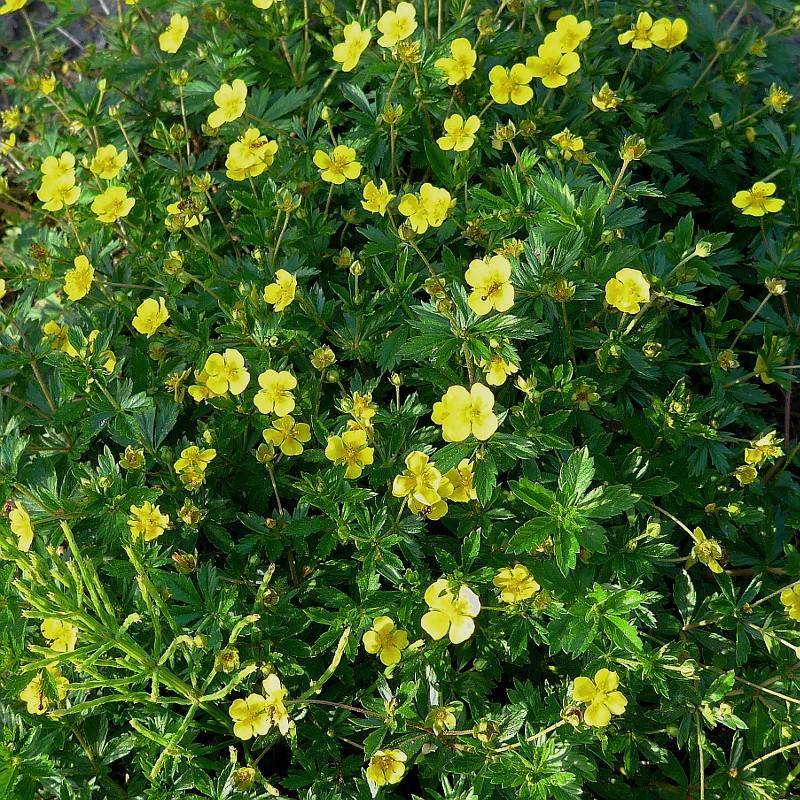
Erect Cinquefoil
Potentilla recta
Overview
Erect cinquefoil is a clumping perennial distinguished by its hairy, upright stems and five-fingered, toothed palmate leaves that give it the common name 'cinquefoil', from the French for five leaves. It produces clusters of pale, sulfur-yellow, five-petaled flowers from late spring to early fall, attracting a range of pollinators including bees and butterflies. Though sometimes considered a weedy invasive in parts of North America where it was introduced, it is also valued for its hardiness and low-maintenance growth in a variety of landscape settings.
Care Guide
Watering
Erect cinquefoil is drought-tolerant once established, requiring only occasional deep watering during extended dry periods; avoid overwatering, as soggy soil can lead to root rot. Young plants need regular, moderate watering to help establish a strong root system, but should be allowed to dry out between waterings to prevent fungal issues.
Light
This species thrives in full sun, requiring at least six hours of direct sunlight daily to produce abundant flowers and maintain sturdy, upright growth. It can tolerate partial shade, though flowering will be reduced and stems may become leggy and prone to flopping in low-light conditions.
Soil
Erect cinquefoil adapts to a wide range of soil types, including sandy, loamy, and even poor, gravelly soils, as long as drainage is excellent. It prefers a neutral to slightly alkaline pH, but can tolerate mildly acidic conditions; heavy clay soils that hold moisture are unsuitable, as they increase risk of root rot.
Fertilizer
This low-maintenance plant generally does not require regular fertilization, as it thrives even in nutrient-poor soils. An annual light application of balanced, all-purpose fertilizer in early spring can boost growth in particularly poor substrates, but over-fertilization will lead to excessive foliage growth at the expense of flowers.
Temperature
Erect cinquefoil is cold-hardy in USDA zones 3 through 8, tolerating winter temperatures as low as -40°F (-40°C) without protection. It prefers temperate summer conditions, and may go dormant early during extended periods of extreme heat above 90°F (32°C), especially if paired with drought.
Pruning
Deadheading spent flowers throughout the blooming season will encourage continued flowering and prevent unwanted self-seeding in areas where it can become invasive. Cut back the entire plant to a few inches above ground level in late fall after foliage dies back, or in early spring before new growth emerges, to maintain a tidy habit and promote healthy new stems.
Propagation
Erect cinquefoil is most easily propagated by seed, which can be sown directly outdoors in fall or cold-stratified for 30 days before sowing in spring. It can also be propagated by division in early spring or late fall, separating mature clumps into smaller sections with intact roots and replanting immediately at the same depth they were previously growing.
Humidity
This species tolerates a wide range of humidity levels, thriving in the moderate humidity of its native temperate ranges without special adjustments. It is not prone to humidity-related issues, though poor air circulation in very high humidity environments can increase risk of foliar fungal diseases, so space plants appropriately to allow airflow.
Repotting
Erect cinquefoil is rarely grown in containers, but if potted, it should be repotted every 2 to 3 years in early spring to refresh the soil and accommodate root growth. Use a well-draining potting mix and select a container with drainage holes to prevent waterlogging, trimming back any circling roots during repotting to encourage healthy growth.
Uses & Symbolism
Erect cinquefoil has a long history of use in traditional herbal medicine, where aerial parts were brewed into teas or poultices to treat diarrhea, inflammation, and minor skin wounds. It is sometimes planted in wildflower gardens and pollinator habitats to support bees and butterflies, and its deep root system helps stabilize soil on slopes and disturbed sites. Though not commonly grown as an ornamental, its long bloom period and hardiness make it suitable for low-maintenance, naturalized landscape areas.
Diseases & Pests
Erect cinquefoil is relatively resistant to most pests and diseases, though it can occasionally be affected by foliar fungal issues such as powdery mildew and leaf spot, especially in wet, poorly ventilated conditions. Common pests include aphids and spider mites, which may colonize young stems and leaf undersides during hot, dry weather, and can be controlled with insecticidal soap or neem oil. Root rot can occur in heavy, poorly draining soils, so proper site selection with good drainage is the best preventative measure.
Related plants
Other plants you might like if you grow Erect Cinquefoil.