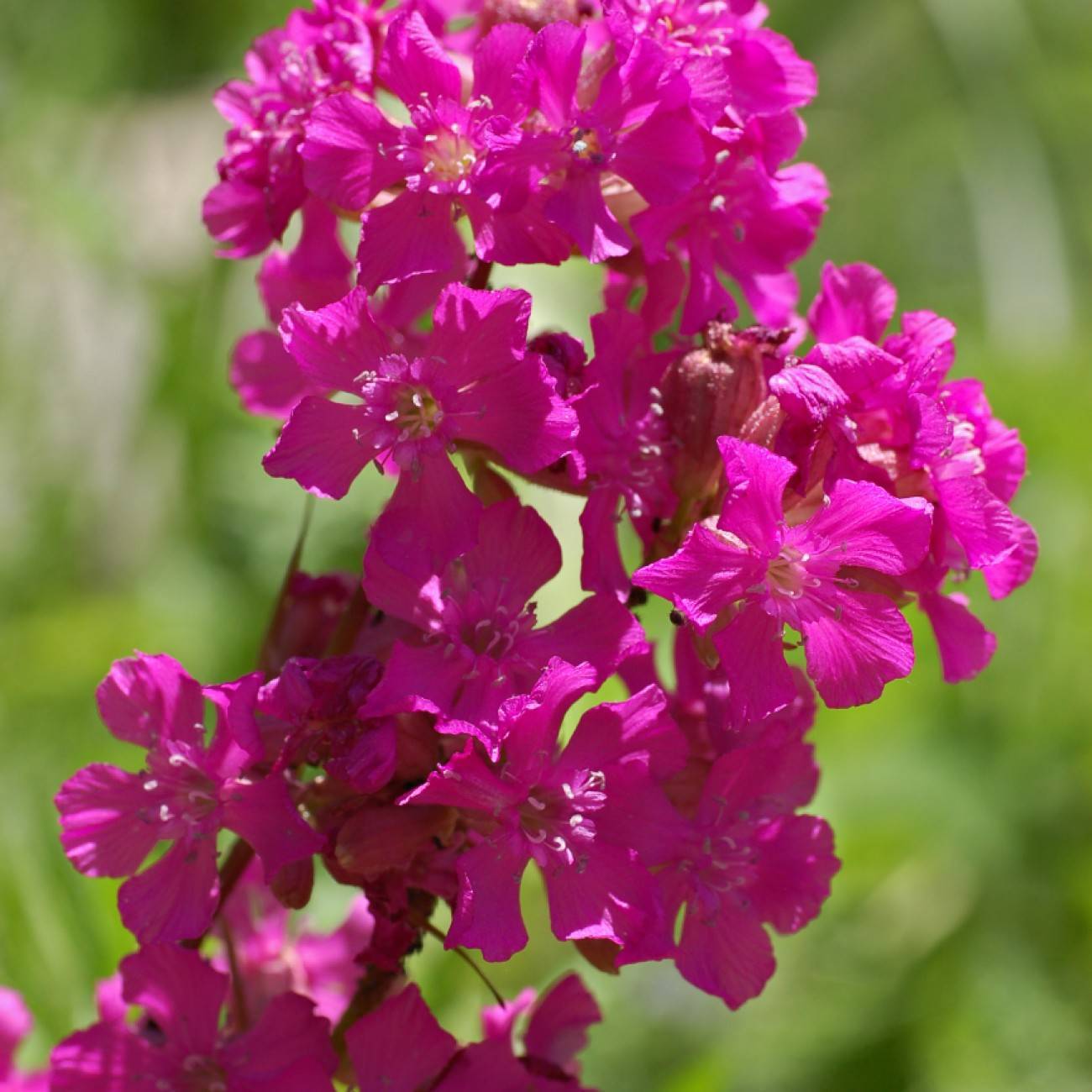
Catchfly
Silene armeria
Overview
Catchfly, also called sweet William catchfly, is a colorful annual valued for its long-lasting summer blooms and adaptability to poor, dry soils. Its sticky stem hairs, which give the plant its common name, deter crawling pests from reaching its nectar-rich flowers. It naturalizes readily in temperate climates, making it a popular choice for wildflower meadows and low-maintenance garden beds.
Care Guide
Watering
Catchfly is drought-tolerant and prefers infrequent, deep watering rather than frequent light sprays; allow the top 1 to 2 inches of soil to dry out completely between waterings. Avoid overwatering, as soggy soil can quickly cause root rot and fungal stem diseases, especially in cool, shaded conditions. During extended periods of summer heat, increase watering slightly to prevent wilting, but always ensure excess moisture drains fully.
Light
Thrives in full sun, requiring a minimum of 6 hours of direct, unfiltered sunlight per day to produce abundant, vibrant blooms and strong, compact growth. It can tolerate partial shade, particularly in regions with intense midday summer heat, but plants grown in too much shade will become leggy, produce fewer flowers, and be more prone to pest infestations. For indoor sowing, place seed trays near a south-facing window or use grow lights to provide sufficient light for seedling development.
Soil
Adaptable to a wide range of soil types, including poor, sandy, or rocky soils, as long as the medium is well-draining. It prefers a neutral to slightly alkaline pH between 6.5 and 7.5, but will tolerate slightly acidic conditions if drainage is adequate. Avoid heavy, clay-rich soils that retain moisture for long periods, as these will stunt root growth and increase the risk of rot.
Fertilizer
Catchfly has low nutrient requirements and generally does not need regular fertilization, especially if grown in moderately fertile garden soil. Over-fertilization will lead to excessive leafy growth at the expense of flowers and weak stems that are prone to flopping. If grown in extremely poor soil, apply a balanced, slow-release 10-10-10 fertilizer at half the recommended rate once at the start of the growing season, before buds form.
Temperature
Prefers moderate temperatures between 60–80°F (15–27°C) during its active growing season, and can tolerate light, short-duration frosts down to 28°F (-2°C) without significant damage. It thrives in cool spring and early summer conditions, and may stop blooming and go dormant early during extended periods of temperatures above 90°F (32°C). Seeds germinate best when soil temperatures are between 55–65°F (13–18°C), sown directly outdoors after the last expected frost date for your region.
Pruning
Minimal pruning is required for catchfly; deadhead spent flower clusters regularly throughout the blooming season to encourage the production of new buds and extend the overall flowering period. If plants become leggy or overgrown mid-season, cut back the stems by up to one-third to promote bushier, more compact growth. At the end of the growing season, pull up and discard entire plants after the first hard frost, or leave a few seed heads in place if you want the plant to self-sow for the following year.
Propagation
Catchfly is most commonly propagated from seed, which can be sown directly outdoors in the garden after the last frost, or started indoors 4–6 weeks before the last expected frost for earlier blooms. Sow seeds on the surface of moist, well-draining soil, as they require light to germinate; do not cover them with a thick layer of soil, as this will prevent sprouting. Germination typically occurs within 10–14 days under optimal temperature conditions, and seedlings can be transplanted outdoors once they have developed 2–3 sets of true leaves and all risk of frost has passed.
Humidity
Tolerates a wide range of humidity levels, from dry inland climates to moderately humid coastal regions, as long as there is adequate air circulation around the plants. High humidity combined with poor air flow and wet foliage increases the risk of powdery mildew and other fungal diseases, so space plants 6–12 inches apart to allow for proper ventilation. Avoid overhead watering if you live in a very humid climate, as this will keep foliage wet for longer periods and encourage disease development.
Repotting
As an annual plant, catchfly is rarely grown in containers long enough to require repotting; if grown in pots, select a container with drainage holes at planting time to prevent waterlogging. If seedlings outgrow their initial starter pots before transplanting outdoors, move them to a slightly larger container filled with well-draining potting mix, taking care not to disturb the delicate root system. At the end of the growing season, discard potted plants or compost them, as they will not regrow the following year.
Uses & Symbolism
Catchfly is widely used in wildflower meadows, rock gardens, border edges, and cottage garden plantings for its vibrant, long-lasting blooms that attract pollinators including bees, butterflies, and hummingbirds. Its sticky stems also help control small nuisance insects such as aphids and whiteflies, as the sticky hairs trap these pests before they can reach other nearby garden plants. It makes an excellent cut flower, with sturdy stems and blooms that last up to a week in fresh floral arrangements.
Diseases & Pests
Catchfly is relatively pest and disease resistant, but can be susceptible to aphid infestations and spider mites, particularly when grown in warm, dry, low-humidity conditions; these can be treated with insecticidal soap or neem oil sprays. Fungal diseases including powdery mildew, root rot, and stem rot are common in plants grown in poorly draining soil or overly wet, humid conditions with insufficient air circulation. Slugs and snails may occasionally feed on young, tender seedling foliage, especially in cool, damp spring weather, and can be controlled with slug bait, copper tape, or hand removal.
Related plants
Other plants you might like if you grow Catchfly.