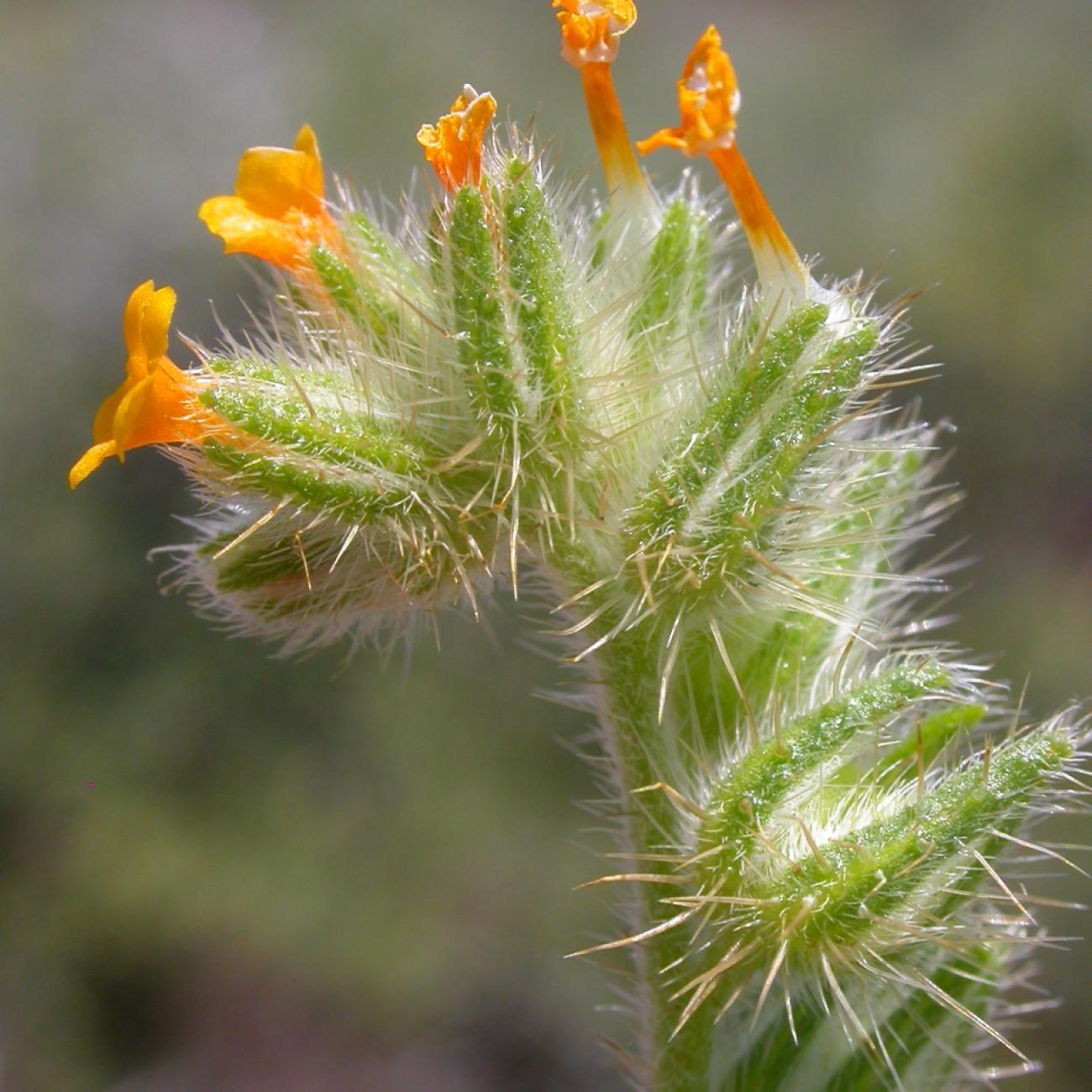
Bugloss Fiddleneck
Amsinckia tessellata
Overview
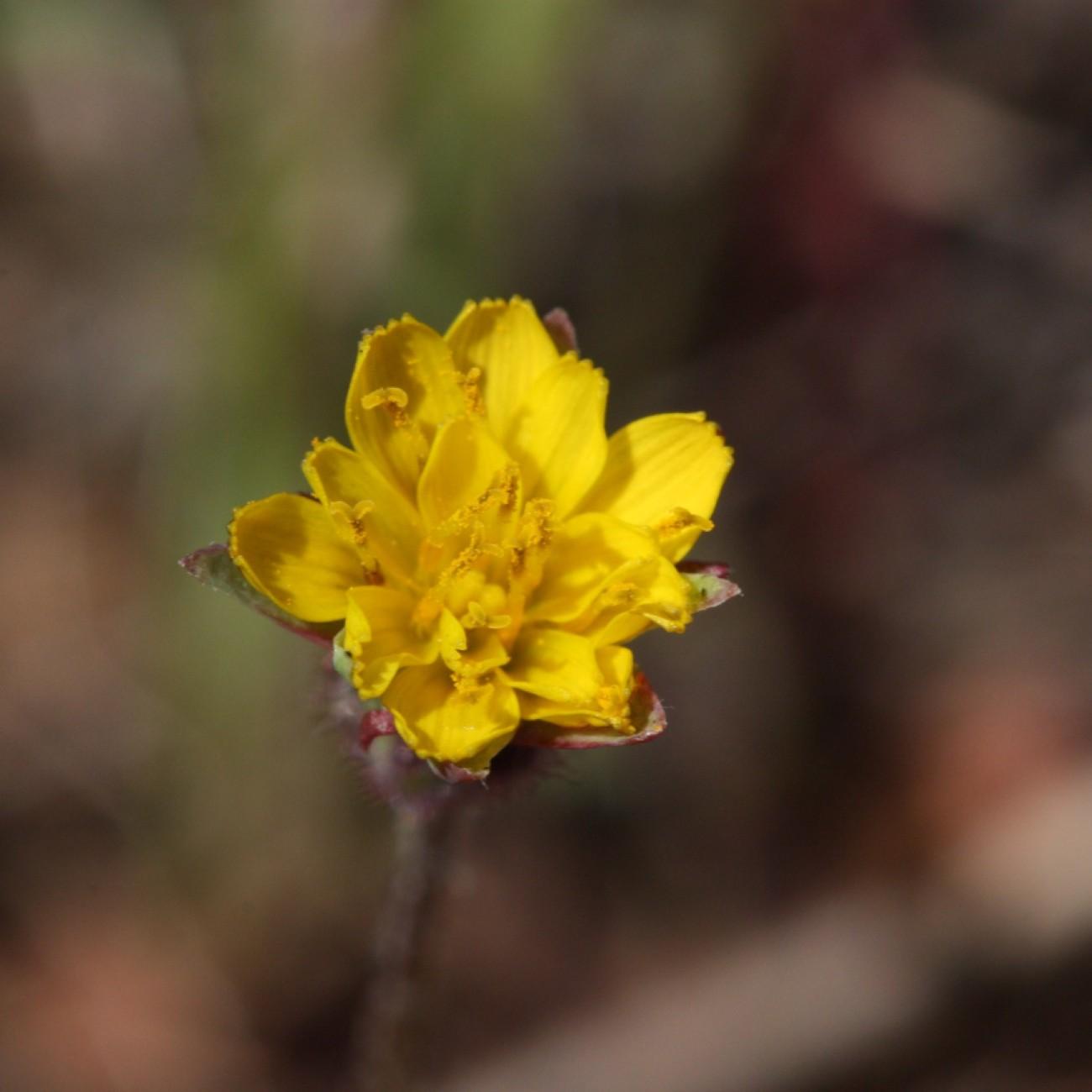
Bugloss Fiddleneck, named for its curled, fiddle-shaped unopened flower spikes and rough, bristly foliage similar to bugloss plants, is a widespread wildflower of dry, open slopes, grasslands, and disturbed sites. Its small, tubular bright yellow to orange flowers bloom in sequential clusters along the coiled stem, attracting native pollinators including solitary bees and butterflies. This plant is adapted to arid conditions, often thriving in nutrient-poor, rocky soils where other species struggle to establish.
Care Guide
Watering
Bugloss Fiddleneck is highly drought-tolerant once established, requiring only occasional deep watering during extended periods of no rainfall; overwatering will quickly cause root rot and fungal disease. For cultivated plants, allow the top 2 to 3 inches of soil to dry out completely between waterings, and reduce watering entirely once the plant has finished flowering and begins to die back.
Light
This species requires full, direct sunlight for at least 6 to 8 hours per day to produce abundant flowers and sturdy, upright growth. It will not thrive in partial or full shade, where it will become leggy, produce few blooms, and be more susceptible to pest and disease issues.
Soil
Bugloss Fiddleneck prefers well-draining, sandy or gravelly, low-nutrient soil, and tolerates alkaline and rocky substrates that are unsuitable for most ornamental plants. Heavy, water-retentive clay soils should be amended with coarse sand or gravel to improve drainage before planting, as standing water will kill the plant rapidly.
Fertilizer
This plant does not require regular fertilization, as it is adapted to nutrient-poor soils; excess nitrogen will encourage soft, leafy growth at the expense of flowers and make the plant prone to flopping. If grown in extremely poor soil, a single application of a balanced, low-nitrogen fertilizer at planting time is sufficient to support growth through its short lifecycle.
Temperature
Bugloss Fiddleneck thrives in warm, dry conditions, tolerating summer temperatures up to 105°F (40°C) and mild, short-term frosts down to 25°F (-4°C) early in its growth cycle. It is adapted to the arid, Mediterranean and semi-arid climates of its native range, and will not survive prolonged cold, wet conditions common in humid temperate regions.
Pruning
Pruning is rarely required for this short-lived annual; spent flower spikes can be removed if self-seeding is unwanted, as each plant produces hundreds of small, hard seeds that will germinate the following growing season. If growing as part of a native wildflower meadow, leave flower heads intact after blooming to allow seeds to disperse and support local bird populations that feed on the mature seed.
Propagation
Bugloss Fiddleneck is easily propagated from seed, which can be sown directly outdoors in fall or early spring, as the seeds require a period of cold stratification to germinate successfully. Scatter seeds on the surface of prepared, well-draining soil, lightly press them into the substrate, and do not cover them, as they need light to germinate; seedlings will emerge within 2 to 3 weeks once temperatures warm in spring.
Humidity
This species prefers low to moderate humidity levels between 20% and 50%, matching the arid and semi-arid conditions of its native range. High humidity above 60% increases the risk of powdery mildew and fungal leaf spot, so ensure plants are spaced adequately for good air circulation if grown in more humid climates.
Repotting
Repotting is unnecessary for this short-lived annual, as it completes its entire lifecycle within a single growing season and does not require container repotting once established. If started in seed trays, transplant seedlings to their final growing location when they have 2 to 3 sets of true leaves, as they do not tolerate root disturbance well once they become larger.
Uses & Symbolism
Bugloss Fiddleneck is used in native wildflower gardens and xeriscaping projects for its drought tolerance, bright blooms, and value to native pollinators, including specialist bees that rely on it as a primary food source. Historically, some Indigenous groups of western North America used small quantities of the plant for medicinal purposes, though its toxic alkaloid content makes internal consumption unsafe without expert preparation. It is also useful for erosion control on disturbed, dry sites such as roadside cuts and post-fire restoration areas, as it establishes quickly and holds soil in place with its fibrous root system.
Diseases & Pests
Bugloss Fiddleneck has very few pest and disease issues when grown in its preferred dry, sunny conditions, but overwatering or high humidity can lead to root rot, powdery mildew, and fungal leaf spot. Aphids and spider mites may occasionally infest stressed plants, particularly those grown in partial shade, and can be controlled with a strong spray of water or insecticidal soap if populations become large.
Related plants
Other plants you might like if you grow Bugloss Fiddleneck.