Large Leaved Cucumber Tree
Magnolia macrophylla
Overview
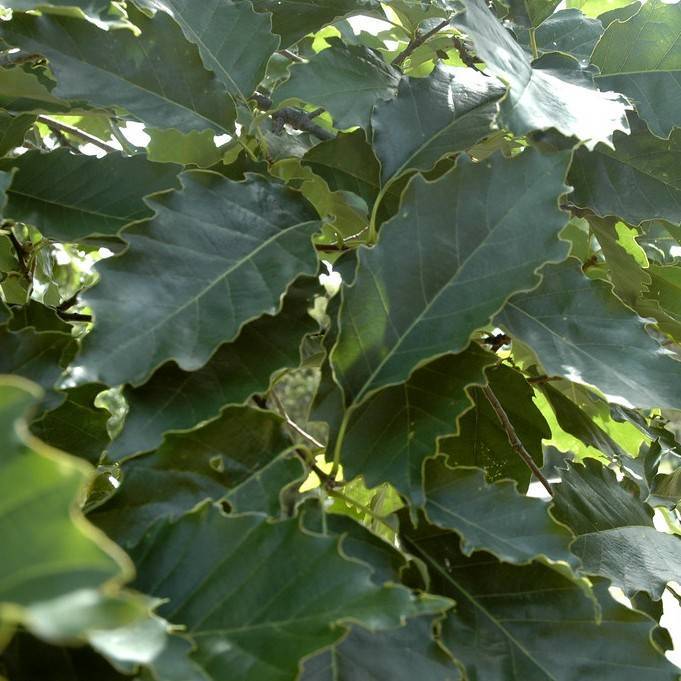
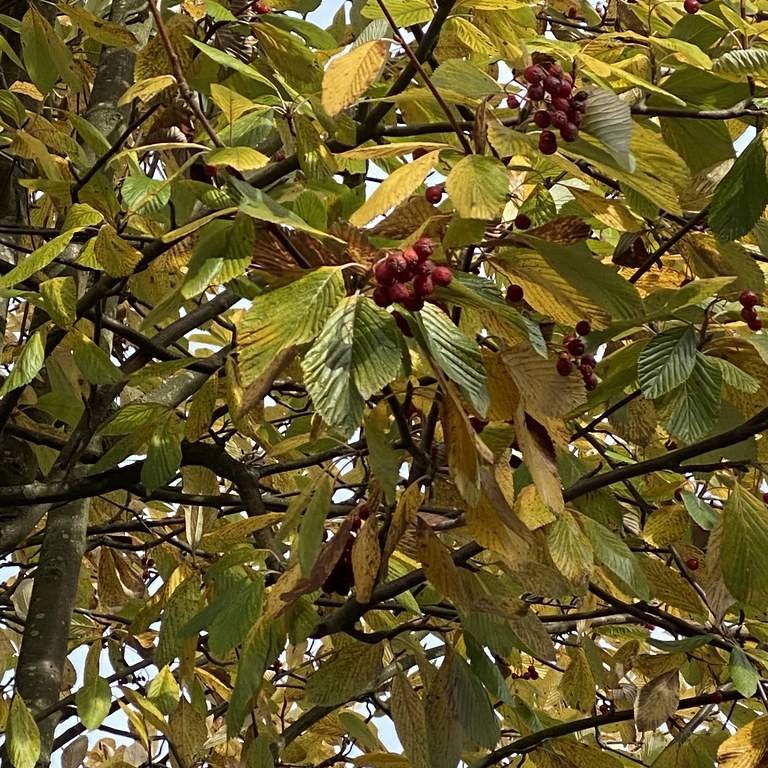
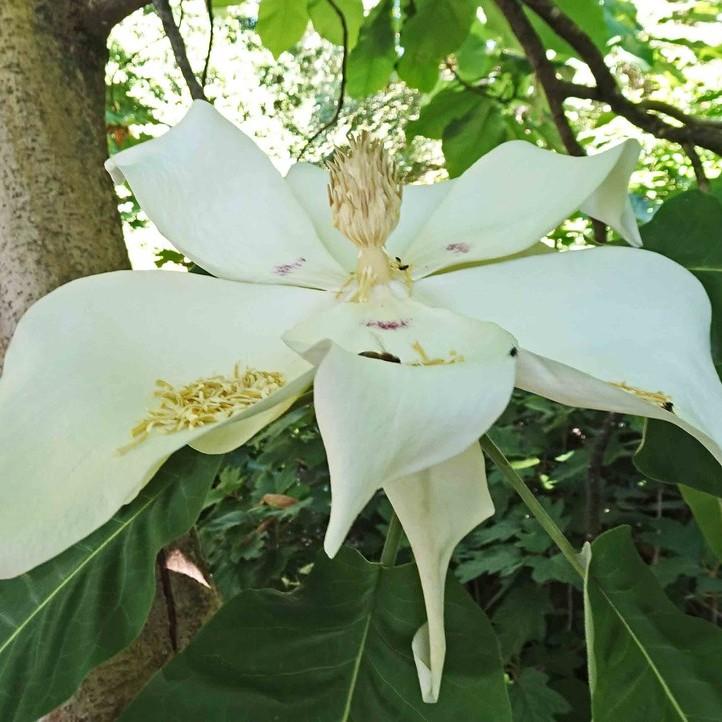
The large leaved cucumber tree boasts the largest simple leaves of any native North American tree, with individual foliage reaching 20-30 inches long and 10 inches wide. In late spring to early summer, it produces showy, 10-14 inch wide creamy white flowers marked with purple blotches at their base, emitting a mild, sweet fragrance. After blooming, elongated, cucumber-like green seed pods develop, ripening to red in fall and releasing bright red seeds that attract songbirds.
Care Guide
Watering
Water young trees regularly to keep soil consistently moist but not waterlogged, especially during hot, dry periods. Established trees have moderate drought tolerance, but supplemental watering during extended dry spells prevents leaf scorch and supports healthy growth. Avoid overwatering, as soggy soil can cause root rot.
Light
Thrives in full sun to partial shade, with young trees benefiting from dappled shade to protect their tender leaves from sun scorch. Mature trees tolerate full sun best in regions with moderate summer heat, while partial afternoon shade is ideal in hotter southern climates to prevent foliage damage.
Soil
Prefers deep, fertile, well-drained loamy soil with a slightly acidic to neutral pH between 5.5 and 7.0. It is intolerant of compacted, heavy clay soils or poorly drained sites, which can lead to root stress and decline. Amend heavy soils with compost or leaf mold prior to planting to improve drainage and nutrient content.
Fertilizer
Feed young trees in early spring with a balanced, slow-release fertilizer formulated for acid-loving trees to support vigorous foliage and root growth. Mature trees typically only need fertilization if growth is stunted or leaves appear pale, with application once per year in early spring sufficient. Avoid high-nitrogen fertilizers, which can promote excessive foliage growth at the expense of flowering.
Temperature
Grows best in USDA hardiness zones 5 through 8, tolerating minimum winter temperatures down to -20°F (-29°C) when established. Late spring frosts can damage newly emerged leaves and flower buds, so planting in a sheltered location away from cold, open winds reduces frost injury. It struggles in regions with extreme, sustained summer heat above 100°F (38°C) without supplemental water and shade.
Pruning
Prune only to remove dead, damaged, or crossing branches during the dormant season in late winter, before new growth emerges. Avoid heavy pruning, as this species bleeds sap profusely when cut and takes time to recover from significant trimming. Remove spent flower heads after blooming if desired, but this is not required for overall tree health.
Propagation
Most commonly propagated from fresh seeds sown in fall immediately after harvesting, as seeds have a hard outer coat that requires cold stratification to germinate. Stratify seeds in moist peat moss in the refrigerator for 3-4 months if sowing in spring, then plant in a well-drained seed starting mix. Softwood cuttings taken in early summer can also root, but success rates are low, so grafting onto hardy magnolia rootstock is often used for named cultivars.
Humidity
Adaptable to average ambient humidity levels across its native range, tolerating levels between 40% and 70% without issue. It does not require extra humidity when grown outdoors in suitable climates, though prolonged very dry air can cause leaf edge browning. Indoor potted specimens, which are rare, benefit from occasional misting during dry winter months.
Repotting
Rarely grown in containers long-term, as its deep taproot and large size make it unsuitable for extended potted growth. Young saplings grown in pots should be repotted every 1-2 years in early spring before new growth starts, using a large, deep container with drainage holes. Transplant saplings to their permanent outdoor location as soon as they outgrow their pots to avoid stunting root development.
Uses & Symbolism
Primarily grown as a specimen ornamental tree in large gardens, parks, and native plant landscapes for its dramatic foliage, showy fragrant flowers, and wildlife value. Its large leaves create dense, cooling shade in summer, and its fall seed pods provide food for a variety of native songbird species. Historically, some Indigenous communities used parts of the tree for medicinal remedies for mild digestive complaints, though it has no widespread modern medicinal use.
Diseases & Pests
It is relatively disease-resistant, though it can suffer from fungal leaf spots, powdery mildew, and verticillium wilt in overly moist, poorly aerated conditions. Common pests include scale insects, magnolia borers, and spider mites, which typically only cause damage to stressed or weakened trees. Young foliage is highly susceptible to wind damage and frost scorch, so sheltered planting locations are recommended to prevent unsightly leaf tears and browning.
Related plants
Other plants you might like if you grow Large Leaved Cucumber Tree.