Chinese Tulip Tree
Liriodendron chinense
Overview
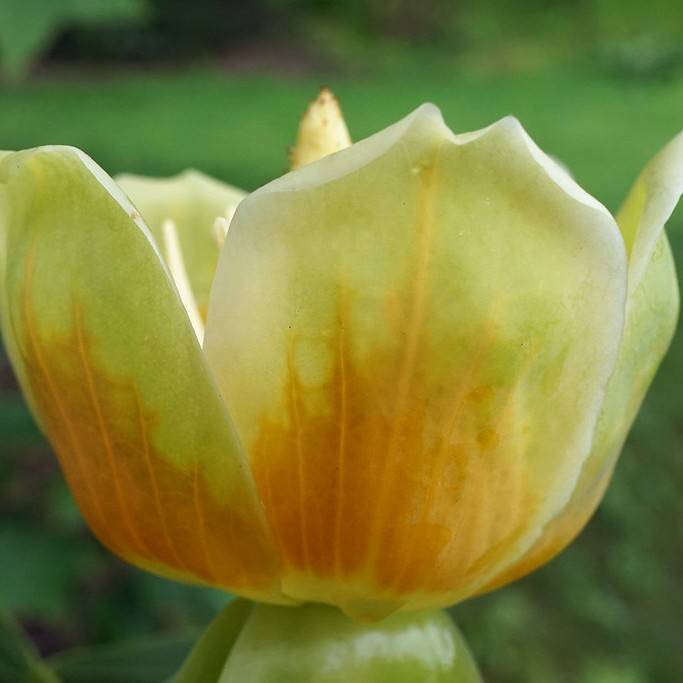
The Chinese Tulip Tree is a close relative of the North American tulip poplar, valued for its broad, pyramidal growth habit and striking, four-lobed leaves that resemble the silhouette of a tulip. In late spring to early summer, it produces cup-shaped, pale yellow blooms with orange markings at their base, which are lightly fragrant and attractive to pollinators. It is a long-lived specimen tree, often planted in parks, large gardens, and along streetscapes for its shade and ornamental value.
Care Guide
Watering
Water young trees regularly to keep the soil consistently moist but not waterlogged, especially during periods of drought or hot weather. Mature trees are moderately drought-tolerant, though supplemental watering during extended dry spells will support healthy foliage and growth. Avoid overwatering, as this can lead to root rot in poorly draining soils.
Light
Grow the Chinese Tulip Tree in full sun for the most vigorous growth and abundant flowering, as it requires at least 6 hours of direct sunlight daily. It can tolerate light partial shade, particularly in warmer southern climates, though excessive shade will reduce bloom production and lead to a sparser canopy. Young trees may benefit from light protection from intense, scorching midday sun in their first 1-2 years of establishment.
Soil
This tree thrives in deep, fertile, well-drained loamy soil with a slightly acidic to neutral pH, though it can adapt to a range of soil types including clay, sand, or loam as long as drainage is adequate. It does not tolerate compacted or waterlogged soils, which can stunt root growth and increase the risk of fungal diseases. Amending planting sites with organic matter such as compost or well-rotted manure will improve soil structure and nutrient content for young trees.
Fertilizer
Fertilize young trees annually in early spring with a balanced, slow-release granular fertilizer to support robust root and canopy growth. Mature, established trees generally do not require regular fertilization, though a light application of a nitrogen-rich fertilizer in early spring can be beneficial if growth is stunted or foliage appears pale. Avoid fertilizing after mid-summer, as this can stimulate tender new growth that is vulnerable to damage from early fall frosts.
Temperature
The Chinese Tulip Tree is hardy in USDA zones 6 through 9, tolerating winter temperatures as low as -10°F (-23°C) once fully established. It prefers temperate climates with moderate seasonal variation, and may struggle in regions with extreme, prolonged heat or arid conditions without supplemental water. Young trees should be protected from harsh winter winds and frost in their first 2-3 years to prevent bark damage and dieback.
Pruning
Prune the Chinese Tulip Tree during its dormant season in late winter to early spring, removing any dead, damaged, or crossing branches to maintain a strong, healthy structure. Avoid heavy pruning, as this species does not respond well to aggressive cutting and may take several years to regrow lost foliage. Mature trees require only minimal pruning to remove low-hanging branches or hazard limbs, as their natural pyramidal form is inherently attractive.
Propagation
The most common propagation method is from seed, which requires 2-3 months of cold stratification to break dormancy before sowing in moist, well-drained potting mix. Softwood cuttings taken in early summer can also be rooted, though success rates are relatively low without the use of rooting hormone and consistent high humidity. Grafting onto hardy rootstock is sometimes used for named cultivars to ensure consistent growth and flowering traits.
Humidity
This tree prefers moderate to high humidity levels typical of its native forest habitats, though it adapts well to average outdoor humidity levels in most temperate growing regions. It may experience leaf browning or drop in extremely arid, low-humidity environments, which can be mitigated with regular deep watering during dry periods. Indoor cultivation is not practical for this large tree, so humidity adjustments are rarely needed for landscape specimens.
Repotting
The Chinese Tulip Tree is a large landscape tree and is not suitable for long-term container growth, so repotting is not a standard part of its care. Young saplings grown in nursery containers should be transplanted into their permanent landscape location as soon as possible, ideally during the dormant season to minimize transplant shock. When transplanting, dig a hole twice as wide as the root ball and at the same depth to encourage healthy root establishment.
Uses & Symbolism
The Chinese Tulip Tree is widely planted as an ornamental specimen tree in large gardens, parks, and public landscapes for its attractive foliage, showy blooms, and dense shade. Its lightweight, fine-grained wood is used in woodworking for furniture, cabinetry, and interior trim, as it is easy to work with and resistant to warping. It is also planted in reforestation projects and as a street tree in areas with adequate space, as it has good tolerance for urban pollution once established.
Diseases & Pests
The Chinese Tulip Tree is relatively pest and disease resistant, though it can be susceptible to aphids, scale insects, and tulip tree leaf miners, which can cause cosmetic damage to foliage but rarely threaten the tree's overall health. Fungal diseases such as powdery mildew, leaf spot, and verticillium wilt may occur in overly wet, poorly drained soils or high humidity conditions. Proper air circulation, well-drained soil, and avoiding overhead watering will reduce the risk of most disease issues.
Related plants
Other plants you might like if you grow Chinese Tulip Tree.