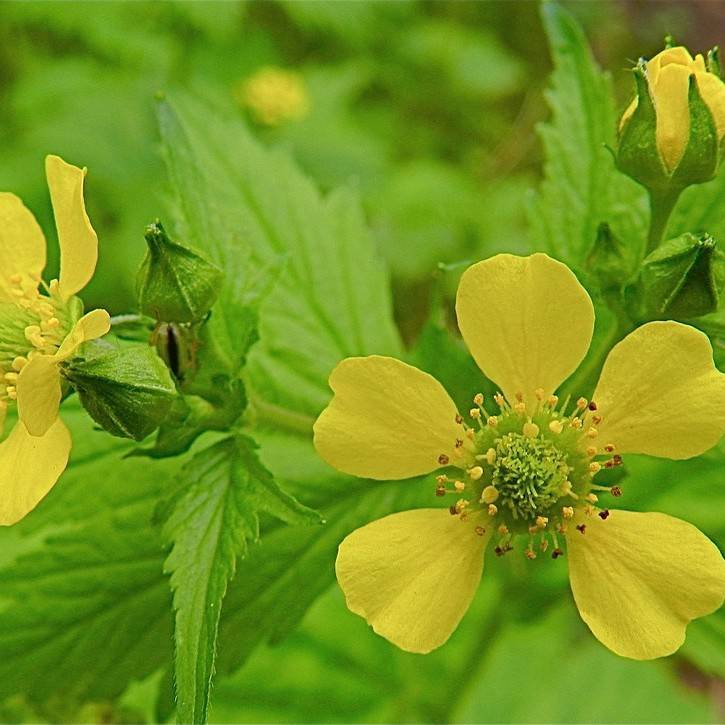
Large Leaved Avens
Geum macrophyllum
Overview
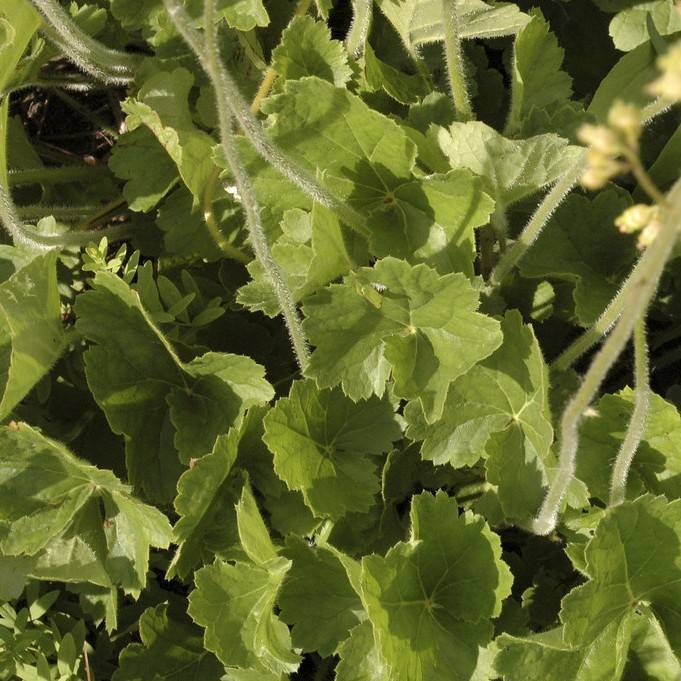
Large leaved avens is a robust herbaceous perennial that forms low, dense mounds of large, lobed, softly hairy basal leaves up to 12 inches long. From late spring to mid summer, it sends up tall, branching flower stalks topped with clusters of small, five-petaled bright yellow blooms that attract native bees, butterflies, and other pollinators. After flowering, it produces distinctive spiky, burr-like seed heads that cling to animal fur to aid dispersal, adding textural interest to garden beds through late fall. It thrives in cool, moist climates and is well adapted to a range of garden settings, from wildflower meadows to shaded border edges.
Care Guide
Watering
Large leaved avens prefers consistently moist, well-drained soil and requires regular watering, especially during dry summer periods, to prevent wilting and stress. Avoid overwatering or allowing the root zone to sit in standing water, as this can lead to root rot, particularly in heavy clay soils. Reduce watering frequency in late fall and winter once the plant goes dormant, only providing moisture if the top several inches of soil are completely dry.
Light
This plant grows best in partial shade, particularly in regions with hot summer sun, where afternoon shade will protect its foliage from scorching. It can tolerate full sun in cooler, northern climates as long as soil moisture levels are kept consistently high throughout the growing season. Too much deep, dense shade will reduce flower production and lead to leggy, sparse growth.
Soil
Large leaved avens adapts well to a wide range of soil types, including loam, sandy loam, and well-amended clay, as long as drainage is adequate. It prefers slightly acidic to neutral soil pH between 5.5 and 7.0, and thrives in soils rich in organic matter such as compost or well-rotted leaf mold. Prior to planting, work 2 to 3 inches of organic compost into the top 10 inches of soil to improve nutrient content and moisture retention.
Fertilizer
Feed established plants in early spring with a balanced, slow-release 10-10-10 fertilizer applied at the base of the clump, taking care to avoid contact with foliage to prevent burn. An optional second application of diluted liquid organic fertilizer can be given at the start of the flowering period to support abundant bloom production. Avoid fertilizing after mid summer, as this can encourage tender new growth that will be damaged by early fall frosts.
Temperature
Large leaved avens is cold hardy in USDA zones 3 through 8, tolerating winter temperatures as low as -40°F (-40°C) once established. It prefers cool summer temperatures between 60°F and 75°F (15°C to 24°C), and may go dormant early if exposed to prolonged periods of heat above 85°F (29°C) without sufficient moisture. A layer of mulch applied around the base in late fall will help insulate roots from extreme temperature fluctuations in colder regions.
Pruning
Deadhead spent flower stalks regularly throughout the blooming season to encourage continued flower production and prevent unwanted self-seeding in formal garden beds. In late fall after the first frost, cut back all above-ground foliage to within 2 inches of the soil line to tidy the planting area and reduce overwintering sites for pests and disease. If self-seeding is desired, leave a portion of the seed heads on the plant through late summer to allow seeds to mature and disperse naturally.
Propagation
Large leaved avens is most commonly propagated by division in early spring or late fall, when the plant is dormant; dig up the entire clump, separate into smaller sections with healthy roots and at least one growing point, and replant immediately at the same depth as the original plant. It can also be grown from seed sown directly outdoors in late fall, as the seeds require a period of cold stratification to germinate; indoor sown seed should be refrigerated in moist seed starting mix for 4 to 6 weeks before planting at 65°F (18°C). Seed-grown plants typically bloom in their second year of growth.
Humidity
This plant adapts well to average ambient humidity levels between 40% and 70%, which are typical of its native woodland and meadow habitats. It does not require extra humidity in garden settings, though it will benefit from regular misting if grown in containers in very dry, arid climates. High humidity combined with poor air circulation can increase the risk of fungal leaf spots, so space plants 12 to 18 inches apart to promote good airflow.
Repotting
Container-grown large leaved avens should be repotted every 2 to 3 years in early spring before new growth emerges, or when roots begin to emerge from the drainage holes of the pot. Use a well-draining potting mix amended with compost or leaf mold, and select a pot one size larger than the current container with adequate drainage holes to prevent waterlogging. After repotting, water thoroughly and place in partial shade for 1 to 2 weeks to allow the plant to acclimate before resuming regular care.
Uses & Symbolism
Large leaved avens is a popular choice for native pollinator gardens, wildflower meadows, and shaded border edges, where its bright yellow blooms support local bees, butterflies, and beneficial insects. Indigenous peoples of the Pacific Northwest historically used various parts of the plant for medicinal purposes, including preparing root infusions to treat digestive issues and sore throats. Its textured foliage and persistent seed heads also make it a useful addition to cut flower arrangements, adding both color and visual interest to mixed bouquets.
Diseases & Pests
Large leaved avens is relatively pest and disease resistant, though it can develop fungal leaf spots and powdery mildew in conditions of high humidity and poor air circulation; these issues can be prevented by spacing plants appropriately and avoiding overhead watering. Aphids and spider mites may occasionally infest new growth, particularly on drought-stressed plants, and can be controlled with insecticidal soap or a strong jet of water to dislodge the pests. Root rot may occur in poorly draining, waterlogged soils, so amending heavy clay soils with organic matter before planting is recommended to reduce this risk.
Related plants
Other plants you might like if you grow Large Leaved Avens.