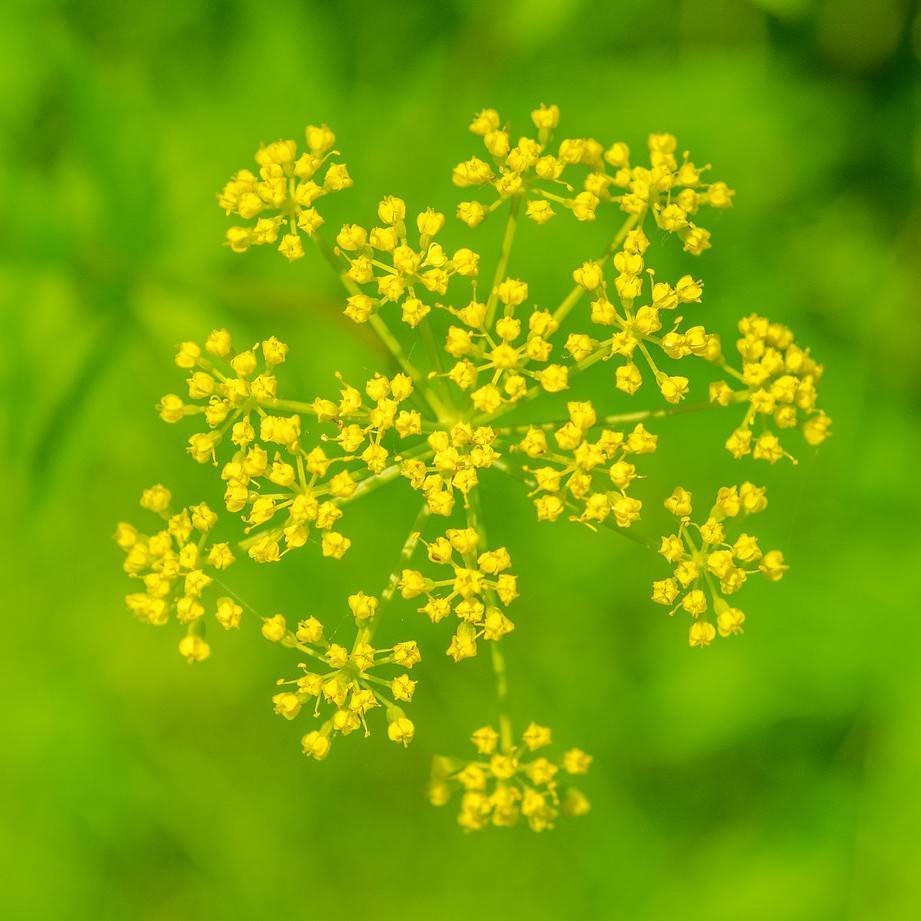
Golden Alexander
Zizia aurea
Overview
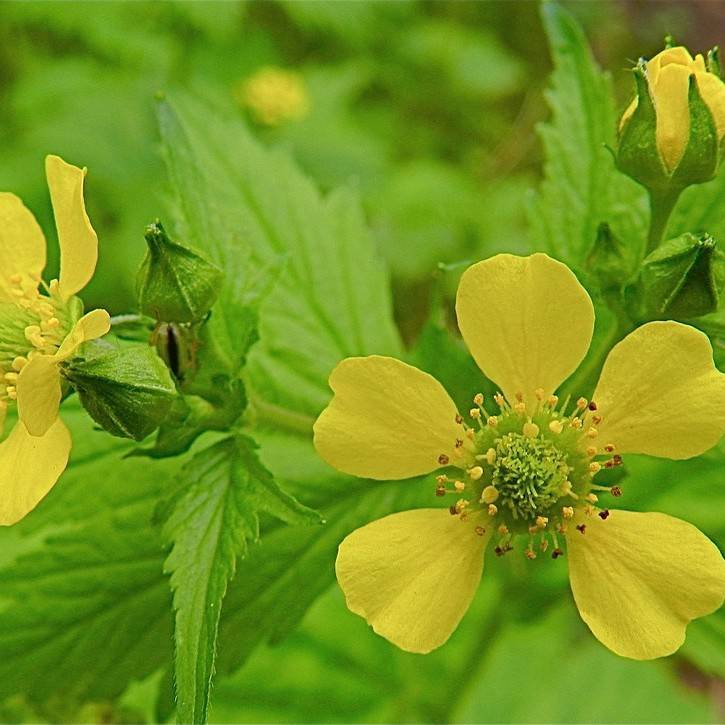
Golden Alexander is a herbaceous perennial in the carrot family, best known for its flat-topped clusters of tiny, bright yellow flowers that bloom in mid-spring to early summer. Its glossy, divided, compound foliage forms dense clumps, making it an attractive low-maintenance addition to native gardens, rain gardens, and meadow plantings. It is a critical host plant for the black swallowtail butterfly, supporting both caterpillars and a wide range of native pollinators including bees and small wasps.
Care Guide
Watering
Golden Alexander prefers consistently moist, well-drained soil, and tolerates occasional short periods of drought once established. Water regularly during the first growing season to help the root system establish, reducing frequency in subsequent years unless conditions are exceptionally dry. Avoid overwatering or letting the plant sit in saturated soil for prolonged periods, as this can cause root rot.
Light
This adaptable plant grows best in full sun to partial shade, with at least 4 hours of direct sunlight daily to encourage robust flowering. In hotter southern climates, it benefits from afternoon shade to prevent foliage scorching during the warmest summer months. It can tolerate full shade, though flowering will be sparser and growth may be leggier.
Soil
Golden Alexander thrives in neutral to slightly acidic loamy soil, but is highly adaptable to a range of soil types including clay, sandy, and rocky soils. It tolerates poorly drained, wetter soils better than many other garden perennials, making it suitable for rain garden edges and low-lying moist areas. Soil with moderate organic content supports the healthiest growth, though it does not require highly fertile conditions.
Fertilizer
Golden Alexander generally does not require regular fertilization, especially when planted in soil with moderate organic matter. If growth is slow or foliage appears pale, apply a balanced, slow-release organic fertilizer in early spring before new growth emerges. Avoid overfertilizing, as this can cause floppy, weak growth and reduce flowering.
Temperature
This hardy plant is adapted to USDA hardiness zones 3 through 9, tolerating winter lows as low as -40°F (-40°C) and summer highs up to 95°F (35°C). It goes dormant in winter, dying back to the ground, and reemerges reliably in early spring as temperatures warm. Extreme, prolonged heat above 100°F (38°C) may cause temporary foliage wilting, which typically recovers with adequate water.
Pruning
Pruning is minimal for Golden Alexander; spent flower heads can be deadheaded after blooming to prevent self-seeding if desired, though allowing some seed heads to remain supports local bird populations and naturalizes in native plantings. Cut back dead foliage to the ground in late fall or early spring before new growth emerges to keep the planting area tidy. Avoid heavy pruning during the growing season, as this can remove foliage that supports black swallowtail caterpillars.
Propagation
Golden Alexander is most easily propagated by seed, which can be sown directly outdoors in fall to allow natural cold stratification over winter, or stratified in the refrigerator for 30 days before spring sowing. It can also be propagated by root division in early spring before new growth starts, or in fall after blooming has finished, taking care to preserve as much of the fibrous root system as possible when dividing clumps. Plants grown from seed typically bloom in their second growing season.
Humidity
Golden Alexander adapts well to a wide range of humidity levels, from the dry conditions of the Great Plains to the high humidity of the southeastern United States. It has no specific humidity requirements, though extended periods of very high humidity combined with poor air circulation can increase the risk of foliar fungal diseases. Ensure plants are spaced appropriately to promote good air flow around foliage in humid climates.
Repotting
Golden Alexander is rarely grown in containers long-term, but if potted, repot every 2-3 years in early spring before new growth begins, using a well-draining potting mix with added organic matter. Choose a pot with drainage holes to prevent waterlogging, and size up only 1-2 inches larger than the previous pot to avoid excess soil that holds unnecessary moisture. If planting outdoors from a container, loosen the root ball slightly before planting at the same depth it was growing in the pot.
Uses & Symbolism
Golden Alexander is widely used in native pollinator gardens, rain gardens, and meadow restorations to support local wildlife, including bees, beneficial wasps, and black swallowtail butterflies. Its bright yellow spring blooms make it an attractive low border or filler plant in mixed perennial beds, and its tolerance for wet soil makes it ideal for stabilizing edges of ponds or streams. Historically, some Indigenous peoples used parts of the plant for medicinal purposes, though it is not commonly used in modern herbalism due to its similarity to toxic Apiaceae family members.
Diseases & Pests
Golden Alexander is relatively pest and disease resistant, though it can be susceptible to aphids and leaf miners, which cause minor cosmetic damage to foliage; these can be controlled with insecticidal soap or by leaving them for natural predators like ladybugs. Fungal diseases such as powdery mildew and leaf spot may occur in conditions of high humidity and poor air circulation, which can be prevented by spacing plants properly and avoiding overhead watering. Root rot can occur in consistently waterlogged soil, so ensure planting sites have adequate drainage.
Related plants
Other plants you might like if you grow Golden Alexander.