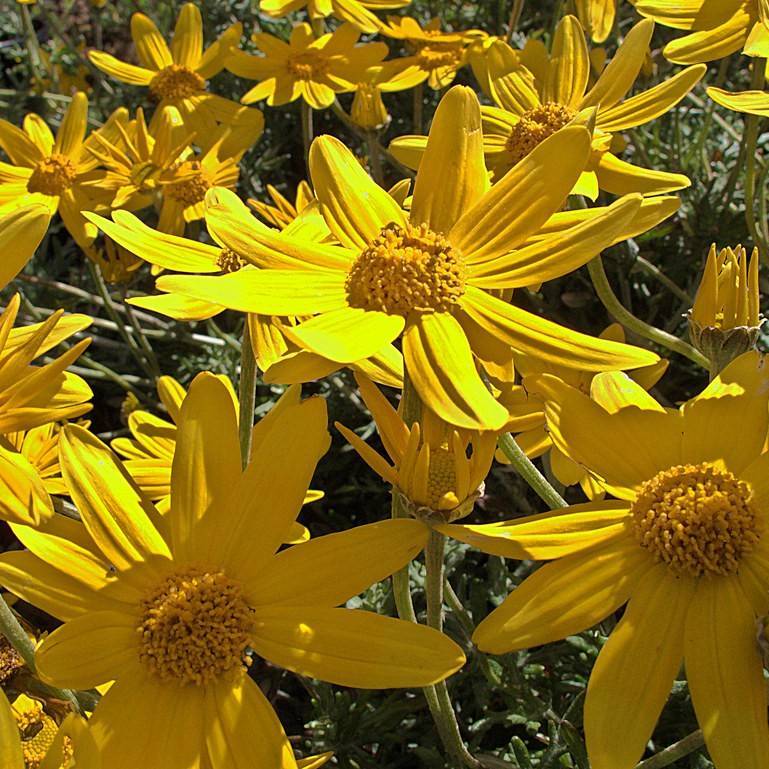
Common Woolly Sunflower
Eriophyllum lanatum
Overview
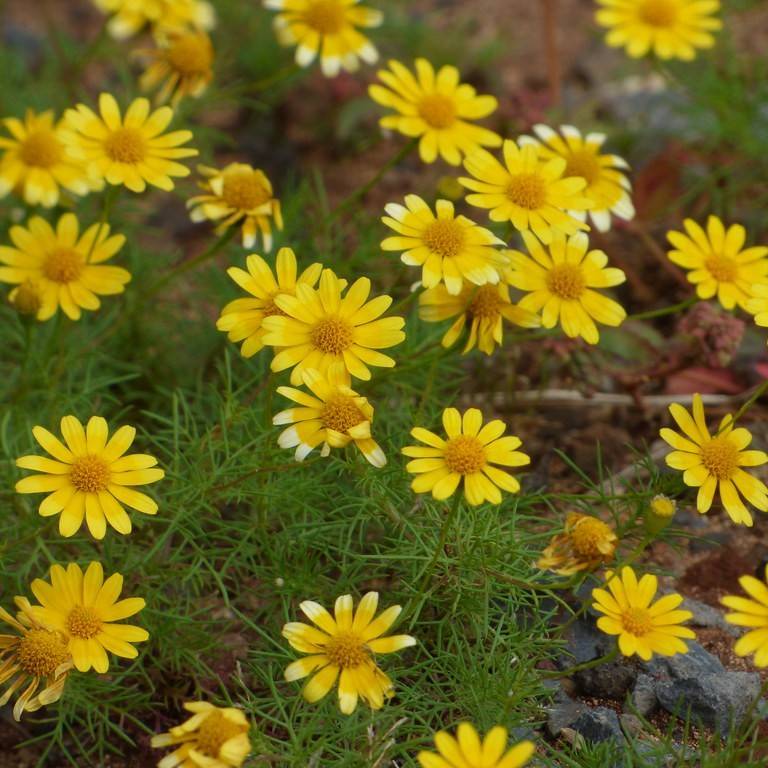
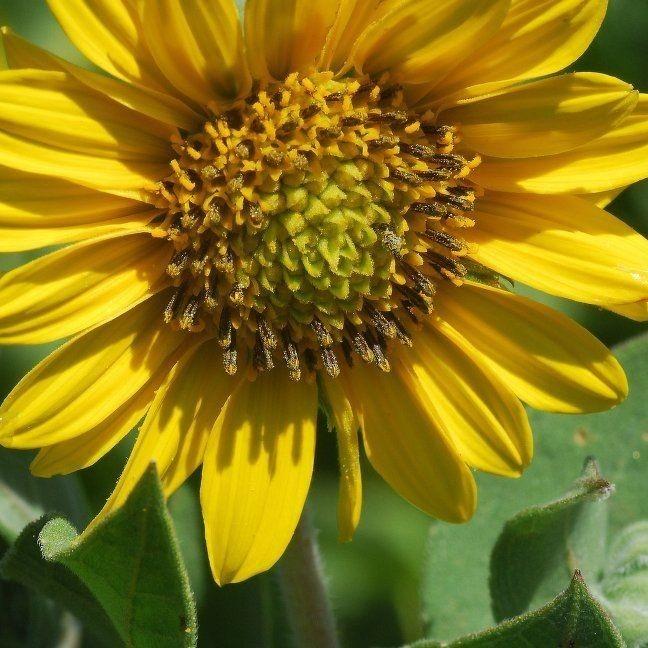
Common woolly sunflower is a hardy, clump-forming perennial named for its soft, woolly silver-gray foliage that helps it retain moisture in dry, sunny habitats. It produces masses of 1-2 inch wide, golden yellow daisy-like flowers with central yellow disks that attract a wide range of native pollinators, including bees and butterflies. Adapted to open slopes, meadows, and rocky coastal areas, it is a staple of water-wise and native plant gardens across its native range.
Care Guide
Watering
This drought-tolerant species requires infrequent, deep watering once established, only needing supplemental moisture during extended periods of extreme heat or drought. Overwatering, especially in heavy, poorly draining soils, will quickly lead to root rot and plant death. Newly planted specimens should be watered regularly for the first 1-2 growing seasons to help them develop a deep, robust root system.
Light
Common woolly sunflower thrives in full, direct sunlight, requiring a minimum of 6 hours of unobstructed sun per day to produce dense foliage and abundant blooms. It can tolerate very light, dappled shade, but plants grown in shadier conditions will become leggy, produce fewer flowers, and have a more open, unkempt growth habit.
Soil
It prefers well-draining, poor to moderately fertile sandy, loamy, or rocky soils with a neutral to slightly alkaline pH. It is highly tolerant of low-nutrient soils and will perform poorly in rich, overly fertile soils, which promote excessive leaf growth at the expense of flowering and can cause the plant to flop open. Heavy clay soils that retain water are unsuitable unless amended heavily with coarse sand or gravel to improve drainage.
Fertilizer
Common woolly sunflower rarely requires fertilization, as it is adapted to low-nutrient native soils. Over-fertilization will lead to lush, weak foliage growth, reduced flowering, and a shorter overall lifespan for the plant. If grown in extremely poor, nutrient-depleted soils, a single light application of a low-nitrogen, slow-release fertilizer can be applied in early spring before new growth emerges.
Temperature
It is hardy in USDA zones 3 to 9, tolerating winter temperatures as low as -40°F (-40°C) and summer temperatures well above 100°F (38°C) when established. It is highly tolerant of wind, salt spray, and dry, arid conditions, making it suitable for coastal and high-desert landscapes. Extreme, prolonged winter wetness is far more damaging to this species than cold temperatures.
Pruning
Light pruning or shearing after flowering has finished in late summer will encourage a compact, bushy growth habit and may trigger a small second flush of blooms in mild climates. Older, woody plants can be cut back hard to 3-4 inches above the soil line in early spring to rejuvenate growth and remove dead, unproductive stems. Spent flower heads can be left on the plant through fall to provide food for seed-eating birds if desired.
Propagation
Common woolly sunflower is most easily propagated from seed, which can be sown directly outdoors in fall or cold-stratified for 30 days and sown in early spring. It can also be propagated via softwood stem cuttings taken in late spring or early summer, rooted in well-draining medium with bottom heat for faster root development. Clumps of established plants can be divided in early spring just as new growth begins, though this species has a deep taproot that makes division more difficult than other perennials.
Humidity
This species prefers low to moderate humidity levels, and is highly tolerant of the dry air found in arid and semi-arid regions. High humidity combined with warm temperatures can increase the risk of foliar fungal diseases, so plants should be spaced appropriately to allow for good air circulation. It does not require any misting or supplemental humidity when grown in gardens or containers.
Repotting
When grown in containers, common woolly sunflower should be planted in a fast-draining cactus or succulent potting mix to prevent root rot. It only needs repotting every 2-3 years, when roots begin to grow out of the drainage holes or the plant becomes root-bound. Repotting should be done in early spring before new growth starts, and the new container should only be 1-2 inches larger than the previous one to avoid excess soil moisture retention.
Uses & Symbolism
Common woolly sunflower is a popular choice for water-wise, native plant, pollinator, and rock gardens, where its bright yellow blooms and silvery foliage provide long-lasting color with minimal maintenance. Historically, Indigenous peoples of western North America used its leaves and flowers to make poultices for treating minor skin irritations and sore throats. It is also used in roadside restoration and erosion control projects due to its deep root system and ability to thrive in poor, rocky soils.
Diseases & Pests
Common woolly sunflower is largely pest and disease resistant when grown in appropriate conditions, with overwatering and poor drainage being the primary causes of root rot, the most common issue affecting this species. Fungal leaf spots and powdery mildew can occur in areas with high humidity or poor air circulation, but these are rarely fatal and can be prevented by spacing plants properly and avoiding overhead watering. Aphids and spider mites may occasionally infest stressed plants, but they can be controlled with insecticidal soap or strong sprays of water.
Related plants
Other plants you might like if you grow Common Woolly Sunflower.