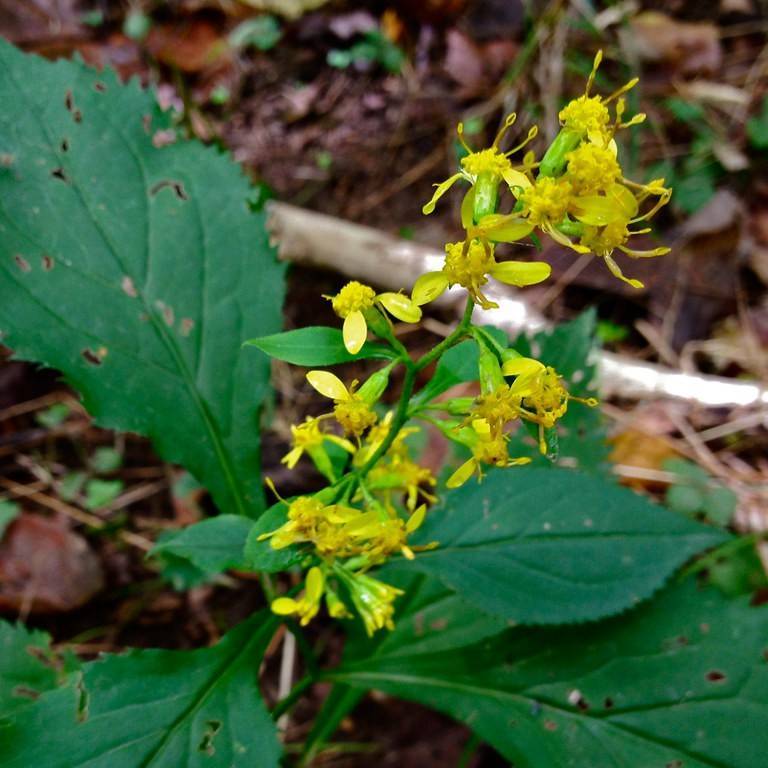
Broad Leaf Goldenrod
Solidago flexicaulis
Overview
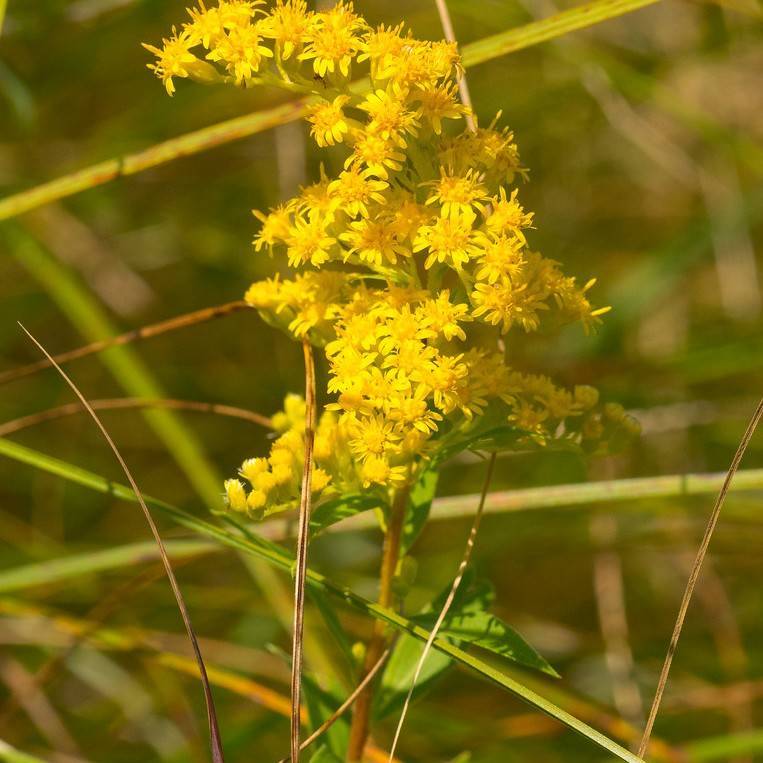
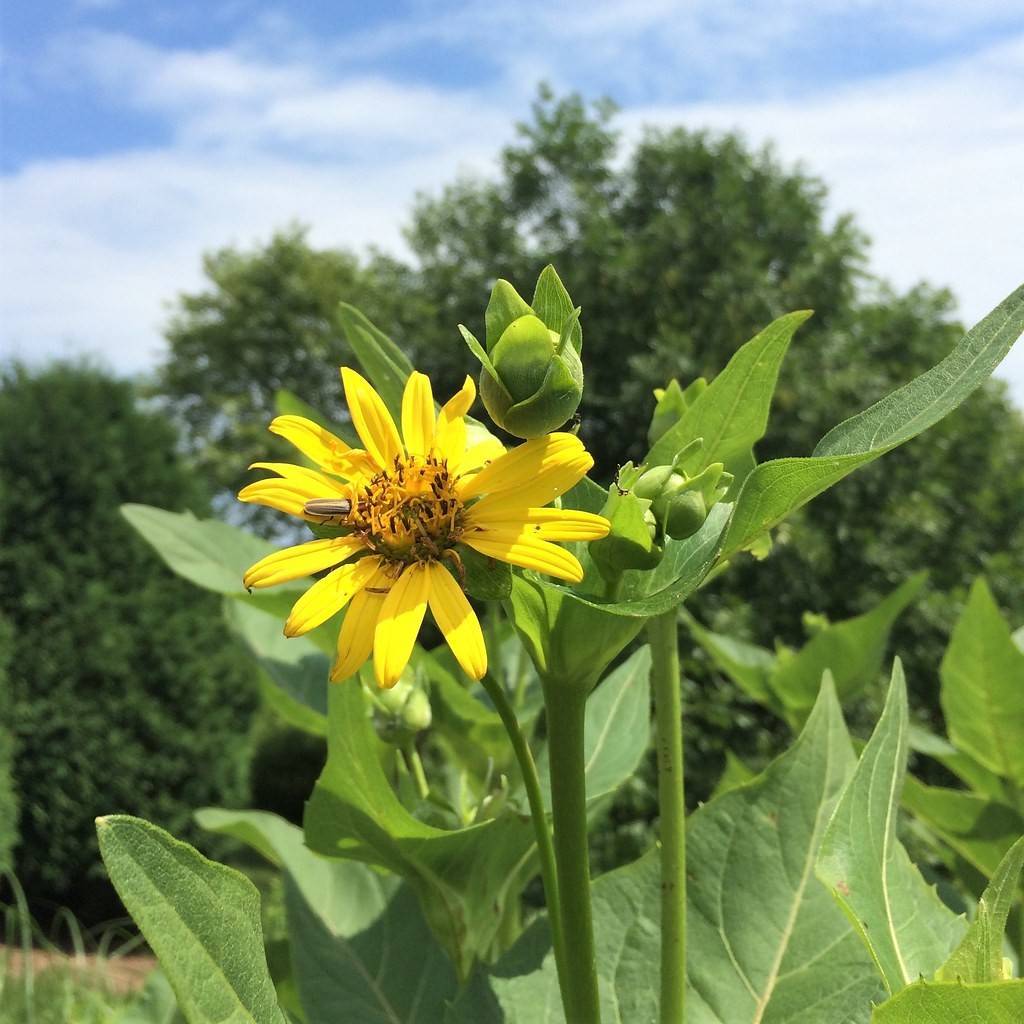
Solidago flexicaulis, commonly called broad leaf goldenrod or zigzag goldenrod, gets its alternate common name from its distinctive zigzagging stem that bends slightly at each leaf node. Unlike many narrow-leaved goldenrod species, it has broad, ovate, sharply toothed leaves that grow 3 to 6 inches long, adapted to partially shaded woodland habitats. It produces dense clusters of tiny, bright yellow composite flowers along the upper portion of stems from late summer to early fall, blooming later than most woodland wildflowers. This species is highly adaptable, spreading gently via rhizomes to form small colonies without becoming aggressively invasive in cultivated settings.
Care Guide
Watering
Broad leaf goldenrod has average water needs, requiring approximately 1 inch of water per week from rain or supplemental irrigation during the growing season. It is moderately drought tolerant once established, only needing extra water during prolonged periods of extreme heat or dryness to prevent foliage wilting. Avoid overwatering or planting in chronically saturated soil, as this can cause root rot and weaken the plant over time.
Light
This species thrives in partial shade, making it ideal for dappled woodland edges or sites that receive 2 to 6 hours of direct sunlight daily. It can tolerate full sun in cooler climates with consistent moisture, though its growth may be stiffer and more compact in these conditions. In deep, dense shade, flowering will be reduced, and stems may become leggy as they stretch toward available light.
Soil
Broad leaf goldenrod prefers well-drained, loamy or sandy soil with a slightly acidic to neutral pH between 5.5 and 7.0. It is highly adaptable to poorer, rocky, or clay soils as long as drainage is adequate, making it suitable for challenging sites where other perennials struggle. It tolerates dry, upland woodland soil conditions far better than most other goldenrod species.
Fertilizer
This low-maintenance perennial rarely needs supplemental fertilizer, especially when planted in reasonably fertile garden soil. If grown in extremely poor, nutrient-depleted soil, apply a balanced, slow-release 10-10-10 fertilizer in early spring at half the recommended label rate to support new growth. Over-fertilizing will cause excessive, floppy foliage growth and reduce flowering, so always err on the side of underfeeding.
Temperature
Broad leaf goldenrod is cold hardy in USDA zones 3 through 8, tolerating winter temperatures as low as -40°F (-40°C) without extra protection. It adapts well to summer temperatures up to 90°F (32°C), though it may benefit from extra shade and water during extended heatwaves in warmer parts of its range. It requires a period of cold winter dormancy to regrow vigorously the following spring, so it does not perform well in tropical or subtropical climates.
Pruning
Prune back spent flower stems in late fall after blooming is complete, or leave them standing through winter to provide food for seed-eating birds and shelter for beneficial insect overwintering sites. In early spring, cut back any remaining dead foliage to the ground before new green shoots emerge to encourage fresh, healthy growth. If plants become too dense or spread beyond their desired bounds, thin clumps by removing excess rhizomatous shoots in early spring.
Propagation
The easiest method of propagation is by division, which should be done in early spring just as new growth emerges or in late fall after the plant goes dormant. Dig up mature clumps, gently separate the root mass into smaller sections with at least one healthy shoot per division, and replant immediately at the same depth they were growing previously. It can also be grown from seed sown directly outdoors in fall, as the seeds require a 60-day period of cold stratification to germinate successfully the following spring.
Humidity
Broad leaf goldenrod adapts well to the average humidity levels of its native North American range, tolerating both moderately dry and humid conditions without issue. It has no special humidity requirements, making it suitable for a wide range of outdoor growing environments. Excessively high humidity combined with poor air circulation can increase the risk of foliar fungal diseases, so space plants properly to allow airflow between individual specimens.
Repotting
Broad leaf goldenrod is almost exclusively grown in outdoor garden beds rather than containers, so repotting is rarely necessary. If grown in a large pot, repot every 2 to 3 years in early spring before new growth starts, using a well-drained potting mix with added organic matter. Divide overcrowded clumps during repotting to prevent the plant from becoming root-bound and reduce the risk of stunted growth or reduced flowering.
Uses & Symbolism
Broad leaf goldenrod is a staple in native pollinator gardens, providing critical late-season nectar for bumblebees, honeybees, butterflies, and native solitary bee species when many other flowering plants have finished blooming. It is often planted in woodland gardens, shade borders, and rain gardens, where its tolerance for partial shade and adaptable soil make it a reliable low-maintenance performer. Indigenous peoples historically used various parts of the plant medicinally to treat sore throats, fevers, and urinary tract ailments, though it is not widely used in modern herbal medicine.
Diseases & Pests
Broad leaf goldenrod is relatively pest and disease resistant, though it can occasionally be affected by powdery mildew, a fungal disease that causes a white powdery coating on foliage, particularly in humid conditions with poor air circulation. Aphids and leaf beetles may feed on young foliage in spring, though infestations are rarely severe and can be controlled with a strong spray of water or insecticidal soap if necessary. Rust fungal spots may also appear on leaves in wet growing seasons, but these are mostly cosmetic and do not cause long-term harm to established healthy plants.
Related plants
Other plants you might like if you grow Broad Leaf Goldenrod.