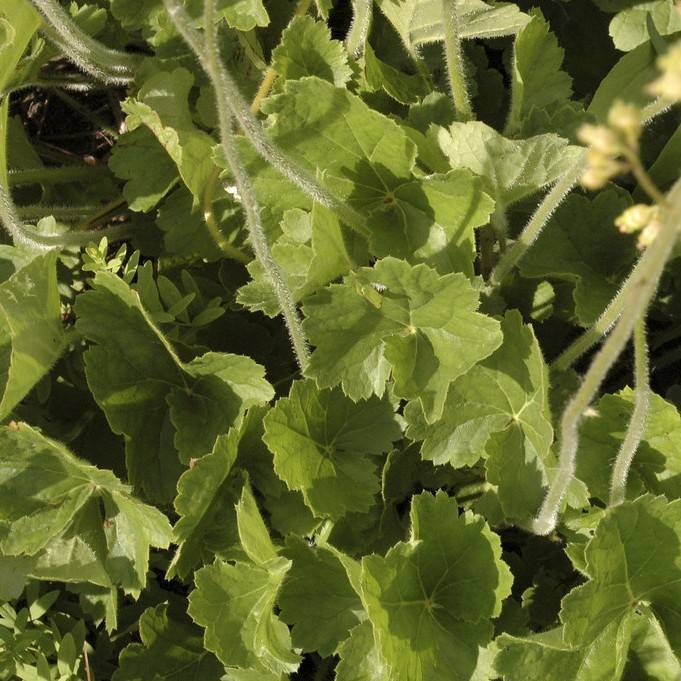
Alum Root
Heuchera americana
Overview
Alum Root, also commonly called coral bells, is a versatile herbaceous perennial prized for its decorative, evergreen to semi-evergreen foliage that comes in shades of purple, burgundy, green, silver, and bronze, often with ruffled or veined texture. In late spring to early summer, it produces tall, slender stems lined with small, bell-shaped white, pink, or red flowers that rise above the foliage clump. Native to woodland edges and rocky slopes, it is highly adaptable to a range of garden conditions and is a popular choice for borders, rock gardens, and container plantings.
Care Guide
Watering
Alum Root prefers consistently moist, well-drained soil, especially during its first growing season as it establishes a deep root system. Once established, it is moderately drought tolerant, requiring supplemental water only during extended dry periods; avoid overwatering, as soggy soil can cause root rot. Water at the base of the plant to keep foliage dry and reduce the risk of fungal diseases.
Light
It thrives in partial shade, particularly in regions with hot summers, where dappled sunlight or morning sun with afternoon shade prevents leaf scorch and maintains vibrant foliage color. In cooler climates, it can tolerate full sun, though it may require more frequent watering to prevent soil drying. Too much deep shade can lead to leggy growth and reduced foliage vibrancy.
Soil
Alum Root grows best in fertile, loamy, well-drained soil with a slightly acidic to neutral pH between 6.0 and 7.0. It adapts to poorer, rocky, or sandy soils as long as drainage is excellent, as it is intolerant of standing water around its crown. Amending heavy clay soils with compost or peat moss improves drainage and provides the organic matter this species prefers.
Fertilizer
Feed lightly in early spring with a balanced, slow-release granular fertilizer formulated for perennial plants, avoiding over-fertilization which can lead to leggy growth and reduced foliage color. Excess nitrogen can also make the plant more susceptible to pest and disease issues. Container-grown plants may benefit from a diluted liquid fertilizer application once in mid-summer, if growth appears stunted.
Temperature
It is hardy in USDA zones 4 through 9, tolerating winter temperatures as low as -30°F (-34°C) when planted in well-drained soil. In regions with severe winter freeze-thaw cycles, a light layer of mulch applied in late fall helps prevent root heave and protects the crown from temperature fluctuations. Summer temperatures above 90°F (32°C) may cause leaf scorch if the plant is exposed to full sun without adequate moisture.
Pruning
Trim back any dead, damaged, or discolored foliage in early spring before new growth emerges to keep the clump looking tidy and encourage fresh, vibrant leaf production. After flowering, you can snip off spent flower stalks at the base to redirect the plant’s energy into foliage growth, though leaving the seed heads can provide food for small birds and add winter interest. Every 3 to 4 years, thin out overcrowded clumps during division to maintain vigorous growth.
Propagation
Alum Root is most commonly propagated by division in early spring or late fall, when the plant is dormant; carefully dig up the clump, separate it into smaller sections with healthy roots and at least one growing crown, and replant immediately at the same depth as the original plant. It can also be grown from seed sown directly outdoors in fall or started indoors 8 to 10 weeks before the last frost date, though seed-grown plants may not retain the exact foliage color of the parent cultivar. Stem cuttings taken from healthy new growth in late spring can root well in moist, well-drained potting mix under high humidity.
Humidity
It adapts well to average outdoor humidity levels between 40% and 60%, which are typical of its native North American woodland habitat. High humidity combined with poor air circulation can increase the risk of fungal leaf spots, so space plants appropriately to allow airflow around foliage. Indoor-grown specimens benefit from occasional misting or a pebble tray if household humidity drops below 30% during winter heating months.
Repotting
Container-grown Alum Root should be repotted every 2 to 3 years in early spring, before new growth begins, to refresh the soil and prevent root binding. Choose a pot with drainage holes that is 1 to 2 inches larger in diameter than the current container, and use a well-draining potting mix amended with perlite or coarse sand to improve drainage. After repotting, water thoroughly and place in a partially shaded location until the plant re-establishes.
Uses & Symbolism
Alum Root is primarily used as an ornamental landscape plant, ideal for shaded borders, rock gardens, woodland plantings, groundcover, and container arrangements, where its colorful foliage provides year-round interest. Its nectar-rich flowers attract bees, butterflies, and hummingbirds, making it a popular addition to pollinator gardens. Historically, Indigenous peoples of North America used the root of the plant as an astringent to treat minor wounds, sore throats, and digestive issues, though medicinal use is not common today.
Diseases & Pests
Alum Root is relatively pest and disease resistant, but it can be susceptible to fungal issues such as powdery mildew, leaf spot, and crown rot, which occur most often in poorly drained soil or high humidity with limited air circulation. Common pests include vine weevils, which lay eggs in the soil and whose larvae feed on the plant’s roots, causing wilting and stunted growth, as well as aphids and slugs that may feed on young foliage. Proper spacing, well-drained soil, and watering at the base of the plant significantly reduce the risk of most disease and pest issues.
Related plants
Other plants you might like if you grow Alum Root.