Large Fothergilla
Fothergilla major
Overview
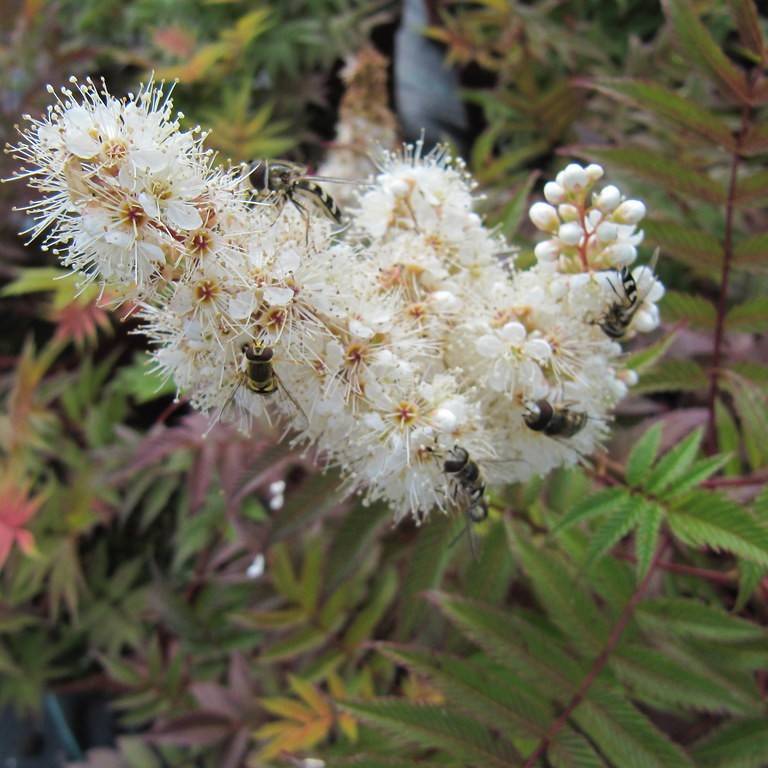
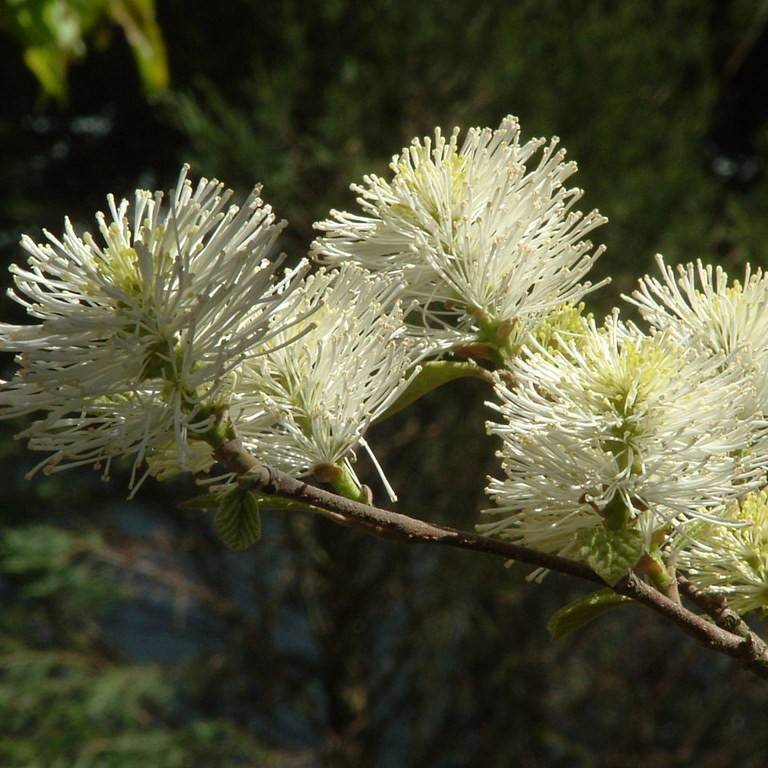
Large fothergilla is a slow-growing, rounded deciduous shrub native to woodland slopes and streambanks of the southeastern U.S. In early spring, before foliage emerges, it produces dense, bottlebrush-like spikes of creamy white, honey-scented flowers that attract pollinators including bees and butterflies. Its glossy, dark green, leathery leaves turn a striking mix of orange, red, and yellow in autumn, making it a valued multi-season ornamental for landscape plantings.
Care Guide
Watering
Water newly planted large fothergilla regularly to keep the soil consistently moist but not waterlogged for the first 2-3 years as it establishes its root system. Once mature, it is moderately drought-tolerant, though it benefits from supplemental watering during extended dry periods to prevent leaf scorch and support healthy growth. Avoid overwatering, especially in poorly drained soils, as this can lead to root rot.
Light
Large fothergilla thrives in partial shade, though it will tolerate full sun in cooler climates if provided with consistent soil moisture. Dappled sunlight under tall deciduous trees mimics its native woodland habitat and supports the most prolific flowering and vibrant fall foliage color. Too much deep shade will reduce bloom production and result in less intense autumn leaf hues.
Soil
This shrub prefers acidic, organically rich, well-drained soil with a pH between 4.5 and 6.0 for optimal growth. It will not tolerate alkaline soils, which can cause nutrient deficiencies leading to yellowing foliage and stunted growth. Amending planting sites with compost, peat moss, or pine bark fines helps improve soil structure and maintain the desired acidic pH.
Fertilizer
Fertilize large fothergilla in early spring before new growth emerges using a slow-release, acid-forming fertilizer formulated for azaleas or rhododendrons. Avoid over-fertilizing, as excess nutrients can burn the root system and reduce flowering. A 2-3 inch layer of organic mulch such as pine straw or shredded bark applied around the base each year will slowly release nutrients and preserve soil moisture without additional feeding in nutrient-rich soils.
Temperature
Large fothergilla is hardy in USDA zones 4 through 8, tolerating winter lows down to -30°F (-34°C) once established. It prefers cool, temperate climates and may struggle in regions with consistently high summer temperatures above 90°F (32°C) without adequate shade and moisture. Late spring frosts can damage emerging flower buds, so planting it in a sheltered site away from cold wind pockets is recommended in cooler zones.
Pruning
Prune large fothergilla immediately after it finishes flowering in spring to avoid removing next year’s bloom buds, which form on old wood. Remove any dead, damaged, or crossing branches to improve air circulation and maintain its natural rounded shape; heavy pruning is rarely needed as it grows slowly and maintains a neat form naturally. Avoid cutting back more than one-third of the shrub’s total growth in a single year to prevent stress.
Propagation
The most reliable method for home gardeners to propagate large fothergilla is through softwood cuttings taken in early summer, just after the current season’s growth has begun to harden slightly. Dip cut end in rooting hormone, plant in a moist, well-drained rooting medium, and keep under high humidity with indirect light until roots form, which typically takes 8-12 weeks. It can also be grown from seed, but seeds require 3-6 months of cold stratification to germinate and may take 5-7 years to reach flowering size.
Humidity
Large fothergilla prefers moderate to high humidity levels, similar to its native woodland environment, though it adapts well to average household or garden humidity levels in its hardiness zones. In arid climates, regular misting or placing a tray of water near potted specimens can help raise ambient humidity and prevent leaf edge browning. Good air circulation around the foliage reduces the risk of fungal diseases even in high-humidity conditions.
Repotting
If grown in a container, repot large fothergilla every 2-3 years in early spring before new growth emerges, using a porous, acidic potting mix formulated for ericaceous plants. Choose a pot that is 2-3 inches wider than the current root ball to accommodate slow growth, and ensure it has ample drainage holes to prevent waterlogging. Mature specimens can be top-dressed with fresh acidic compost annually instead of full repotting to replenish nutrients without disturbing the root system.
Uses & Symbolism
Large fothergilla is a popular ornamental shrub for woodland gardens, mixed borders, foundation plantings, and rain gardens, where its multi-season interest and tolerance for moist soil make it a versatile addition. Its nectar-rich spring flowers support native pollinators, and its dense, branching habit provides shelter for small birds and beneficial insects. It is also a low-maintenance alternative to non-native flowering shrubs, as it has few pest issues and does not require frequent pruning to remain attractive.
Diseases & Pests
Large fothergilla is relatively disease-resistant, though it may develop leaf spot, powdery mildew, or root rot if grown in poorly drained soil or crowded conditions with poor air circulation. Common pests include aphids and scale insects, which can be controlled with horticultural oil or insecticidal soap if infestations become severe. Chlorosis, or yellowing of the leaves, is a common issue in alkaline soils, which can be corrected by amending the soil to lower pH and applying chelated iron.
Related plants
Other plants you might like if you grow Large Fothergilla.