Fringed Rosemallow
Hibiscus schizopetalus
Overview
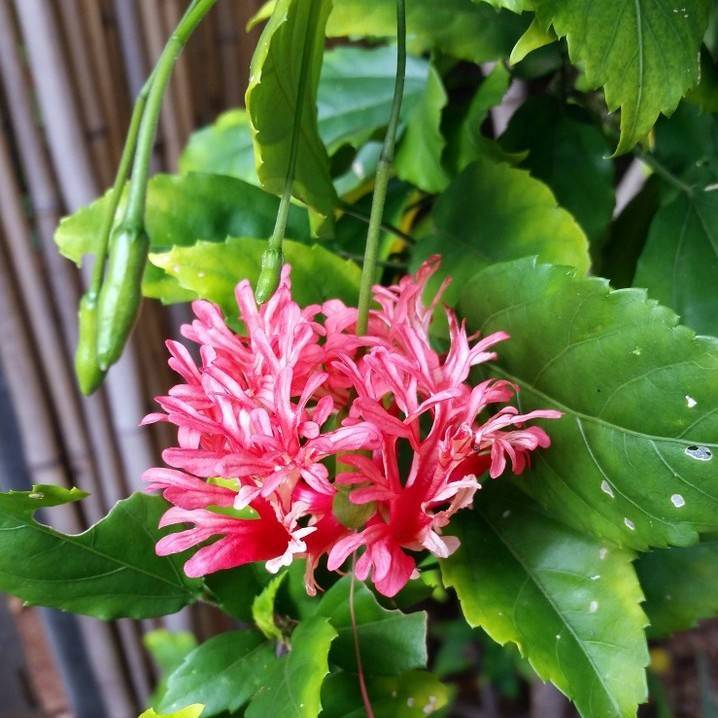
Fringed rosemallow, also called coral hibiscus or Japanese lantern, is a woody evergreen shrub recognizable by its deeply dissected, fringed petals that curve backward on pendulous, bell-shaped flowers. Its blooms, which appear nearly year-round in warm regions, hang down on long stalks, with prominent protruding stamens that extend far below the petals. In its native East African habitat, it grows in moist, sunny forest edges and riparian zones, and it is widely cultivated in tropical and subtropical gardens globally, often trained as an espalier or kept as a container specimen in cooler climates.
Care Guide
Watering
Water fringed rosemallow regularly to keep soil consistently moist but not waterlogged, especially during active growth in spring and summer. Reduce watering frequency in cooler winter months, allowing the top 1–2 inches of soil to dry out between waterings to prevent root rot. Avoid overhead watering to reduce risk of fungal leaf diseases, aiming water directly at the base of the plant.
Light
Plant in full sun, meaning at least 6 hours of direct sunlight daily, to promote abundant flowering and strong, compact growth. It can tolerate partial shade, but too little light will lead to sparse blooms and leggy, weak stems. For indoor container specimens, place in a south or west-facing window to provide sufficient light levels.
Soil
Grow in well-draining, loamy soil with a slightly acidic to neutral pH range of 6.0 to 7.0 for optimal health. Amend heavy clay soils with compost, peat moss, or perlite to improve drainage, as soggy soil will quickly damage the plant’s root system. For potted specimens, use a high-quality, peat-free potting mix formulated for flowering tropical plants.
Fertilizer
Feed every 2–3 weeks during the active growing season (spring through fall) with a balanced, water-soluble fertilizer formulated for flowering plants, with an NPK ratio near 10-10-10. Reduce fertilizer applications to once every 6–8 weeks in winter when growth slows. Avoid over-fertilizing with high-nitrogen formulas, as this will encourage leaf growth at the expense of blooms.
Temperature
Thrives in warm temperatures between 65–85°F (18–29°C), and is highly sensitive to frost and freezing conditions, which will kill above-ground growth. If temperatures drop below 50°F (10°C), potted specimens should be moved indoors to a protected location. Established outdoor plants in mild winter zones may die back to the ground after light frost but often regrow from roots in spring.
Pruning
Prune in late winter or early spring before new growth emerges to shape the plant, remove dead or damaged wood, and encourage bushier, more floriferous growth. You can cut back up to one-third of the plant’s total height each year to control size, especially for container specimens. Regularly deadhead spent blooms throughout the flowering season to stimulate continuous new flower production.
Propagation
The most reliable propagation method is softwood stem cuttings taken in spring or early summer, from healthy, non-flowering new growth. Dip cut ends in rooting hormone, place in moist, well-draining propagation medium, and keep in warm, humid conditions with indirect light until roots develop in 4–6 weeks. It can also be grown from seed, though seed-grown plants may not retain the exact flower characteristics of the parent plant.
Humidity
Prefers moderate to high humidity levels between 50–70% to support healthy foliage and flowering, similar to its native tropical habitat. In dry indoor environments, mist the plant regularly, place a pebble tray filled with water beneath the pot, or use a humidifier to boost ambient humidity. Low humidity can cause leaf browning at the edges and reduced flower production.
Repotting
Repot container-grown fringed rosemallow every 1–2 years in early spring, before new growth begins, moving to a pot one size larger when roots start growing through the drainage holes. Ensure the new pot has ample drainage holes to prevent water buildup, and refresh the potting mix at repotting time to replenish nutrients. Mature, large specimens can be top-dressed with fresh compost annually instead of full repotting to reduce root disturbance.
Uses & Symbolism
Fringed rosemallow is primarily grown as an ornamental landscape plant in tropical and subtropical gardens, where it is used as a specimen shrub, hedge, or trained as an espalier against walls and fences. It is also a popular container plant for patios, conservatories, and indoor spaces in cooler climates, prized for its unusual, long-blooming distinctive flowers. In its native range, parts of the plant are occasionally used in traditional folk medicine to treat minor ailments, and its flowers attract pollinators including hummingbirds, bees, and butterflies to gardens.
Diseases & Pests
The most common pests affecting fringed rosemallow are aphids, whiteflies, spider mites, and mealybugs, which feed on sap and can cause leaf yellowing, stunted growth, and sooty mold growth on honeydew secretions. Fungal diseases including powdery mildew, leaf spot, and root rot can occur in conditions of poor drainage, high humidity, or poor air circulation. Regular inspection, proper spacing to promote airflow, and avoiding overwatering help prevent most pest and disease issues, with insecticidal soap or neem oil effective for treating mild infestations.
Related plants
Other plants you might like if you grow Fringed Rosemallow.