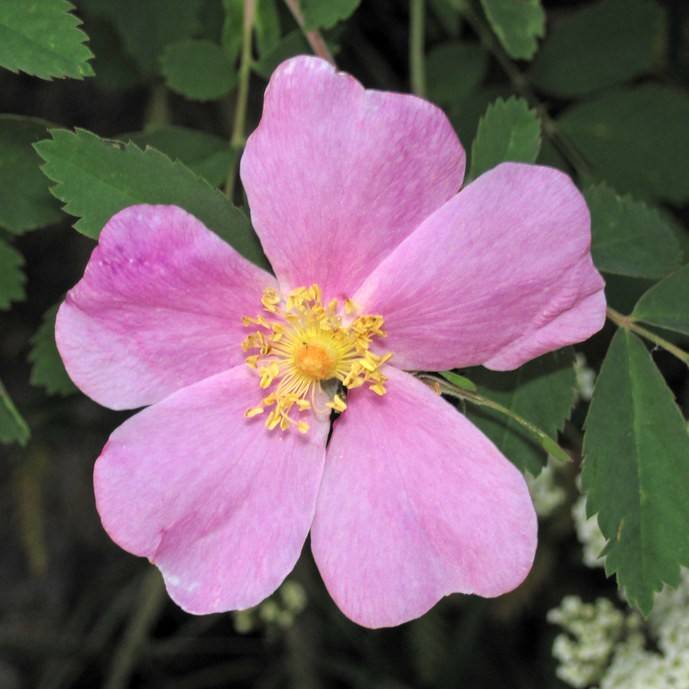
Common Wild Rose
Rosa canina
Overview
The common wild rose, also called dog rose, is a sprawling, thorny shrub that grows in hedgerows, woodlands, and grassland edges across its native range. It produces delicate five-petaled pale pink or white blooms from late spring to mid-summer, which attract pollinators like bees and butterflies. After flowering, it develops glossy, round red rose hips packed with vitamin C, which are a valuable food source for birds and small mammals through cold months.
Care Guide
Watering
Water young common wild rose shrubs regularly during their first growing season to establish deep root systems, keeping soil consistently moist but not waterlogged. Mature plants are highly drought-tolerant, only needing supplemental water during extended periods of extreme heat or dryness. Avoid overhead watering to reduce the risk of fungal diseases on foliage.
Light
Common wild rose thrives in full sun, which supports the most abundant flower and hip production. It can tolerate partial shade, but flowering will be reduced and growth may become sparse and leggy. Plant it in a location that receives at least 6 hours of direct sunlight daily for best performance.
Soil
This adaptable shrub grows well in most well-drained soil types, including loam, sand, and even heavy clay, as long as standing water does not accumulate. It prefers a slightly acidic to neutral soil pH between 5.5 and 7.0, but can tolerate mildly alkaline conditions. Prior to planting, amend poor soil with organic matter like compost to improve structure and nutrient content.
Fertilizer
Common wild rose has low nutrient needs and usually thrives without regular fertilization if planted in moderately fertile soil. In very poor soil, apply a balanced, slow-release granular fertilizer in early spring just before new growth emerges. Avoid high-nitrogen fertilizers, as these encourage excessive leaf growth at the expense of flowers and hips.
Temperature
It is extremely cold-hardy, tolerating winter temperatures as low as -40°F (-40°C) in USDA hardiness zones 3 through 9. It can adapt to a wide range of summer temperatures, but extreme heat above 100°F (38°C) may cause temporary wilting if plants are not established. A period of winter cold dormancy is required for healthy spring regrowth.
Pruning
Prune common wild rose in late winter or early spring while the plant is still dormant, removing dead, diseased, or crossing branches to improve air circulation and shape the shrub. Cut back up to one-third of older, woody stems each year to encourage vigorous new growth, which produces more flowers. You can also trim back sprawling canes to keep the plant contained if it is growing in a smaller garden space.
Propagation
The easiest method of propagation is by taking hardwood cuttings from mature, dormant stems in late autumn or winter, planting them in well-drained medium until roots develop the following spring. It can also be grown from seed, but seeds require a period of cold stratification (2-3 months at 32-40°F / 0-4°C) to break dormancy before germination. Suckers that grow from the base of established plants can be dug up and transplanted in early spring for immediate new plants.
Humidity
Common wild rose adapts well to a wide range of humidity levels, thriving in both dry and moderately humid climates. High humidity paired with poor air circulation can increase the risk of fungal diseases like powdery mildew and black spot on foliage. If growing in a humid area, space plants adequately to allow air flow around leaves and stems.
Repotting
Common wild rose is rarely grown in containers long-term, as it develops an extensive root system and prefers to grow directly in the ground. If you do grow it in a large pot, repot every 2-3 years in early spring before new growth starts, using a high-quality, well-drained potting mix. Choose a pot at least 2 inches larger in diameter than the current one to accommodate root growth, and trim any damaged or circling roots during repotting.
Uses & Symbolism
Common wild rose hips are widely used to make jams, jellies, syrups, teas, and herbal supplements, valued for their exceptionally high vitamin C, antioxidant, and mineral content. The shrub is planted in wildlife gardens and native hedgerows to provide shelter and food for pollinators, birds, and small mammals, and it is also used for erosion control on slopes. Its fragrant flowers are sometimes used in potpourris, cosmetic products, and traditional herbal remedies for mild inflammatory and immune support.
Diseases & Pests
Common wild rose is susceptible to common rose diseases including black spot, powdery mildew, and rust, which are most prevalent in humid conditions with poor air circulation. Common pests include aphids, rose slugs, Japanese beetles, and spider mites, which feed on foliage and can cause leaf drop if infestations are severe. Good cultural practices like adequate spacing, avoiding overhead watering, and removing fallen foliage in autumn significantly reduce the risk of most pest and disease issues.
Related plants
Other plants you might like if you grow Common Wild Rose.