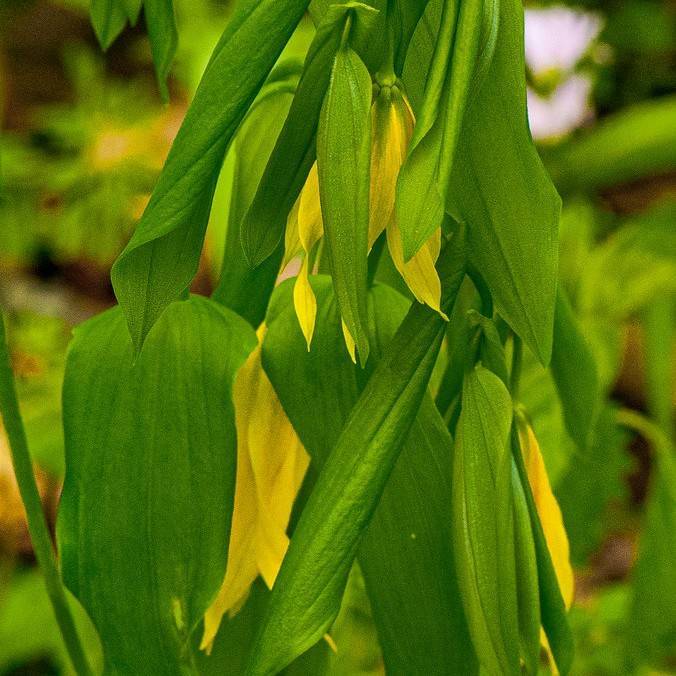
Large Flowered Bellwort
Uvularia grandiflora
Overview
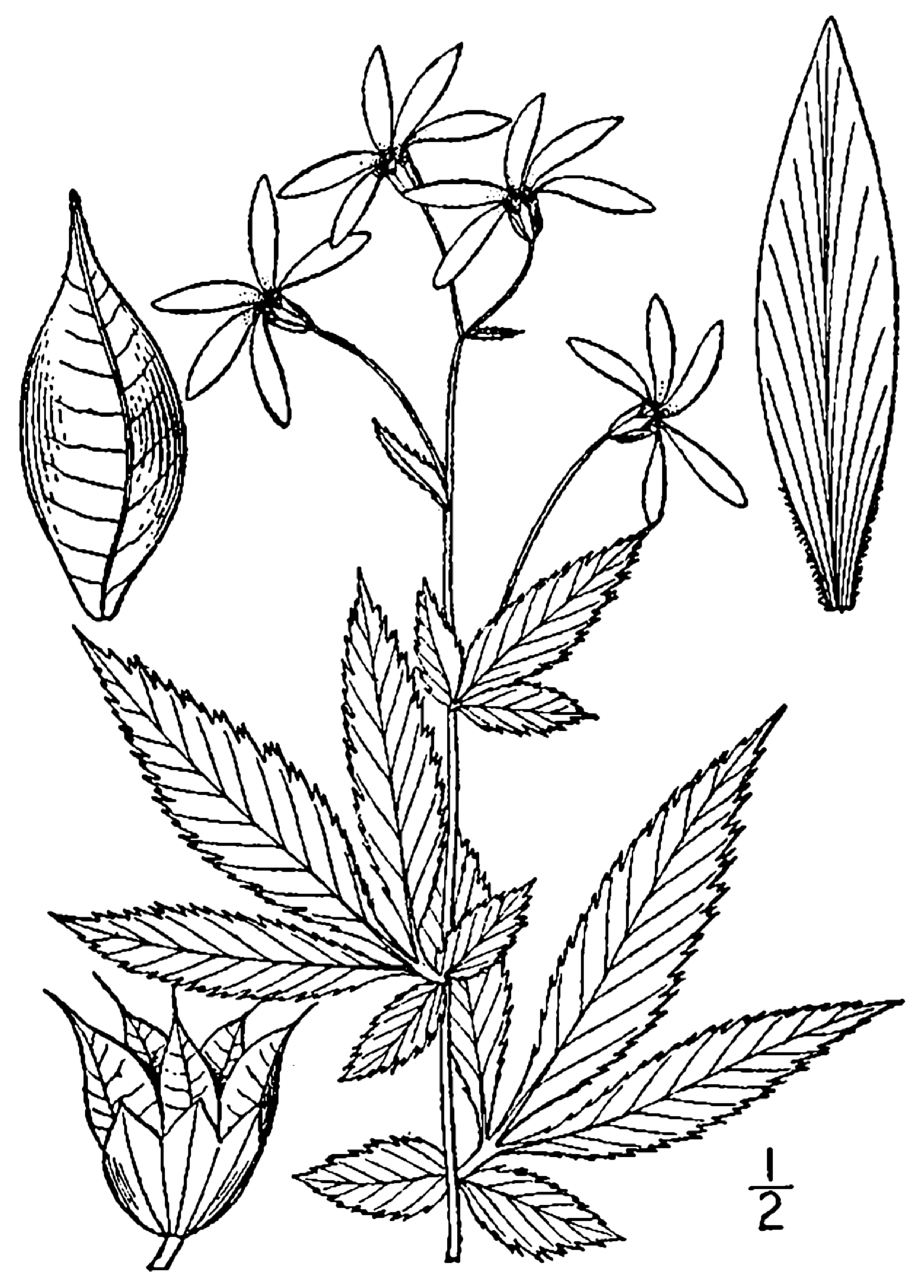
Large Flowered Bellwort is a herbaceous perennial native to rich deciduous woodlands of eastern North America, known for its graceful, arching stems and soft, parallel-veined oval leaves. In mid to late spring, it produces clusters of bright yellow, downward-hanging bell-shaped flowers with twisted petals that emit a subtle, sweet fragrance. After flowering, it forms triangular seed pods that split open when ripe to disperse small, elaiosome-coated seeds attractive to ants. This low-growing plant spreads slowly via rhizomes to form dense, non-invasive clumps, making it a low-maintenance addition to naturalized landscapes.
Care Guide
Watering
Water Large Flowered Bellwort regularly to keep the soil consistently moist but not waterlogged, especially during active growth in spring and early summer. Reduce watering frequency in late summer and fall once the foliage begins to die back naturally, allowing the top 1 inch of soil to dry out between sessions. Avoid overwatering in dormant winter months, as soggy soil can cause rhizome rot.
Light
Thrives best in partial to full shade, mimicking its native woodland understory habitat where it receives dappled sunlight through tree canopies. It can tolerate short periods of morning sun, but prolonged direct midday or afternoon sun will scorch its delicate leaves and cause wilting. In areas with very cool summers, it can handle slightly brighter light as long as soil moisture is maintained.
Soil
Requires rich, well-drained, loamy soil with a high organic matter content and a slightly acidic to neutral pH between 5.5 and 7.0. Amend heavy clay or sandy soils with compost, leaf mold, or well-rotted manure before planting to improve nutrient content and drainage. A thick layer of organic mulch applied annually around the base will help retain moisture, regulate soil temperature, and support the slow breakdown of organic matter the plant prefers.
Fertilizer
Fertilize lightly in early spring just as new growth emerges, using a balanced, slow-release organic fertilizer or a top dressing of well-rotted compost. Avoid high-nitrogen synthetic fertilizers, as these can promote excessive, weak foliage growth at the expense of flower production. No additional fertilization is needed during the growing season if the soil is already rich in organic material.
Temperature
Adaptable to USDA hardiness zones 3 through 8, tolerating winter temperatures as low as -40°F (-40°C) when its rhizomes are insulated by a layer of mulch or leaf litter. It prefers cool spring temperatures between 50°F and 70°F (10°C and 21°C) for optimal growth and flowering, and will go dormant earlier in the season in areas with prolonged hot summer temperatures above 85°F (29°C). Frost and light freezes in early spring will not damage new growth, as the plant is adapted to variable spring conditions in its native range.
Pruning
Pruning is minimal for Large Flowered Bellwort; simply snip off spent flower stalks after blooming if you wish to prevent self-seeding, or leave them in place to allow seed development for natural propagation. Once the foliage yellows and dies back in late summer or early fall, you can cut back the stems to ground level to keep the planting area tidy. Avoid cutting back green foliage before it has fully yellowed, as the leaves are still photosynthesizing and storing energy in the rhizomes for the next year’s growth.
Propagation
The most reliable propagation method is division of established clumps in early fall, once the foliage has died back, or in very early spring before new growth emerges. Carefully dig up the rhizome mass, separate it into sections with at least 2 to 3 healthy growth buds per section, and replant immediately at the same depth as the original plant. It can also be grown from seed sown fresh in fall, though seeds require a 3-month period of cold stratification to germinate, and seed-grown plants will take 2 to 3 years to reach flowering maturity.
Humidity
Prefers moderate to high humidity levels between 40% and 60%, typical of its native woodland habitat, and will struggle in very dry, arid conditions. If grown in a dry garden setting, misting is not necessary, but regular watering and a layer of organic mulch will help maintain consistent ambient humidity around the plant. It can tolerate average household humidity if grown as a potted houseplant, though it will perform better if placed near a humidifier or pebble tray during dry winter months.
Repotting
If grown in containers, repot every 2 to 3 years in early spring before new growth begins, using a rich, peat-free potting mix amended with compost or leaf mold. Choose a pot that is 1 to 2 inches wider than the current root ball to accommodate slow rhizome spread, and ensure it has adequate drainage holes to prevent waterlogging. After repotting, water thoroughly and place the pot in a shaded location until new growth is established.
Uses & Symbolism
Large Flowered Bellwort is a popular choice for shaded native plant gardens, woodland borders, and pollinator gardens, as its early spring flowers provide nectar for native bumblebees, mason bees, and specialized mining bees. Historically, Indigenous peoples of North America used the plant’s roots to make topical remedies for sore muscles and throat ailments, though it is not commonly used in modern herbalism. Its graceful, arching foliage and delicate blooms also make it an attractive cut flower for small, informal spring arrangements.
Diseases & Pests
Large Flowered Bellwort is relatively pest and disease resistant, though it can be susceptible to fungal leaf spots and powdery mildew in overly humid, poorly ventilated conditions, which can be prevented by spacing plants adequately to encourage air flow. Slugs and snails may occasionally feed on young, tender new growth in spring, especially in very moist, shaded areas, and can be controlled with handpicking, organic slug baits, or copper barriers. Root rot can occur in heavy, poorly drained soils that stay waterlogged for extended periods, so ensuring proper soil drainage is critical to prevent this issue.
Related plants
Other plants you might like if you grow Large Flowered Bellwort.