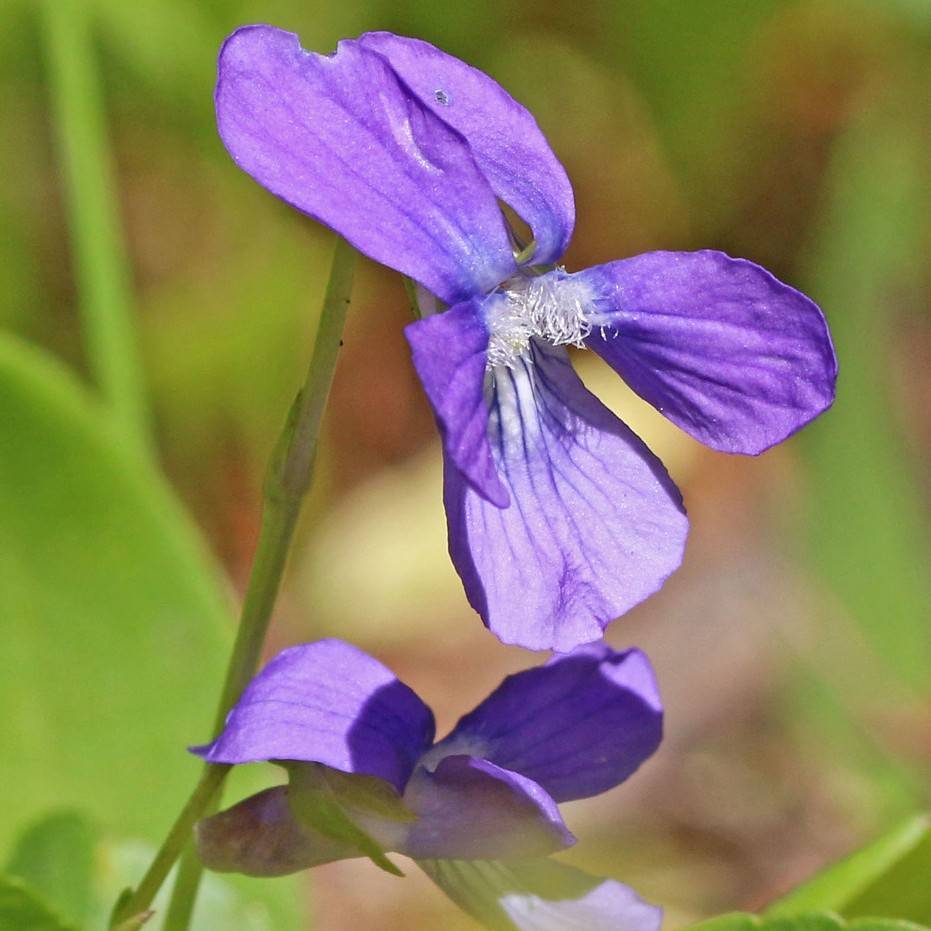
Early Blue Violet
Viola adunca
Overview
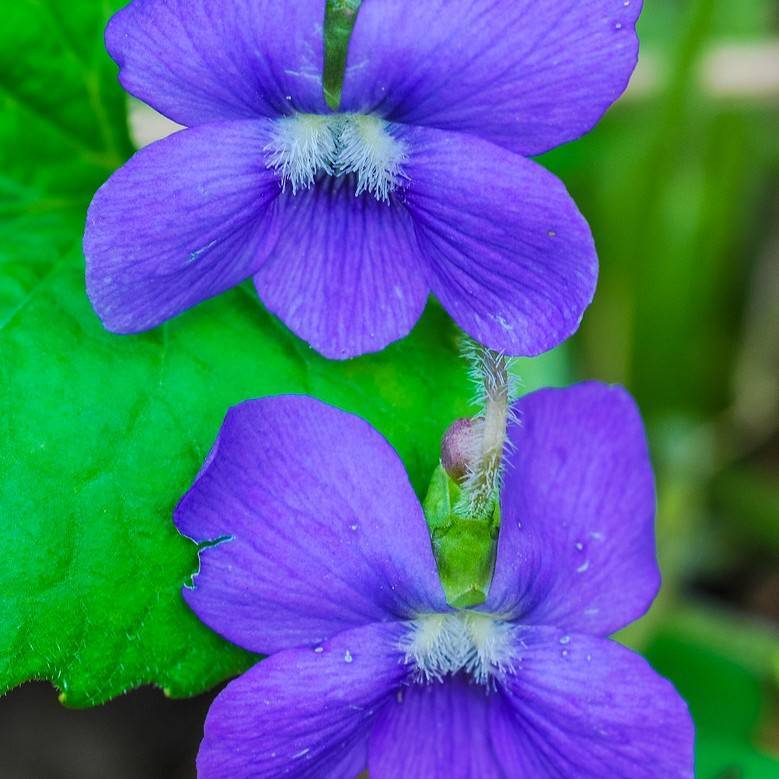
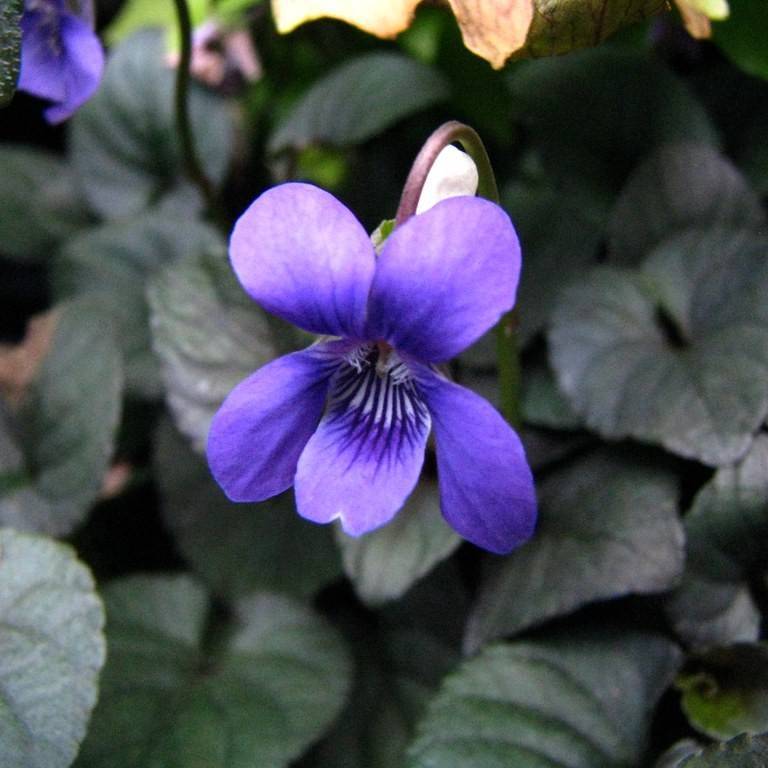
Early Blue Violet, also called hookedspur violet, is a beloved wildflower valued for its dainty, sweet-scented early spring blooms that emerge before many other native perennials. It forms low, spreading mats of heart-shaped, fuzzy green foliage, with small purple-blue flowers marked by a distinctive hooked spur at the back of the bloom. Adaptable to a wide range of conditions, it is a popular choice for native plant gardens, ground cover, and pollinator habitats, providing an early food source for bees and fritillary butterfly caterpillars.
Care Guide
Watering
Water Early Blue Violet regularly to keep the soil consistently moist but not waterlogged, especially during hot, dry summer months. Reduce watering frequency in fall and winter when the plant goes dormant, allowing the top inch of soil to dry out between waterings to prevent root rot. Avoid overhead watering if possible to minimize fungal growth on foliage.
Light
Thrives in partial shade, such as dappled sunlight under deciduous trees, but can tolerate full sun in cooler climates with consistent moisture. In regions with hot summers, provide protection from intense midday sun to prevent leaf scorch and wilting. Too much deep shade will reduce flowering production.
Soil
Prefers rich, well-draining loamy soil with a slightly acidic to neutral pH between 6.0 and 7.0. It can adapt to sandy or clay soils if amended with organic matter like compost to improve drainage and nutrient content. Avoid heavy, waterlogged soils that can cause root rot.
Fertilizer
Fertilize lightly in early spring just as new growth emerges, using a balanced, slow-release organic fertilizer or a diluted liquid all-purpose fertilizer. Avoid over-fertilizing, as this will encourage excessive foliage growth at the expense of blooms. No additional fertilization is needed for the rest of the growing season, especially if planted in organically rich soil.
Temperature
Hardy in USDA zones 3 through 8, tolerating winter temperatures as low as -40°F (-40°C) when dormant. It prefers cool spring temperatures between 50-70°F (10-21°C) for optimal flowering, and will go semi-dormant in extended periods of summer heat above 85°F (29°C). A layer of mulch in winter helps protect root systems in colder zones.
Pruning
Pruning is rarely required for Early Blue Violet, but you can trim back spent flower stalks after blooming to encourage a tidier appearance and prevent excessive self-seeding if desired. If foliage becomes yellow or ragged in mid-summer, cut back the entire plant to 1-2 inches above the soil line to promote fresh new growth for the fall. Remove any dead or diseased foliage as it appears to keep the plant healthy.
Propagation
Easiest to propagate by division in early spring or fall, simply digging up established clumps and separating them into smaller sections with intact roots before replanting. It also self-seeds readily in ideal growing conditions, with volunteer seedlings easily transplanted to new locations in spring. Propagation from seed is possible, but seeds require a 30-90 day cold stratification period to germinate successfully.
Humidity
Adaptable to average outdoor humidity levels between 40-70%, requiring no special humidity adjustments when grown in its native range. In very dry climates, occasional misting or a layer of mulch around the base of the plant helps retain soil moisture and maintain adequate ambient humidity around the foliage. High humidity combined with poor air circulation can increase the risk of fungal diseases, so ensure plants have adequate space between them for airflow.
Repotting
When grown in containers, repot Early Blue Violet every 1-2 years in early spring, moving to a pot one size larger if the plant has outgrown its current container. Use a well-draining potting mix amended with compost, and ensure the pot has drainage holes to prevent waterlogging. If the plant becomes root-bound, gently loosen the root ball before repotting to encourage new root growth.
Uses & Symbolism
Early Blue Violet is widely used in native pollinator gardens, woodland gardens, and as a low-growing ground cover under trees or along garden edges, where it spreads gently without being aggressive. Its edible flowers and young leaves are rich in vitamin C, often used fresh in salads, as a garnish, or infused into syrups, teas, and jellies. It also has a history of traditional medicinal use by Indigenous peoples for treating minor respiratory ailments and skin irritations.
Diseases & Pests
The most common pests affecting Early Blue Violet are aphids, slugs, and snails, which feed on tender young foliage and flowers; these can be controlled with insecticidal soap for aphids, or organic slug baits and barriers for slugs and snails. Fungal diseases such as powdery mildew, leaf spot, and root rot can occur in overly wet conditions with poor air circulation, which can be prevented by avoiding overhead watering, spacing plants for good airflow, and ensuring well-draining soil. In hot, dry conditions, spider mites may occasionally infest foliage, which can be treated with neem oil or regular rinsing with water.
Related plants
Other plants you might like if you grow Early Blue Violet.