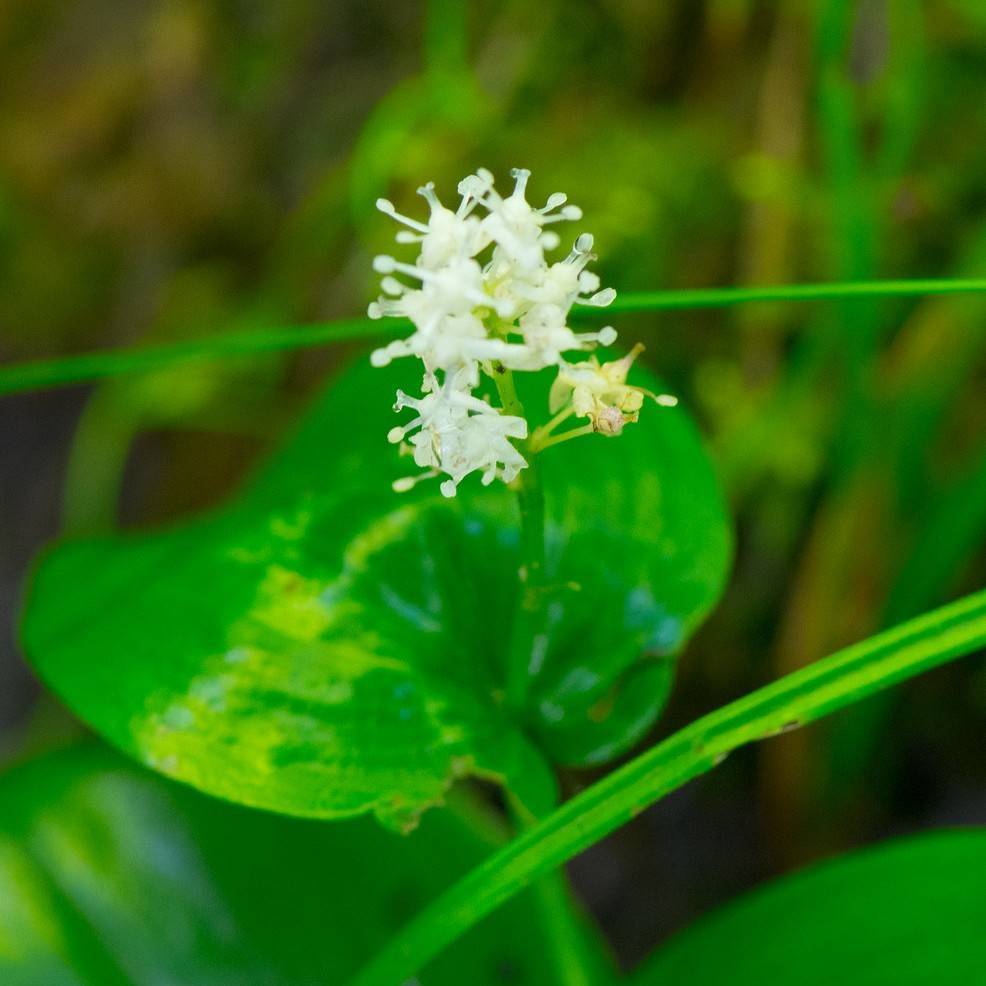
Canada Mayflower
Maianthemum canadense
Overview
Canada Mayflower is a creeping, mat-forming perennial native to North American forest understories, recognizable by its paired, oval glossy green leaves and clusters of tiny, star-shaped white flowers that bloom in mid to late spring. After flowering, it produces small, round bright red berries that persist into late summer and fall, providing food for native birds and small mammals. It spreads slowly via shallow rhizomes, forming dense, low-growing ground covers that suppress weeds and thrive in undisturbed shaded sites, making it a popular choice for native plant and woodland gardens. It is extremely cold-hardy, surviving harsh northern winters and thriving in regions where many other ground covers struggle with cool temperatures and low light.
Care Guide
Watering
Canada Mayflower prefers consistently moist, well-drained soil and should be watered regularly to prevent the root zone from drying out completely, especially during prolonged dry spells in summer. Avoid overwatering or allowing standing water around the roots, as this can cause rhizome rot in poorly draining sites. Once established, it has moderate drought tolerance, but will grow more vigorously and produce more blooms and berries with consistent moisture.
Light
This species thrives in partial to full shade, mimicking its native forest understory habitat where it receives dappled sunlight or only indirect light throughout the day. It can tolerate a small amount of early morning direct sun, but prolonged exposure to midday or afternoon sun will scorch its leaves and stunt growth. In deeper full shade, it will still spread reliably, though it may produce fewer flowers and berries than plants receiving dappled light.
Soil
Canada Mayflower grows best in rich, humus-filled, slightly acidic to neutral soil with a pH between 5.0 and 7.0, high in organic matter to replicate its natural woodland growing environment. It requires well-drained soil to prevent root rot, though it can tolerate occasional short periods of wet soil in spring. Amending planting sites with compost, leaf mold, or well-rotted pine bark will improve soil structure and nutrient content to support healthy growth.
Fertilizer
As a native woodland plant adapted to low-nutrient soils, Canada Mayflower rarely requires regular fertilization if planted in soil amended with organic matter. If growth is stunted or leaves appear pale, a light application of balanced, slow-release organic fertilizer can be applied in early spring before new growth emerges. Avoid high-nitrogen synthetic fertilizers, as these can encourage excessive foliage growth at the expense of flowers and berries, and may damage the shallow rhizomes.
Temperature
Canada Mayflower is extremely cold-hardy, suitable for USDA hardiness zones 2 through 7, and can survive winter temperatures as low as -50°F (-46°C) with a protective layer of leaf litter or snow cover. It prefers cool summer temperatures between 60°F and 75°F (15°C to 24°C), and will struggle in regions where summer temperatures regularly exceed 85°F (29°C) for extended periods. In warmer parts of its range, it benefits from deeper shade and extra mulch to keep the root zone cool.
Pruning
Pruning is rarely required for Canada Mayflower, as it maintains a low, tidy growth habit naturally, but any yellowed or damaged foliage can be trimmed back in early spring before new growth emerges to keep the planting looking neat. If it spreads beyond its desired planting area, rhizomes can be dug up and divided or removed in late fall or early spring to control its spread. Avoid cutting back foliage in late summer or fall, as the leaves and berries provide food for wildlife and the plant stores energy in its foliage for winter dormancy.
Propagation
The most reliable method of propagation is by division of established rhizome clumps, done in late fall after the plant goes dormant, or early spring before new foliage emerges; simply dig up a section of the mat, separate rhizome segments with at least one growing point, and replant at the same depth in prepared soil. It can also be grown from seed, but seeds require a 3-4 month period of cold stratification to germinate, and plants grown from seed will take 2-3 years to reach maturity and produce flowers. Vegetative propagation by rhizome division produces mature plants much faster, and is the preferred method for home gardeners.
Humidity
Canada Mayflower prefers moderate to high humidity levels between 40% and 70%, typical of its native forest understory habitat, and will struggle in very dry, low-humidity environments. In drier regions or during periods of drought, misting or placing a layer of organic mulch around the base of the plant will help retain soil moisture and increase local humidity around the foliage. It does not tolerate prolonged dry air, so avoid planting it near heat sources or in exposed, windy sites that will dry out the foliage quickly.
Repotting
Canada Mayflower is rarely grown in containers, as it spreads via rhizomes and requires a large area to form a mature mat, but if grown in a pot, it should be repotted every 2-3 years in early spring before new growth emerges. When repotting, use a well-draining, peat-free potting mix amended with leaf mold or compost to replicate its native soil, and choose a wide, shallow pot to accommodate its spreading rhizome growth. If the plant becomes root-bound, divide the rhizomes into smaller clumps and repot each section into a separate container to prevent overcrowding.
Uses & Symbolism
Canada Mayflower is widely used as a low-growing, low-maintenance ground cover in shaded native plant gardens, woodland landscapes, and rain gardens, where it suppresses weeds and provides year-round greenery in mild climates. Its berries are a valuable food source for native songbirds, grouse, chipmunks, and deer, while its flowers provide nectar for native bees and small pollinators, making it an excellent addition to wildlife-friendly gardens. Historically, Indigenous communities used parts of the plant for medicinal purposes to treat sore throats, headaches, and kidney ailments, though it is not widely used for medicinal purposes today.
Diseases & Pests
Canada Mayflower is relatively pest and disease resistant, but can be susceptible to fungal leaf spots and powdery mildew in very humid, poorly ventilated growing conditions, which can be prevented by ensuring adequate spacing between plants to improve air circulation. Slugs and snails may occasionally feed on young tender foliage in damp, shaded sites, and can be controlled with organic bait, diatomaceous earth, or hand removal. Root and rhizome rot can occur in poorly draining, waterlogged soil, so ensuring proper soil drainage is critical to preventing this fatal issue.
Related plants
Other plants you might like if you grow Canada Mayflower.