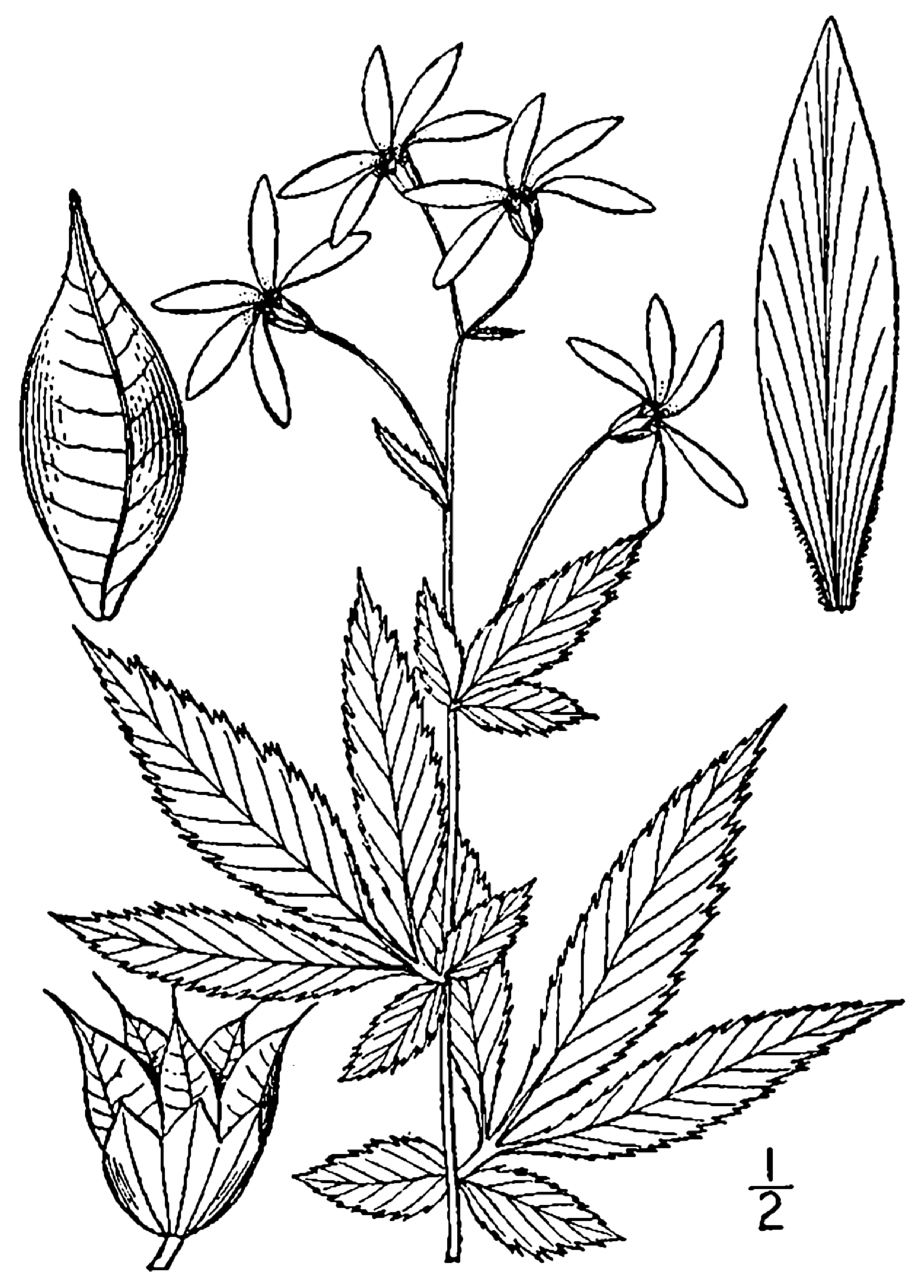
American Ipecac
Gillenia stipulata
Overview
American Ipecac, also called Indian physic, is a clump-forming herbaceous perennial native to woodland edges, meadows, and stream banks across eastern North America. It produces loose clusters of dainty white, five-petaled star-shaped flowers in late spring to early summer, attracting native pollinators including bumblebees and solitary bees. Its serrated, three-lobed foliage turns a warm bronze hue in autumn, adding seasonal interest to native and wildflower gardens. Historically, Indigenous communities and early settlers used its root as a potent emetic and expectorant, though it is rarely used in modern herbalism due to its toxicity.
Care Guide
Watering
American Ipecac prefers consistently moist, well-drained soil and does not tolerate prolonged drought. Water deeply when the top 1 to 2 inches of soil feel dry, avoiding overwatering that can lead to root rot, especially in heavy clay soils. In its native woodland habitat, it receives regular rainfall, so mimic these conditions by supplementing water during extended dry spells in summer.
Light
Thrives in partial shade, such as dappled sunlight under deciduous trees, though it can tolerate full sun in cooler climates if provided with ample moisture. Too much intense, direct afternoon sun in warmer regions will scorch its foliage and reduce flowering, so site it in a location with morning sun and afternoon shade for best performance. It can grow in full shade, but flowering will be sparser and the plant may develop a looser, leggier habit.
Soil
Requires rich, loamy, slightly acidic to neutral soil with excellent drainage, similar to its native woodland floor habitat. It will not tolerate heavy, poorly draining clay soils that stay waterlogged after rain; amend heavy soils with compost, leaf mold, or pine bark fines to improve structure and drainage before planting. A layer of organic mulch around the base of the plant will help retain moisture, regulate soil temperature, and add nutrients as it decomposes.
Fertilizer
American Ipecac is adapted to low-fertility woodland soils and does not need heavy fertilization. A light application of balanced, slow-release organic fertilizer in early spring, just as new growth emerges, is sufficient to support healthy growth and flowering. Avoid high-nitrogen synthetic fertilizers, which can promote excessive foliage growth at the expense of flowers and make the plant more susceptible to pest damage.
Temperature
It is hardy in USDA zones 4 through 8, tolerating winter temperatures as low as -30°F (-34°C) when established. It prefers cool summer temperatures between 60°F and 80°F (15°C to 27°C), and may wilt temporarily during extended heatwaves above 90°F (32°C), even with adequate moisture. Mulching the root zone helps insulate roots from extreme temperature fluctuations in both winter and summer.
Pruning
Pruning requirements are minimal for American Ipecac; simply cut back dead, yellowed foliage to the ground in late autumn after it dies back naturally, or in early spring before new growth emerges. Deadhead spent flowers after blooming if you do not want the plant to self-seed, though allowing some seed heads to remain provides food for small native birds and supports natural spread in wildflower gardens. Remove any damaged or diseased stems throughout the growing season to maintain good air circulation around the plant.
Propagation
American Ipecac is most easily propagated by root division in early spring, just as new growth begins, or in late autumn after the foliage has died back. Dig up mature clumps, carefully separate the root crowns into sections with at least 2 to 3 growing points each, and replant immediately at the same depth they were growing previously. It can also be grown from seed, though seeds require 2 to 3 months of cold stratification to germinate, and seedlings take 2 to 3 years to reach flowering size.
Humidity
Adapted to the moderate humidity levels of its native eastern North American range, American Ipecac tolerates average garden humidity between 40% and 70% with no special accommodations. It does not thrive in extremely arid conditions; if grown in a dry climate, regular misting or placement near a water feature can help raise ambient humidity levels to support healthy growth. Good air circulation around the foliage prevents fungal issues even in periods of high humidity.
Repotting
American Ipecac is rarely grown in containers, as it develops a deep, fibrous root system that performs best when planted directly in the ground. If grown in a pot, use a large, deep container at least 12 inches wide and deep, and repot every 2 to 3 years in early spring before new growth emerges, refreshing the soil with plenty of organic matter. Ensure the container has ample drainage holes to prevent waterlogging, which will quickly cause root rot in this species.
Uses & Symbolism
Historically, the dried root of American Ipecac was used by Indigenous communities and early European settlers as a powerful emetic, expectorant, and purgative to treat a range of ailments, though medical use is now discouraged due to its toxicity and potential for adverse reactions. It is a popular addition to native plant gardens, wildflower meadows, and woodland shade gardens, where its delicate white flowers attract pollinators and its autumn foliage provides seasonal color. It is also used in ecological restoration projects to support native pollinator populations and stabilize soil in riparian areas.
Diseases & Pests
American Ipecac is relatively pest and disease resistant when grown in its preferred conditions, though it can be susceptible to fungal leaf spots and powdery mildew if grown in overly crowded, poorly ventilated areas with high humidity. Root rot can occur quickly if the plant is grown in heavy, poorly draining soil that stays waterlogged, so ensuring proper soil structure and drainage is the best prevention. Aphids and spider mites may occasionally infest new growth, particularly in dry conditions, and can be controlled with insecticidal soap or a strong spray of water to dislodge the pests.
Related plants
Other plants you might like if you grow American Ipecac.