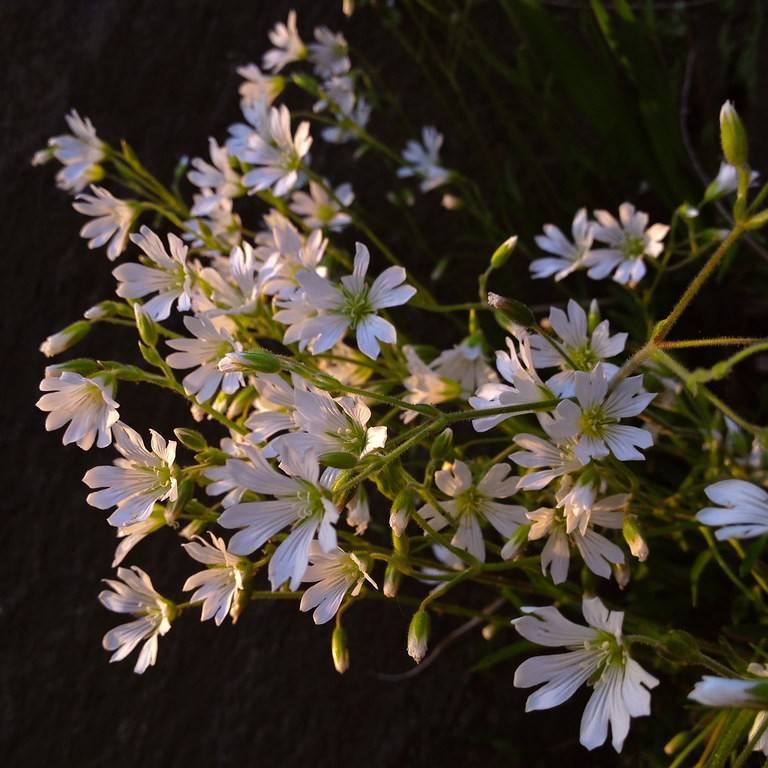
Large Field Chickweed
Cerastium holosteoides
Overview
Large field chickweed is a common, adaptable annual herb often found in meadows, agricultural fields, roadsides, and disturbed open ground. It features narrow, slightly fuzzy opposite leaves and clusters of small, five-petaled white flowers that bloom from spring through early fall. Though sometimes considered a minor agricultural weed, it supports pollinators and serves as a forage source for small herbivores.
Care Guide
Watering
Large field chickweed prefers consistently moist but well-drained soil, tolerating short dry spells once established. Avoid overwatering, as saturated soil can lead to root rot, especially in shaded, poorly ventilated sites. In natural settings, it relies on regular rainfall, requiring supplemental irrigation only during extended periods of drought.
Light
This species thrives in full sun, requiring a minimum of 6 hours of direct sunlight daily to produce abundant foliage and flowers. It can tolerate partial shade, but growth will be leggier and flowering will be significantly reduced. In hotter temperate regions, light afternoon shade can help prevent leaf scorch during peak summer heat.
Soil
Large field chickweed adapts to a wide range of soil types, including sandy, loamy, and clay soils, as long as drainage is adequate. It prefers a neutral to slightly alkaline pH between 6.0 and 7.5, though it can tolerate mildly acidic conditions. It will even grow in nutrient-poor, disturbed soils where many other plant species struggle to establish.
Fertilizer
As a hardy, low-demand plant, large field chickweed requires no regular fertilization to thrive. Excess nitrogen from agricultural runoff or heavy fertilization will encourage overly lush, weak growth that is more susceptible to pest damage. If grown in a garden setting, a single light application of balanced, all-purpose fertilizer in early spring is sufficient for the full growing season.
Temperature
This species is adapted to temperate climates, growing best in temperatures between 50 and 75°F (10 and 24°C). It can tolerate light spring and fall frosts, but prolonged freezing temperatures will kill the plant. Hot, sustained temperatures above 90°F (32°C) will slow growth and trigger early seed production and senescence.
Pruning
Pruning is rarely required for large field chickweed, though cutting back plants after the first flush of flowering can encourage a second round of blooms. If grown in a garden border, trim back spreading stems periodically to prevent the plant from overtaking smaller, slower-growing neighboring species. Pull entire plants before seed sets if you wish to limit self-seeding and unwanted spread.
Propagation
Large field chickweed propagates easily from seed, which it produces in abundance and self-sows readily in suitable growing conditions. Seeds can be directly sown outdoors in early spring, just after the last frost date, scattered lightly on the soil surface and pressed in without covering, as they require light to germinate. Germination typically occurs within 7 to 14 days under moist, warm conditions.
Humidity
This plant tolerates a wide range of humidity levels, thriving in the moderate humidity common to most temperate regions. It can survive low-humidity conditions as long as soil moisture levels are adequate. High humidity combined with poor air circulation can increase the risk of fungal leaf spot and powdery mildew infections.
Repotting
Large field chickweed is almost exclusively grown outdoors in open ground or wildflower meadows, so repotting is generally not applicable. If grown in containers for pollinator gardens, repotting is unnecessary for its single-season lifespan, though you can transfer seedlings to larger pots if roots outgrow their initial container before outdoor planting.
Uses & Symbolism
Large field chickweed is often included in native wildflower mixes to support early-season pollinators, including small bees, flies, and butterflies that feed on its nectar. Young, tender leaves are edible raw in salads or cooked as a potherb, with a mild, grassy flavor similar to common chickweed. It is also used in low-input ecological restoration projects to stabilize disturbed soils and provide quick ground cover while slower-growing perennial species establish.
Diseases & Pests
Large field chickweed is relatively resistant to most pests and diseases, though it can be susceptible to fungal infections including powdery mildew and leaf spot in warm, humid, poorly ventilated conditions. Aphids and spider mites may occasionally feed on its tender new growth, though infestations are rarely severe enough to kill the plant. As an agricultural weed, it can act as a host for common crop viruses including cucumber mosaic virus and tobacco rattle virus, which can spread to nearby cultivated vegetable and ornamental plants.
Related plants
Other plants you might like if you grow Large Field Chickweed.