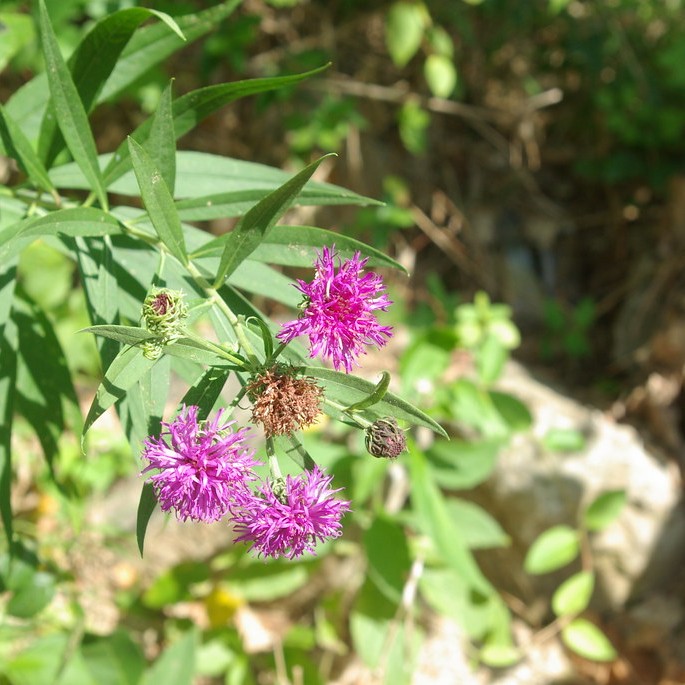
Great Ironweed
Vernonia gigantea
Overview
Great Ironweed is a robust, upright herbaceous perennial named for its tough, rigid stems and rusty brown seed heads that persist into winter. From mid-summer to early fall, it produces dense, flat-topped clusters of tiny, bright magenta-purple disk flowers that are highly attractive to bees, butterflies, and other native pollinators. It naturally occurs in wet prairies, meadows, stream banks, and open woodlands, and is a staple of native plant landscaping for its low maintenance and ecological value. Its deep, fibrous root system makes it effective for erosion control in moist, sloped sites.
Care Guide
Watering
Great Ironweed prefers consistently moist, well-drained soil, and tolerates periodic flooding and short dry spells once established. Water deeply during extended periods of drought to prevent wilting and support healthy flower production, though it rarely requires supplemental irrigation in areas with regular summer rainfall. Avoid overwatering in heavy, poorly drained soils to reduce risk of root rot.
Light
This species thrives in full sun, requiring at least 6 hours of direct sunlight daily to produce dense, upright growth and abundant flower clusters. It can tolerate partial shade, but stems may become leggy, require staking, and produce fewer blooms in low-light conditions. Plant in open, unshaded locations for best performance.
Soil
Great Ironweed adapts to a wide range of soil types, including clay, loam, and sandy soils, as long as moisture retention is adequate. It prefers a slightly acidic to neutral pH range of 5.5 to 7.0, but tolerates mildly alkaline conditions as well. It performs exceptionally well in rich, moist soils typical of rain gardens and riparian areas.
Fertilizer
As a native wildflower, great ironweed requires minimal fertilization, and excess nutrients can cause overly lush, weak growth that requires staking. In poor, depleted soils, apply a balanced, slow-release organic fertilizer in early spring before new growth emerges to support healthy development. Avoid high-nitrogen synthetic fertilizers, which prioritize foliage over flower production.
Temperature
Great ironweed is hardy in USDA zones 5 to 9, tolerating winter temperatures as low as -20°F (-29°C) and summer highs above 90°F (32°C). It dies back to the ground completely in winter, with new growth emerging in late spring once soil temperatures warm consistently above 50°F (10°C). It is highly tolerant of heat and humidity in its native range, with no significant temperature-related stress when moisture needs are met.
Pruning
Prune back dead stems to 2-3 inches above the soil line in late winter or early spring before new growth emerges to make space for fresh shoots. For a more compact, bushy growth habit and to reduce the need for staking, cut stems back by half in late spring when they reach 1-2 feet tall. Deadheading spent flower clusters is optional; leaving seed heads provides food for songbirds in fall and winter, and adds visual interest to the winter landscape.
Propagation
Great ironweed is most commonly propagated by seed, which requires 30-60 days of cold stratification to germinate successfully; sow seeds outdoors in late fall or stratify indoors before spring planting. It can also be propagated by root division in early spring before new growth begins, carefully splitting mature clumps into smaller sections with at least one growing point per division. Cuttings taken from soft new growth in late spring can also root well in moist, well-drained potting mix under bright indirect light.
Humidity
This species thrives in the moderate to high humidity levels common in its native eastern North American range, tolerating humidity levels between 40% and 80% without issue. It has no special humidity requirements when planted in appropriate outdoor conditions, and is not prone to humidity-related stress as long as soil moisture is sufficient. In indoor nursery settings, provide average room humidity to support young seedling growth.
Repotting
Great ironweed is rarely grown in containers long-term, as its deep root system and large mature size are best suited to in-ground planting. If growing in a container for a single season, use a large, deep pot at least 18 inches in diameter with drainage holes to accommodate its spreading roots. Container-grown specimens should be repotted annually in early spring, or planted out into the landscape after one growing season to prevent root binding.
Uses & Symbolism
Great ironweed is a core plant for native pollinator gardens, rain gardens, and meadow restorations, providing critical nectar for monarch butterflies, native bees, and hummingbirds during the late summer bloom period. Its tall, upright growth makes it an excellent background plant in perennial borders, and its persistent winter seed heads provide food for finches, sparrows, and other seed-eating songbirds. Historically, some Indigenous North American communities used the plant's roots and leaves for medicinal purposes to treat fevers, menstrual pain, and minor digestive issues.
Diseases & Pests
Great ironweed is relatively pest and disease resistant, with few serious issues in its native range. It can occasionally be affected by powdery mildew in areas with poor air circulation and high humidity, which can be mitigated by spacing plants to allow airflow and avoiding overhead watering. Aphids and spider mites may infest stressed plants, but can be controlled with insecticidal soap or natural predators like lady beetles; deer rarely browse the tough, bitter foliage of this species.
Related plants
Other plants you might like if you grow Great Ironweed.