Larch Dwarf Mistletoe
Arceuthobium laricis
Overview
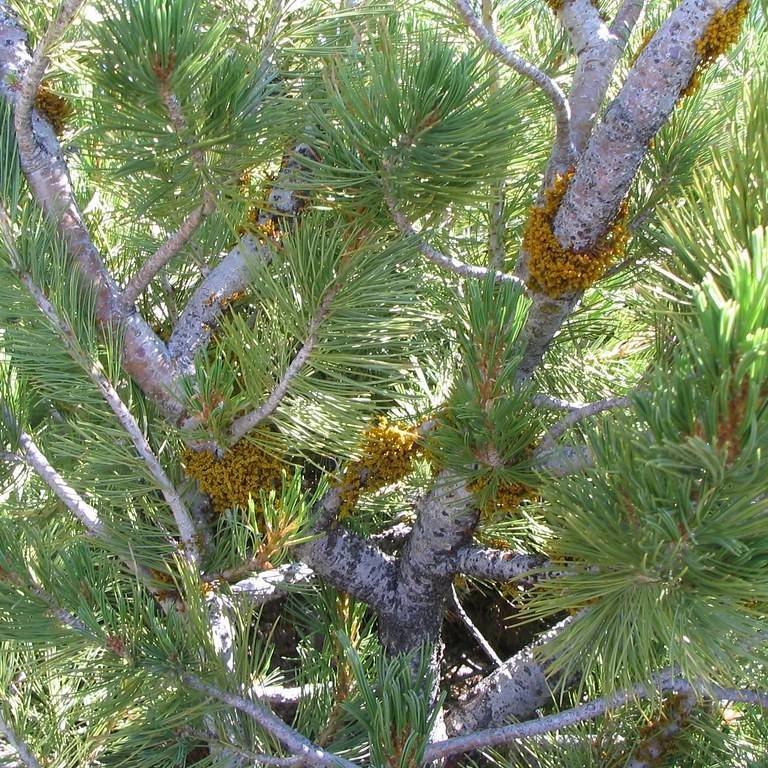
Larch Dwarf Mistletoe is an obligate hemiparasite that relies solely on larch (Larix) species as hosts, drawing water and nutrients from host vascular tissue while producing small amounts of its own chlorophyll. It forms diminutive, yellow-green, leafless shoots that emerge from swollen host branches, often triggering dense clusters of distorted twigs called witch’s brooms. Female plants produce small, sticky, bluish-white berries that disperse seeds via explosive discharge, which can travel up to 50 feet to infect new host foliage.
Care Guide
Watering
As an obligate parasite, Larch Dwarf Mistletoe derives all required moisture from its larch host, so no independent watering is needed; drought stress on the host may reduce the parasite’s vigor but will rarely eliminate it. Excess standing water around the host tree’s root zone can harm the larch, indirectly weakening the mistletoe infestation alongside the host.
Light
This species thrives in the same full to partial sun conditions preferred by its larch host, as it relies on limited photosynthesis to supplement resources taken from the host. Shaded host branches support smaller, less productive mistletoe colonies, while sun-exposed branches allow for faster growth and more frequent berry production.
Soil
Larch Dwarf Mistletoe has no independent root system and does not grow in soil, as it anchors itself directly to the inner bark of larch branches to access host resources. The health of the parasite is entirely tied to the well-drained, slightly acidic loam soils that support healthy larch tree growth.
Fertilizer
No direct fertilization is required for the mistletoe, as it absorbs all necessary nutrients from its host; fertilizing the host larch may inadvertently boost the parasite’s growth rate by increasing available host resources. High-nitrogen fertilizers applied to the host can lead to more vigorous mistletoe shoot production and heavier infestations.
Temperature
This species is adapted to the cold temperate and boreal climates where larch trees naturally occur, tolerating winter temperatures as low as -40°F (-40°C) while embedded in dormant host branches. Warmer than average summer temperatures can accelerate seed maturation and increase dispersal success, though extended heatwaves above 95°F (35°C) may reduce seed viability.
Pruning
Controlling Larch Dwarf Mistletoe requires pruning infected host branches at least 12 inches below the visible mistletoe shoots to remove all embedded haustoria (root-like parasitic structures) that extend into healthy host tissue. Pruning should be done in late winter before seed dispersal occurs in late summer to prevent accidental spread of sticky seeds to uninfected branches during removal.
Propagation
In natural settings, propagation occurs via explosive seed discharge from mature berries, which coat seeds in a sticky substance that adheres to larch needles; seeds germinate and penetrate young bark to establish a new infestation. Intentional propagation is not recommended, as this species is a damaging forest pest that reduces host growth, increases tree mortality risk, and lowers timber value.
Humidity
Larch Dwarf Mistletoe prefers moderate to high humidity levels common in its native mountain and boreal forest habitats, as moist conditions improve seed germination and successful penetration of young larch bark. Low humidity can reduce seed viability and slow initial establishment, though established infestations are highly resilient to fluctuations in ambient humidity.
Repotting
This parasitic species has no independent root system and cannot be potted or repotted, as it can only survive when anchored to a living larch host. Attempts to transplant mistletoe shoots will fail unless they are already embedded in a viable section of larch branch that remains attached to a healthy, growing tree.
Uses & Symbolism
Larch Dwarf Mistletoe has no commercial or ornamental uses, as it is classified as a destructive forest pest that reduces larch timber yield and increases host tree vulnerability to secondary pests and drought mortality. Some Indigenous communities have historically used small amounts of the plant in limited medicinal preparations, though its toxicity makes consumption unsafe without specialized, traditional preparation knowledge.
Diseases & Pests
Larch Dwarf Mistletoe itself is relatively free of diseases, though it may be colonized by secondary fungi that can weaken its shoots and reduce seed production. As a pest, it indirectly increases host larch susceptibility to bark beetles, root rot, and canker diseases, which often kill heavily infested trees over 10 to 20 years of persistent infection.
Related plants
Other plants you might like if you grow Larch Dwarf Mistletoe.