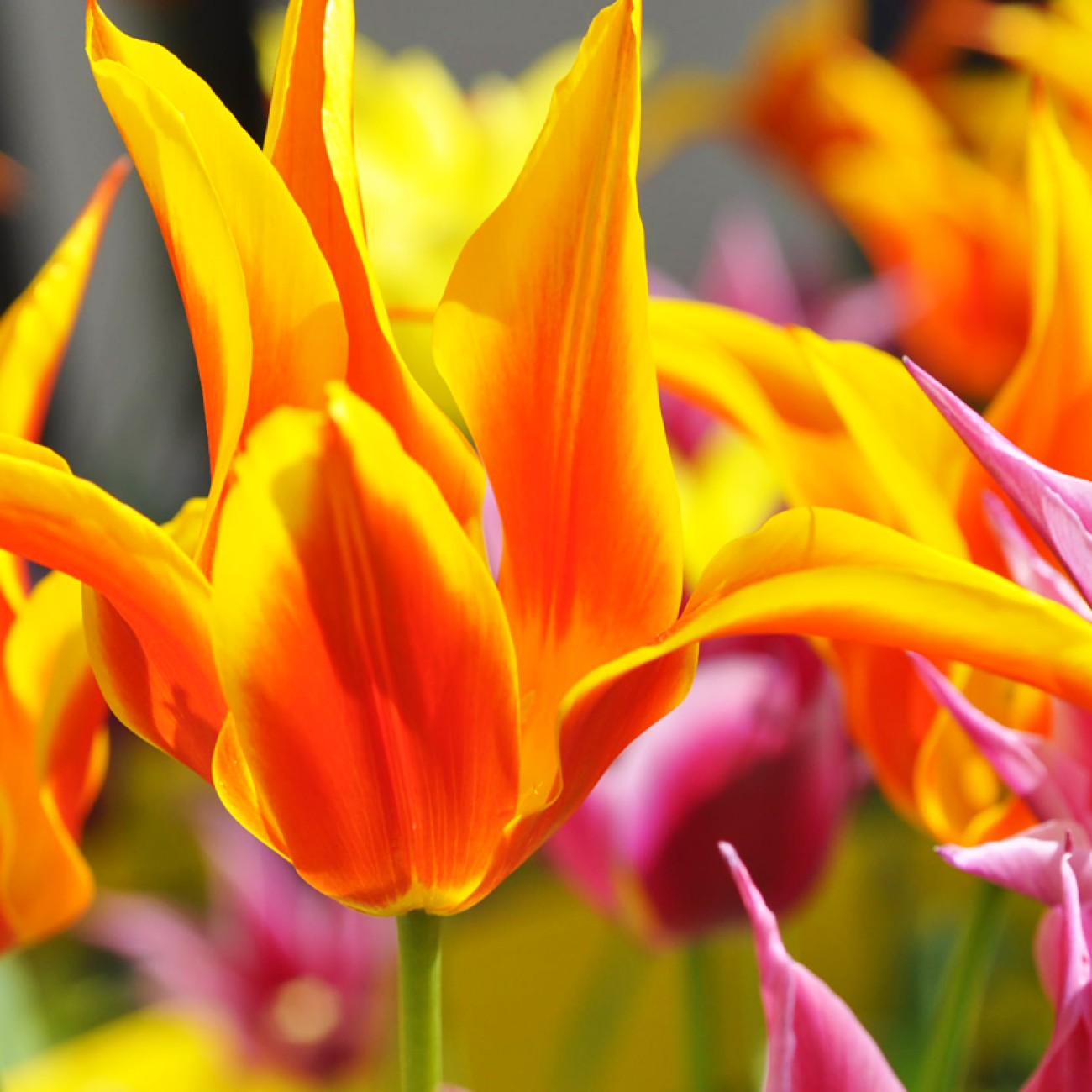
Lady Tulip
Tulipa clusiana
Overview
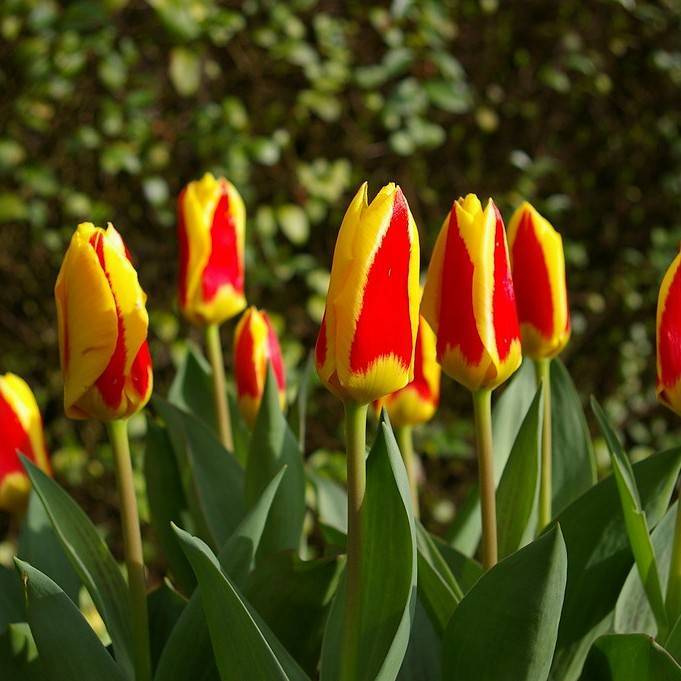
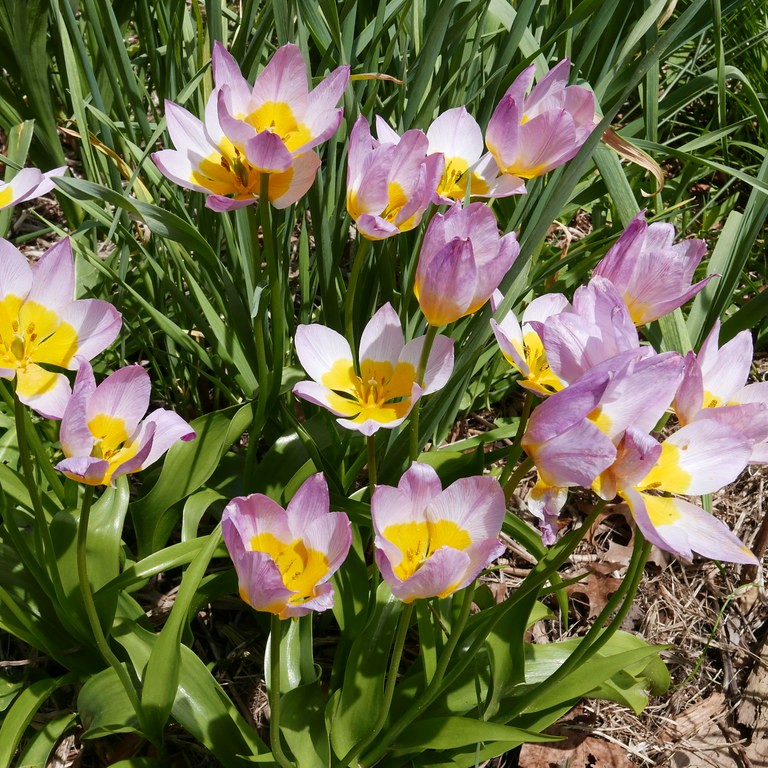
The lady tulip is a small, hardy bulbous perennial recognized for its slender, gray-green foliage and star-shaped flowers that open wide in full sun to reveal contrasting inner and outer petal hues. Most cultivars feature creamy white or soft pink outer petals edged with rose or deep red, with a bold yellow or purple basal blotch on the inner tepals. Native to arid mountain slopes, it is far more tolerant of dry, warm summers than common hybrid tulips, often returning reliably for multiple years in temperate climates. It blooms earlier than many large-flowered tulip varieties, typically emerging in mid to late spring.
Care Guide
Watering
Water lady tulips regularly during active spring growth, keeping the soil evenly moist but never waterlogged, as excess moisture will cause bulb rot. Once flowering finishes and foliage begins to yellow, reduce watering gradually to let the soil dry out completely during the bulb's summer dormancy, mimicking its native arid habitat. During winter dormancy, natural rainfall is usually sufficient; avoid supplemental watering in regions with wet winters unless grown in fast-draining containers.
Light
Grow lady tulips in full, direct sun for at least 6 to 8 hours daily to encourage strong stem growth and abundant, vibrant blooms. Partial shade is tolerated in very warm climates, but too much shade will cause stems to stretch and flowers to be sparse or small. When grown indoors as a forced bulb, place in a bright south-facing window to prevent leggy growth.
Soil
Lady tulips require sharply drained, light, sandy or loamy soil with a neutral to slightly alkaline pH to thrive, as heavy, clay soils that retain moisture will quickly rot bulbs. For container planting, use a porous, well-aerated potting mix amended with coarse sand or perlite to improve drainage. Add a small layer of gravel at the bottom of planting holes or pots to further reduce standing water around bulb roots.
Fertilizer
Apply a balanced, slow-release bulb fertilizer in early spring just as new shoots emerge from the soil to support healthy foliage and flower development. Avoid high-nitrogen fertilizers, which promote excessive leaf growth at the expense of blooms. No additional fertilizer is needed after flowering finishes, as the plant will draw nutrients from its foliage to replenish the bulb for the next growing season.
Temperature
Lady tulips are cold-hardy in USDA zones 3 to 8, requiring 12 to 14 weeks of winter temperatures between 35 and 45°F (2 to 7°C) to fulfill their vernalization requirement for spring blooming. They tolerate mild spring frosts without damage, and their compact growth habit makes them resistant to wind damage in cool, exposed sites. In regions with warm winters, bulbs must be pre-chilled in a refrigerator for 10 to 12 weeks before planting to trigger flowering.
Pruning
Snip off spent flower heads immediately after blooming to prevent the plant from expending energy on seed production, which reduces bulb vigor for the following year. Do not cut back or remove yellowing foliage until it has completely died back naturally, usually 6 to 8 weeks after flowering, as the leaves photosynthesize to store nutrients in the bulb for the next growth cycle. Remove any damaged or diseased foliage promptly to prevent the spread of pathogens to healthy plants.
Propagation
Lady tulips are most easily propagated by separating small offset bulbs from the parent bulb during summer dormancy, when the foliage has fully died back. Dig up clumps of bulbs, gently detach the small offsets, replant them immediately at the same depth as the parent bulb, and they will typically flower in 1 to 2 years once they reach mature size. They can also be grown from seed, but seed-grown plants take 3 to 5 years to mature and produce flowers, and may not retain the characteristics of the parent cultivar.
Humidity
Lady tulips prefer low to moderate humidity levels, and are highly tolerant of the dry air common in their native mountain habitats and in temperate spring climates. High humidity combined with wet soil greatly increases the risk of bulb and root rot, so ensure good air circulation around plantings, especially in humid regions. When forced indoors, average household humidity levels are sufficient; no misting or additional humidity is required.
Repotting
Container-grown lady tulips should be lifted and divided every 2 to 3 years during summer dormancy to prevent overcrowding, which reduces flowering performance. Once foliage has died back, gently remove bulbs from the pot, discard any soft or rotting bulbs, separate offsets, and replant in fresh, well-draining potting mix, spacing bulbs 2 to 3 inches apart. In-ground plantings only need to be dug and divided when clumps become overcrowded and bloom production declines, usually every 3 to 5 years.
Uses & Symbolism
Lady tulips are a popular choice for rock gardens, alpine beds, and border edges, where their small, delicate flowers add soft spring color without overshadowing lower-growing companion plants. They perform exceptionally well in shallow containers and window boxes, as their compact root system adapts to limited soil volume far better than larger hybrid tulips. They are also suitable for cut flower arrangements, with their long-lasting, dainty blooms adding an elegant touch to small bouquets.
Diseases & Pests
The most common issue affecting lady tulips is bulb rot, caused by poorly drained soil or overwatering, which presents as soft, mushy bulbs and stunted, yellowed foliage. Fungal diseases such as gray mold (botrytis blight) may develop in cool, wet spring conditions, causing brown spots on leaves and flowers, and can be prevented by ensuring good air circulation and avoiding overhead watering. Aphids and slugs may occasionally feed on new young foliage and flower buds; aphids can be controlled with insecticidal soap, while slugs can be deterred with organic bait or diatomaceous earth around plant bases.
Related plants
Other plants you might like if you grow Lady Tulip.