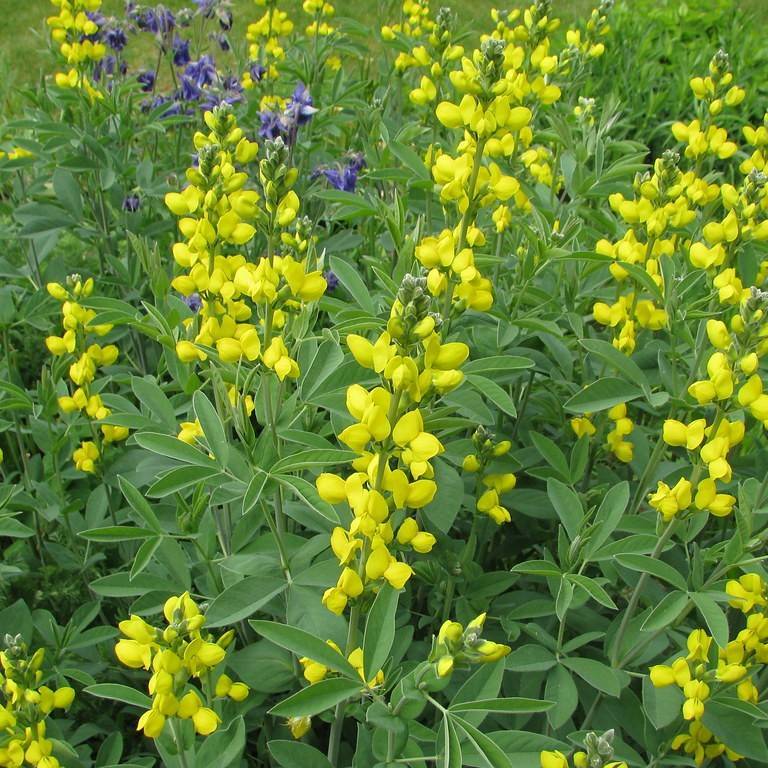
Carolina Lupine
Thermopsis villosa
Overview
Carolina Lupine, also called Aaron’s Rod, is a clumping perennial that produces dense, 8-12 inch racemes of golden yellow flowers in late spring to early summer, resembling true lupines but adapted to warmer, less acidic soils. Its trifoliate, gray-green foliage is soft and fuzzy, and the plant spreads slowly via rhizomes to form large, long-lived clumps without being invasive. It is a nitrogen-fixing legume, improving soil health as it grows, and thrives in meadow, cottage, and native pollinator gardens.
Care Guide
Watering
Water newly planted Carolina Lupine regularly to keep the soil evenly moist for the first growing season, until its deep taproot is established. Once mature, it is highly drought tolerant, requiring only occasional supplemental watering during extended dry spells; avoid overwatering, as soggy soil leads to root rot.
Light
Plant in full sun for the most abundant flowering and sturdiest stems that do not require staking. It can tolerate light partial shade, particularly in hotter southern climates, but too much shade will cause leggy growth and reduced flower production.
Soil
Prefers well-drained, loamy or sandy soils with a neutral to slightly alkaline pH, though it adapts to poor, rocky, or low-nutrient soils far better than true lupines. It cannot tolerate heavy, waterlogged clay soils; amend heavy planting sites with sand or compost to improve drainage before installing.
Fertilizer
Carolina Lupine rarely requires fertilizer, as it fixes its own nitrogen from the air, making it well-suited to low-fertility sites. If grown in extremely poor soil, apply a thin layer of compost around the base of the plant in early spring; avoid high-nitrogen fertilizers, which will promote foliage growth over flowering.
Temperature
Thrives in USDA hardiness zones 3 through 8, tolerating winter lows as low as -40°F (-40°C) and summer highs up to 90°F (32°C). In the warmest parts of its range, provide afternoon shade to prevent foliage scorch, and mulch around the root zone to keep soil temperatures cool.
Pruning
Deadhead spent flower spikes immediately after blooming to encourage tidy growth and prevent unwanted self-seeding, if desired. Cut back the entire foliage clump to 2-3 inches above the soil line in late fall after the foliage dies back, or leave the dried stalks in place over winter to provide shelter for beneficial native bees that nest in hollow stems.
Propagation
Easiest to propagate from seed, which should be scarified (nicked or soaked in hot water for 24 hours) before sowing in fall or early spring to break hard seed coat dormancy. Mature clumps can be divided in very early spring before new growth emerges, though division is often slow to reestablish due to the plant’s deep taproot, so seed propagation is preferred.
Humidity
Adaptable to a wide range of humidity levels, thriving in both the humid summers of its native southeastern range and the drier climates of the midwestern and northeastern U.S. No extra humidity is required, and excessive humidity combined with poor air circulation can increase risk of foliar fungal diseases.
Repotting
Carolina Lupine is rarely grown in containers due to its deep taproot, which can extend 2-3 feet deep in mature plants. If grown in a pot, use a deep, 5+ gallon container with well-drained soil, and repot only when the plant is visibly rootbound, taking extreme care not to damage the fragile taproot during the process.
Uses & Symbolism
Widely planted in native pollinator gardens, meadow plantings, and cottage garden borders, where its tall yellow flower spires provide vertical interest and a vital nectar source for bumblebees, honeybees, and native solitary bees. Its deep taproot makes it effective for erosion control on slopes and hillsides, and as a nitrogen-fixing legume, it improves soil fertility for neighboring plants. It is also a long-lasting cut flower, with dried stems used in floral arrangements.
Diseases & Pests
Carolina Lupine is largely pest and disease resistant, with no major common issues, though it can be susceptible to powdery mildew and leaf spot in areas with high humidity and poor air circulation. Aphids and spider mites may occasionally infest new growth, but these can be controlled with a strong spray of water or insecticidal soap, and rarely cause significant damage to healthy plants. Root rot is the most common issue, caused by planting in heavy, poorly drained soils or overwatering established plants.
Related plants
Other plants you might like if you grow Carolina Lupine.