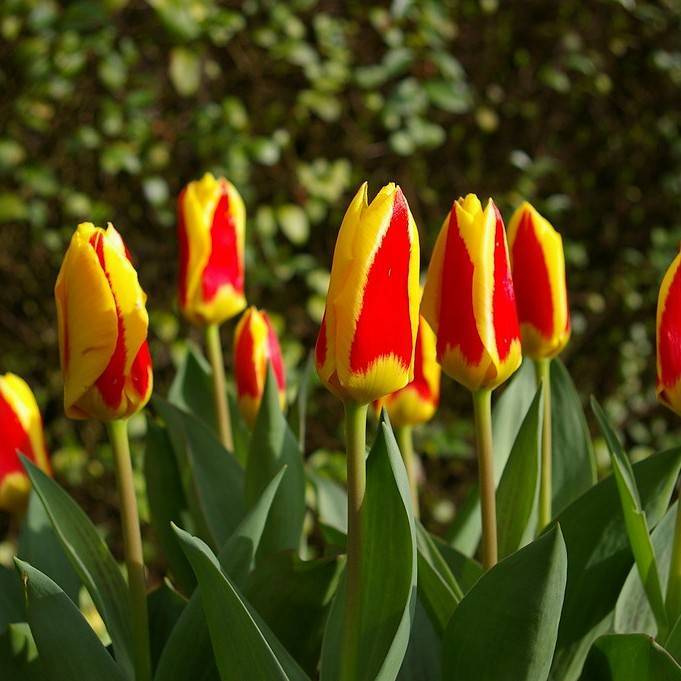
Kaufmanniana Tulip
Tulipa kaufmanniana
Overview
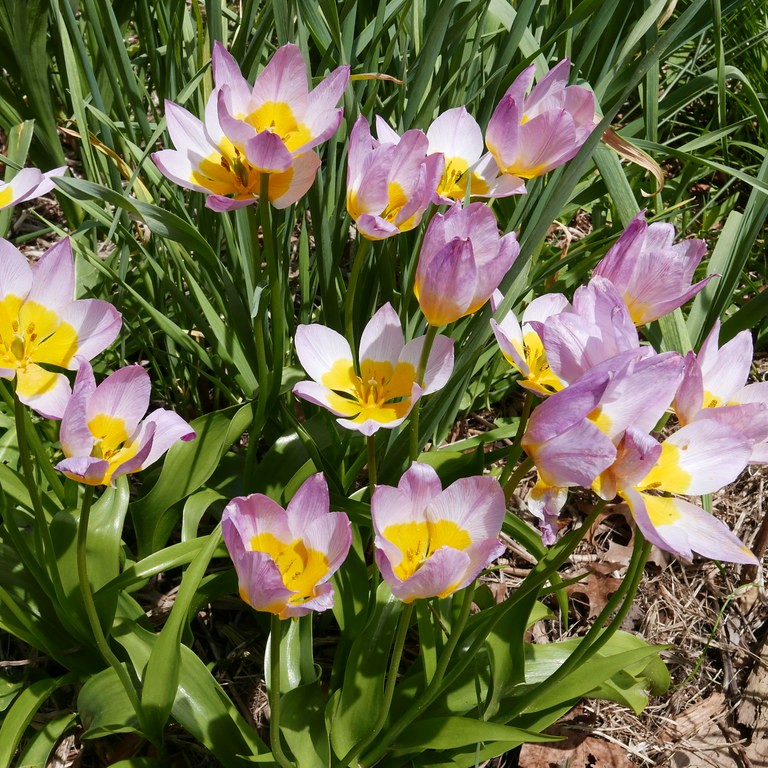
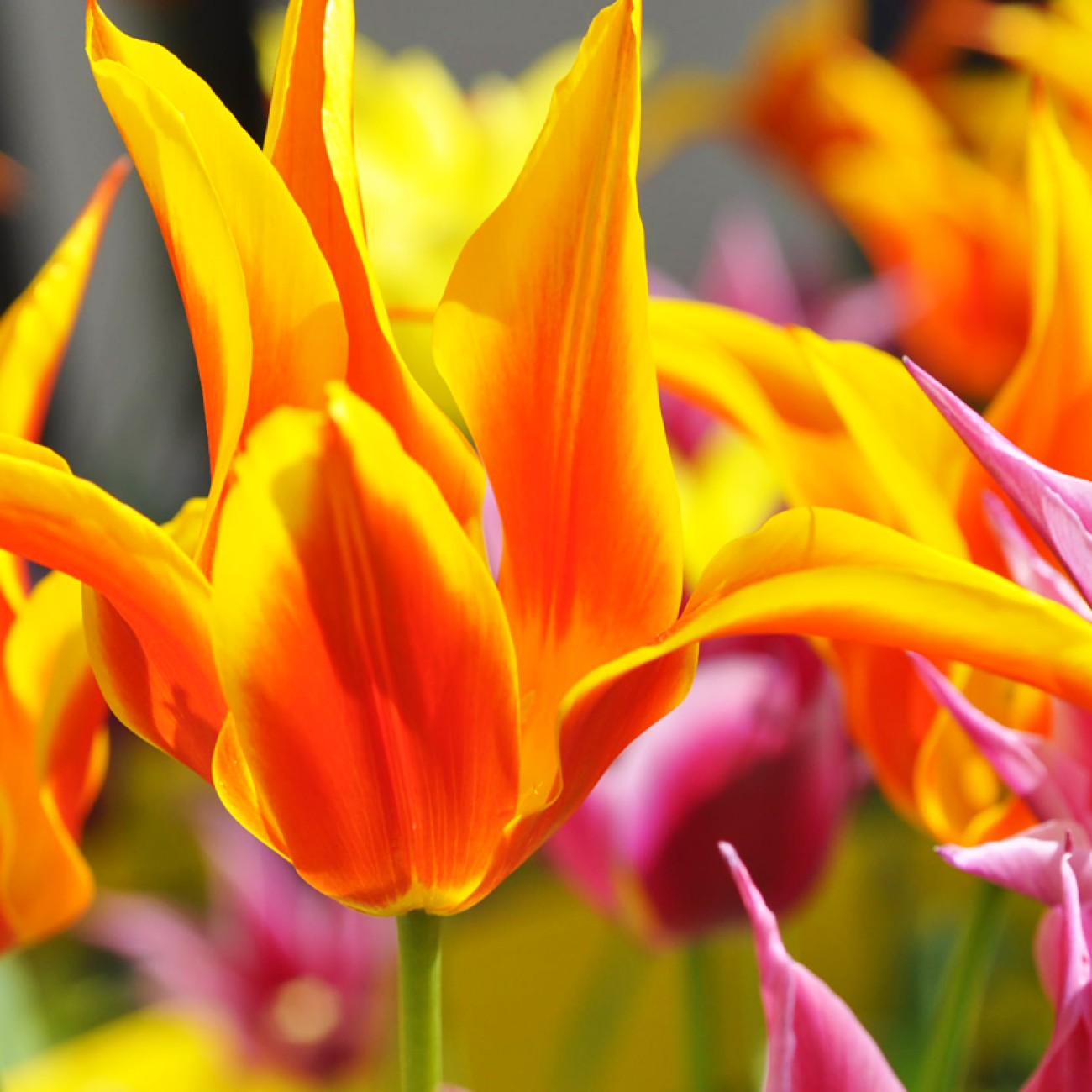
Kaufmanniana tulips, also called waterlily tulips for their wide, open bloom shape that resembles a waterlily when fully expanded, are among the earliest tulips to flower in spring, often emerging as soon as snow recedes in their native mountain habitats. Their naturally short, sturdy stems make them highly wind-resistant, and they naturalize readily in suitable climates, returning and multiplying for several years with minimal care. Cultivars offer a wide palette of colors including red, yellow, pink, orange, and white, many with contrasting blotches or streaks on petals and distinctive purple or brown mottling on their lance-shaped foliage.
Care Guide
Watering
Water newly planted bulbs deeply in fall to encourage root establishment, then reduce moisture during winter dormancy. During active spring growth, keep soil evenly moist but not waterlogged to prevent bulb rot, and cease watering entirely once foliage yellows and dies back after blooming. In regions with regular spring rainfall, supplemental watering is rarely needed for established plants.
Light
Plant in full sun, defined as at least 6 hours of direct, unfiltered sunlight daily, to promote sturdy stems and abundant blooms. While they can tolerate very light partial shade, too much shade will cause stems to stretch and flower production to decline. In warmer southern climates, light afternoon shade can help extend the bloom period by preventing flower fading.
Soil
Kaufmanniana tulips require sharply drained, loamy or sandy soil with a neutral to slightly alkaline pH between 6.0 and 7.5. Heavy clay soils that hold moisture will cause bulbs to rot quickly, so amend with coarse sand, perlite, or compost to improve drainage before planting. Avoid low-lying areas that collect standing water, especially during winter dormancy.
Fertilizer
Apply a balanced, slow-release bulb fertilizer (10-10-10 or 9-9-6 formulation) in early spring as soon as new shoots emerge from the soil, and again immediately after blooming to support bulb replenishment for the following year. Avoid high-nitrogen fertilizers, which encourage excess foliage growth at the expense of flowers. Do not fertilize dormant bulbs in summer or fall, as this can trigger premature root growth and rot.
Temperature
These tulips are exceptionally cold-hardy, thriving in USDA zones 3 through 8, and require 12 to 14 weeks of consistent cold temperatures between 35°F and 45°F (2°C and 7°C) in winter to trigger proper spring blooming. They tolerate short periods of spring frost without damage, and their native mountain habitat exposes them to large day-night temperature fluctuations, which they adapt to easily. In zones 9 and above, bulbs must be pre-chilled in a refrigerator for 12 to 14 weeks before planting in late fall to simulate winter cold.
Pruning
Deadhead spent flowers immediately after blooming to prevent the plant from expending energy on seed production, cutting the flower stem just below the bloom and leaving all foliage intact. Do not remove or cut back green foliage, as it photosynthesizes to store energy in the bulb for next year’s growth. Once foliage turns fully yellow and brown 6 to 8 weeks after blooming, you can gently pull it away from the bulb or cut it back to ground level.
Propagation
Kaufmanniana tulips propagate primarily through underground bulb offsets, small baby bulbs that form around the base of the main parent bulb over time. Dig up clumps of bulbs once foliage has died back in late summer, carefully separate the offsets from the parent bulb, and replant them immediately at the same depth as mature bulbs, spacing them 3 to 4 inches apart. Offsets will take 1 to 2 years to reach flowering size, while seeds collected from mature pods can be sown in fall but may take 3 to 5 years to produce blooming plants.
Humidity
These drought-tolerant tulips prefer low to moderate humidity levels between 30% and 50%, typical of their native arid mountain habitats. High humidity, especially combined with warm temperatures, increases the risk of fungal diseases and bulb rot, so ensure good air circulation around plantings. Avoid planting in enclosed, humid garden spaces or under dense foliage that traps moisture around the bulbs and foliage.
Repotting
Container-grown Kaufmanniana tulips should be lifted and repotted every 2 to 3 years in late summer when dormant, as container soil becomes compacted and loses drainage capacity over time. Empty the container, separate offset bulbs from the parent clump, discard any soft or rotted bulbs, and replant in fresh, well-drained potting mix formulated for bulbs, positioning bulbs 4 to 6 inches deep and 3 inches apart. If you want to reuse bulbs for future blooms, allow foliage to fully die back after flowering before moving containers to a cool, dry location for summer dormancy.
Uses & Symbolism
Kaufmanniana tulips are highly valued for early spring garden displays, planted en masse in rock gardens, alpine beds, front borders, and along walkways where their low height and vibrant blooms are easily visible. Their compact size makes them ideal for container plantings on patios, balconies, and windowsills, and they are frequently used in forced bulb arrangements for early indoor winter and spring blooms. Because they naturalize readily, they are also popular for naturalistic meadow and wildflower garden plantings in temperate regions.
Diseases & Pests
The most common issue affecting Kaufmanniana tulips is bulb rot, caused by overly wet, poorly drained soil, which presents as soft, mushy bulbs and stunted, yellowing growth in spring. Fungal diseases including tulip fire (Botrytis tulipae) can occur in cool, humid conditions, causing brown spots on foliage, distorted blooms, and gray mold on plant tissue, which can be managed by removing affected plants immediately and improving air circulation. Common pests include aphids that suck sap from new growth and stems, and bulb mites that attack stored or planted bulbs, both of which can be controlled with insecticidal soap or appropriate horticultural pesticides, and by inspecting bulbs carefully before planting.
Related plants
Other plants you might like if you grow Kaufmanniana Tulip.