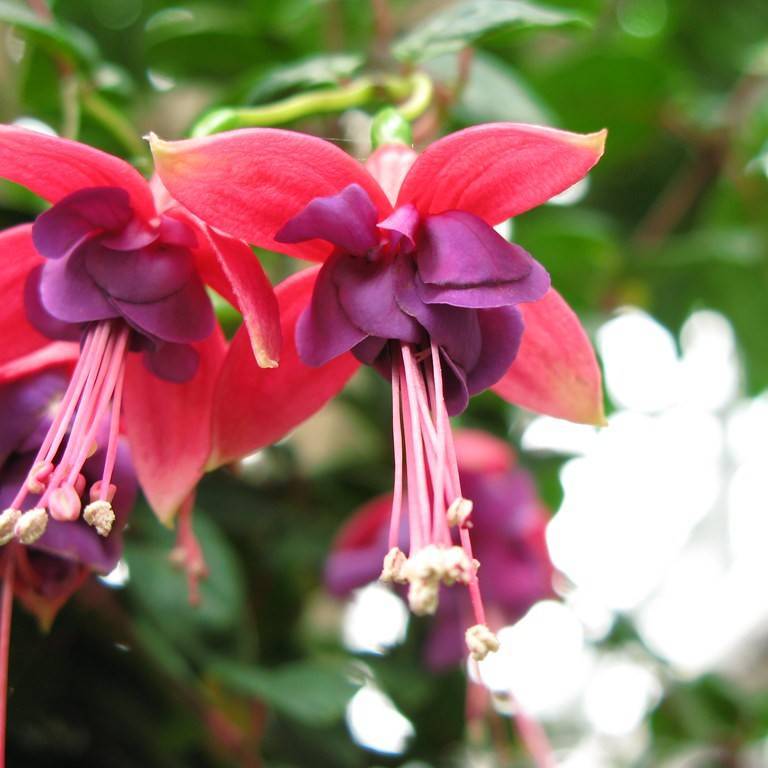
Lady's Eardrops
Fuchsia triphylla 'Gartenmeister Bonstedt'
Overview
Lady's Eardrops, a widely cultivated fuchsia hybrid, is beloved for its distinctive drooping, tubular red flowers that dangle like delicate earrings from arching stems, paired with rich bronze-green, slightly fuzzy foliage. It blooms continuously from late spring through frost in temperate climates, attracting hummingbirds and pollinators with its nectar-rich blossoms. While it is primarily grown as an outdoor container or bedding plant in mild regions, it is also frequently kept as a seasonal or year-round houseplant in cooler areas.
Care Guide
Watering
Lady's Eardrops requires consistently moist, well-drained soil; water thoroughly when the top 1 inch of soil feels dry to the touch, avoiding overwatering that can lead to root rot. Reduce watering frequency in winter when the plant enters a period of slower growth, allowing the top 2 inches of soil to dry out between waterings to prevent soggy conditions.
Light
This fuchsia thrives in bright, indirect light, such as dappled shade under taller trees or a position with morning sun and afternoon shade to avoid scorching its delicate foliage and blooms. When grown indoors, place it near a bright east or west-facing window, avoiding direct midday sun that can cause leaf burn and premature flower drop.
Soil
Plant Lady's Eardrops in a light, nutrient-rich, well-drained potting mix with a slightly acidic pH between 5.5 and 6.5, ideally amended with peat moss or compost to improve moisture retention without sogginess. Avoid heavy, clay-based soils that hold excess water, as these can quickly cause root rot in this relatively shallow-rooted plant.
Fertilizer
Feed every two weeks during the active growing season (spring to early fall) with a balanced, water-soluble fertilizer diluted to half strength, to support continuous bloom production and healthy foliage growth. Stop fertilizing entirely in late fall and winter when growth slows, to avoid burning sensitive new roots during the plant's dormant period.
Temperature
Lady's Eardrops prefers moderate temperatures between 60-75°F (15-24°C) during the growing season, and will suffer damage if exposed to temperatures below 40°F (4°C) for extended periods. Hot temperatures above 80°F (27°C) can cause stress, leaf drop, and reduced blooming, so provide extra shade and ventilation during summer heatwaves.
Pruning
Prune back stems by one-third to one-half in late winter or early spring before new growth emerges, to encourage bushier, more compact growth and a higher volume of blooms during the upcoming season. Pinch off spent flower clusters regularly throughout the blooming period to promote continuous flowering and prevent the plant from expending energy on seed production.
Propagation
Lady's Eardrops is most easily propagated from softwood stem cuttings taken in spring or early summer, selecting 3-4 inch (7-10 cm) non-flowering stem tips, removing lower leaves, and rooting them in moist potting mix or water in bright, indirect light. Rooting hormone can be used to speed up root development, and cuttings typically root within 2-4 weeks when kept consistently warm and moist.
Humidity
This plant prefers moderate to high humidity levels between 50-70%, which supports healthy foliage and prevents leaf edge browning, especially when grown indoors in heated or air-conditioned spaces. Increase humidity around indoor plants by placing the pot on a tray filled with pebbles and water, or using a small room humidifier during dry winter months.
Repotting
Repot Lady's Eardrops every 1-2 years in early spring, just before new growth begins, choosing a pot only 1-2 inches larger than the current container to avoid excess soil that holds unneeded moisture. Gently loosen the root ball before placing in fresh potting mix, and water thoroughly after repotting to settle the soil around the roots.
Uses & Symbolism
Lady's Eardrops is a popular ornamental plant grown in hanging baskets, window boxes, and container gardens to showcase its trailing growth habit and cascading blooms, as well as in shaded garden beds as a low, colorful edging plant. It is also valued as a pollinator-friendly garden addition, attracting hummingbirds, butterflies, and native bees with its nectar-rich tubular flowers throughout the blooming season. In mild, frost-free climates, it can be grown as a permanent landscape shrub, while in colder regions it is often kept as a seasonal patio plant or overwintered indoors.
Diseases & Pests
Common pests affecting Lady's Eardrops include aphids, whiteflies, and spider mites, which tend to colonize the undersides of leaves and can be controlled with regular applications of insecticidal soap or neem oil, as well as increased air circulation around the plant. Root rot is the most prevalent fungal disease, caused by overwatering or poorly draining soil, and can be prevented by allowing the top layer of soil to dry between waterings and avoiding soggy growing conditions. Fuchsia rust, a fungal disease that causes orange pustules on the undersides of leaves, may occur in humid, poorly ventilated conditions, and can be managed by removing infected foliage and applying a copper-based fungicide if necessary.
Related plants
Other plants you might like if you grow Lady's Eardrops.