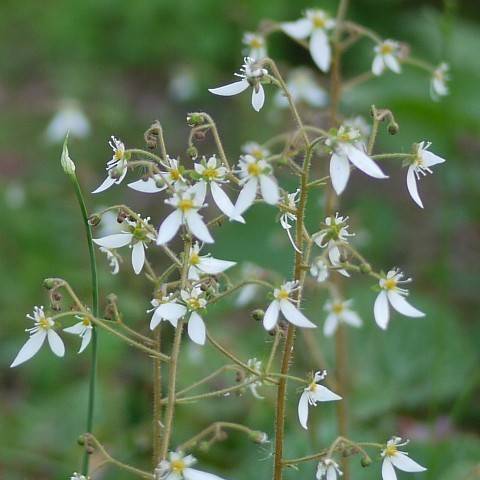
Creeping Saxifrage
Saxifraga stolonifera
Overview
Creeping saxifrage, also called strawberry begonia despite no relation to begonias, spreads via thin, red runner-like stolons that produce new plantlets at their tips. Its rounded, fuzzy leaves feature silvery veining on the upper surface and a rich maroon underside, creating striking foliage contrast year-round. In spring, it sends up slender stalks bearing clusters of tiny, star-shaped white flowers with two elongated lower petals that resemble moth wings. It thrives in cool, shaded spots, making it versatile for both outdoor shaded gardens and indoor container displays.
Care Guide
Watering
Water creeping saxifrage when the top 1 inch of soil feels dry to the touch, taking care to avoid overwatering that can lead to root rot. Reduce watering frequency in winter when growth slows, allowing the soil to dry out slightly more between sessions. Avoid splashing water directly on the fuzzy leaves to prevent fungal spotting.
Light
Prefers bright, indirect light when grown indoors, or partial to full shade in outdoor garden settings. Direct midday sun will scorch its delicate leaves, causing brown tips and faded foliage patterning. Indoors, it performs well near north or east-facing windows that receive gentle, filtered light throughout the day.
Soil
Grow in well-draining, moisture-retentive soil with a slightly acidic to neutral pH between 5.5 and 7.0. A standard potting mix amended with perlite or peat moss works well for container-grown specimens, improving drainage while holding adequate moisture. Outdoor plantings require loamy, organically rich soil that does not become waterlogged after rain.
Fertilizer
Feed with a balanced, diluted liquid houseplant fertilizer once every 4 to 6 weeks during the active growing season from spring to early fall. Do not fertilize in winter when the plant is dormant, as this can cause salt buildup in the soil and damage delicate roots. For outdoor ground cover plants, a single application of slow-release granular fertilizer in early spring is sufficient for the year.
Temperature
Thrives in cool temperatures between 50-75°F (10-24°C), and can tolerate brief dips down to 20°F (-7°C) when grown outdoors in USDA hardiness zones 6 through 9. Indoor plants should be kept away from hot, dry heating vents and cold drafty windows to prevent leaf drop. Prolonged exposure to temperatures above 80°F (27°C) can cause the plant to wilt and stress.
Pruning
Trim back any yellowed, damaged, or dead leaves as needed throughout the year to maintain a tidy appearance and encourage new foliage growth. After flowering, cut back spent flower stalks at their base to redirect the plant’s energy into producing new stolons and foliage. If grown as a houseplant, you can trim overly long stolons to control its spread, or leave them intact to trail over the edges of hanging baskets.
Propagation
The easiest propagation method is to peg small plantlets produced at the ends of stolons into a separate pot of moist potting mix while they are still attached to the mother plant. Once the plantlet has developed its own root system, usually after 2-3 weeks, you can sever the connecting stolon to create an independent plant. It can also be propagated from leaf cuttings taken in spring or summer, or by dividing mature clumps during repotting.
Humidity
Prefers moderate to high humidity levels between 40-60% to keep its foliage lush and prevent brown leaf tips. Indoor plants benefit from regular misting, placement on a pebble tray filled with water, or being kept in naturally humid rooms like bathrooms or kitchens. It can tolerate average household humidity levels, but will grow more vigorously with added moisture in the air.
Repotting
Repot creeping saxifrage every 1 to 2 years in spring, moving it to a pot one size larger when its roots have filled the current container and begin growing out of the drainage holes. Choose a pot with ample drainage holes to prevent waterlogging, and refresh the potting mix at repotting time to provide new nutrients. Mature clumps can be divided during repotting to create multiple new plants if desired.
Uses & Symbolism
Creeping saxifrage is widely used as a low-growing ground cover in shaded woodland gardens, rock gardens, and along path edges, where it spreads gently to form a dense, attractive mat of foliage. It is also a popular houseplant, often grown in hanging baskets or tabletop containers where its trailing stolons and colorful leaves can be displayed prominently. In traditional East Asian medicine, its leaves are sometimes used to treat minor ailments including sore throats and skin irritations.
Diseases & Pests
Creeping saxifrage is relatively pest-resistant, but can be affected by common houseplant pests including aphids, spider mites, and mealybugs, which tend to congregate on the undersides of leaves. Overwatering or poorly draining soil can lead to root rot, the most common disease issue, which causes wilting, yellowed leaves, and eventual plant death if not corrected. Fungal leaf spot can occur if water is left sitting on the fuzzy foliage for extended periods, especially in cool, humid conditions with poor air circulation.
Related plants
Other plants you might like if you grow Creeping Saxifrage.