Japanese Jack In The Pulpit
Arisaema sikokianum
Overview
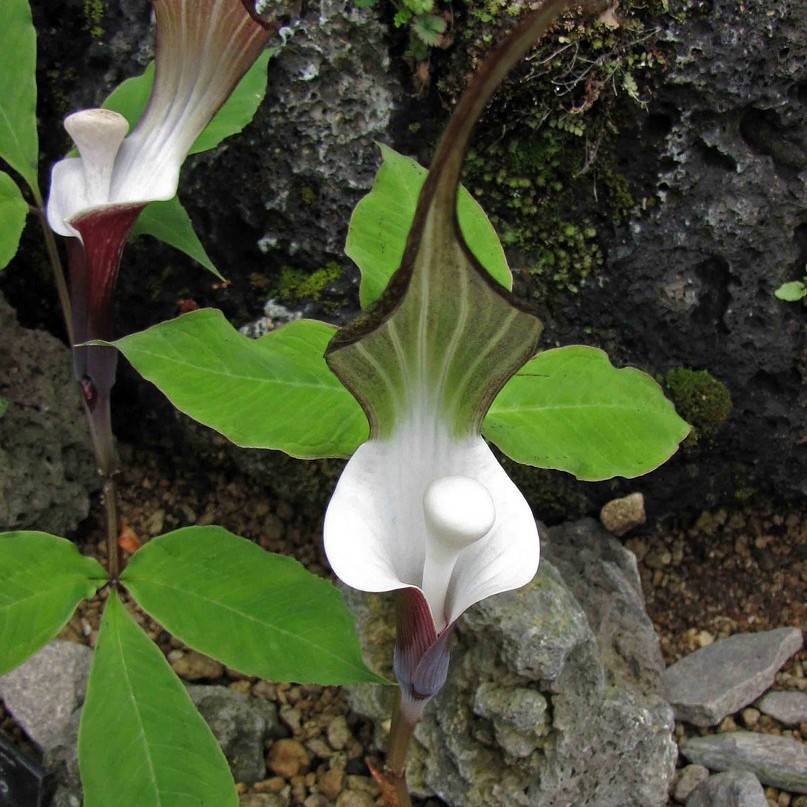
Japanese Jack In The Pulpit is a distinctive herbaceous perennial valued for its unusual, hooded spring blooms and lush tropical-looking foliage. Each stem bears two large, three-lobed, glossy green leaves that emerge alongside the flower structure in early to mid-spring. After flowering, the plant produces clusters of bright red berries in late summer, which add ornamental interest before the foliage dies back to the ground for winter dormancy.
Care Guide
Watering
Keep the soil consistently moist but never waterlogged throughout the active growing season, from spring to early fall. Reduce watering gradually as the foliage begins to yellow and die back in late summer, and keep the dormant corms barely damp over winter to prevent rot. Avoid overhead watering where possible to reduce risk of fungal issues on leaves.
Light
Thrives in partial to full shade, replicating its native woodland understory habitat. Dappled sunlight filtered through tree canopy is ideal; avoid direct midday sun, which can scorch the delicate foliage and cause premature leaf drop. It can tolerate deeper shade but may produce fewer blooms in very low light conditions.
Soil
Requires rich, well-draining, humus-heavy soil with a slightly acidic to neutral pH between 5.5 and 7.0. Amend heavy or sandy planting sites with plenty of compost, leaf mold, or well-rotted manure to improve moisture retention and nutrient content. Ensure the soil does not compact around the corms to prevent rot during dormancy.
Fertilizer
Feed lightly in early spring just as new growth emerges, using a balanced, slow-release organic fertilizer or a diluted liquid all-purpose fertilizer. Avoid high-nitrogen formulas, which can encourage excessive leaf growth at the expense of blooms. No additional fertilizer is needed during the dormant winter period.
Temperature
Grows best in temperate climates with cool spring temperatures, suited to USDA hardiness zones 4 through 9. It requires a period of cold winter dormancy with temperatures between 32 and 45°F (0 and 7°C) for at least 10 weeks to trigger healthy spring growth. Protect young emerging shoots from late spring frosts with a layer of mulch or frost cloth.
Pruning
Remove spent flower stalks after blooming if you do not wish to encourage self-seeding, though the resulting red berries provide significant late-season ornamental value. Cut back yellowed, dying foliage in late fall once it has fully died back to the ground to keep the planting area tidy and reduce overwintering pest habitat. No regular pruning is required during the active growing season.
Propagation
Most commonly propagated by dividing mature corms in late fall or early winter while the plant is dormant, carefully separating small offset corms from the parent and replanting them 2 to 3 inches deep. It can also be grown from fresh seed sown immediately after harvesting ripe berries in late summer, though seed-grown plants take 3 to 4 years to reach flowering maturity. Avoid disturbing established corms unnecessarily, as they can take time to reestablish after transplanting.
Humidity
Prefers moderate to high humidity levels between 50 and 70%, consistent with its native cool woodland environment. Indoor potted specimens may benefit from occasional misting or placement on a pebble tray filled with water to raise ambient humidity. Outdoor plants in dry climates should be mulched heavily with leaf mold to retain soil moisture and support local humidity around the foliage.
Repotting
Potted specimens should be repotted every 2 to 3 years during dormancy in late fall, replacing the potting medium with a fresh mix of compost, perlite, and peat moss to maintain drainage and nutrient levels. Choose a pot with ample drainage holes that is 2 to 3 inches wider than the previous container to accommodate corm growth. Take care not to damage the fleshy roots when handling dormant corms during repotting.
Uses & Symbolism
Primarily grown as an ornamental specimen in shade gardens, woodland landscapes, and rock gardens for its unique, eye-catching spring blooms and late-season red berries. It is also a popular choice for container cultivation on shaded patios or indoor cool sunrooms where its unusual flower structure can be displayed up close. In its native Japan, it has a long history of cultivation as a prized specialty garden plant for enthusiast collections.
Diseases & Pests
Susceptible to fungal diseases such as leaf spot, powdery mildew, and root rot, particularly in overly wet, poorly draining soil or areas with poor air circulation. Common pests include slugs and snails, which feed on young tender foliage and emerging shoots in spring, as well as aphids that may cluster on new growth. Proper spacing, well-draining soil, and avoiding overhead watering help reduce most disease and pest issues.
Related plants
Other plants you might like if you grow Japanese Jack In The Pulpit.
%22%2F%3E%0A%20%20%20%20%20%20%3Ccircle%20cx%3D%22920%22%20cy%3D%22180%22%20r%3D%2290%22%20fill%3D%22%23cfe8d5%22%2F%3E%0A%20%20%20%20%20%20%3Cpath%20d%3D%22M600%20590c-90-180-215-255-310-280%200%20165%20118%20296%20270%20296h40z%22%20fill%3D%22%2379b88e%22%2F%3E%0A%20%20%20%20%20%20%3Cpath%20d%3D%22M600%20590c80-150%20198-212%20302-228-8%20142-123%20255-270%20255h-32z%22%20fill%3D%22%235c9f73%22%2F%3E%0A%20%20%20%20%20%20%3Cpath%20d%3D%22M600%20610V360%22%20stroke%3D%22%234f8c64%22%20stroke-width%3D%2218%22%20stroke-linecap%3D%22round%22%2F%3E%0A%20%20%20%20%20%20%3Ctext%20x%3D%22600%22%20y%3D%22700%22%20text-anchor%3D%22middle%22%20font-family%3D%22Arial%2C%20sans-serif%22%20font-size%3D%2244%22%20fill%3D%22%23365c45%22%3E%0A%20%20%20%20%20%20%20%20Plant%20image%20coming%20soon%0A%20%20%20%20%20%20%3C%2Ftext%3E%0A%20%20%20%20%3C%2Fsvg%3E%0A%20%20)