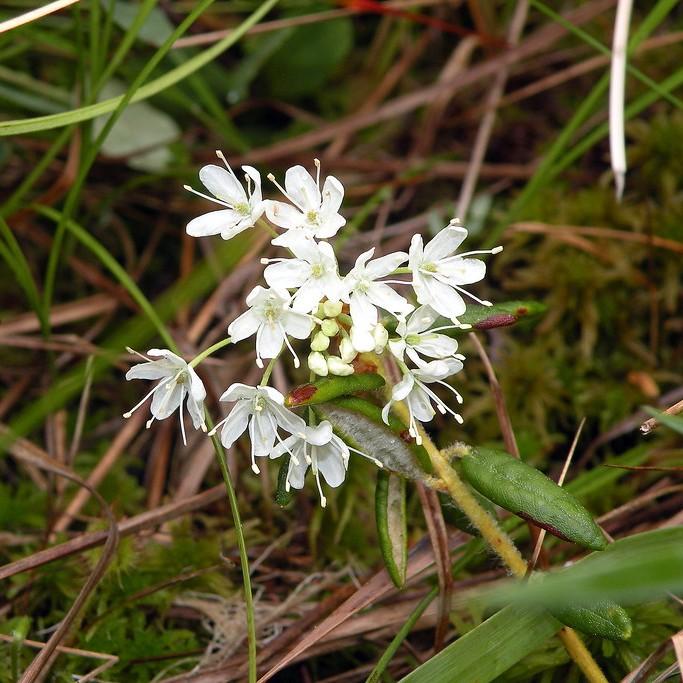
Labrador Tea
Rhododendron groenlandicum
Overview
Labrador Tea is a low-growing, evergreen shrub native to cool, acidic wetland and bog habitats across northern North America and Eurasia. It features narrow, leathery dark green leaves with distinctive woolly white or rust-colored undersides, and produces clusters of small, fragrant white flowers in late spring. Long valued by Indigenous communities for its medicinal and ceremonial uses, it is also cultivated as a hardy ornamental for native plant gardens and cold-climate landscapes.
Care Guide
Watering
Labrador Tea requires consistently moist, even wet soil, as it is adapted to bog and wetland environments; never allow the root zone to dry out completely. Use rainwater or distilled water if your tap water is alkaline, as high pH can damage its sensitive root system. Reduce watering slightly in winter, but keep the soil evenly damp rather than saturated to prevent root rot.
Light
Thrives in full sun to partial shade; in cooler northern climates, full sun encourages denser foliage and more abundant flowering. In warmer parts of its growing range, provide afternoon shade to prevent leaf scorch during periods of intense summer heat. Avoid deep, full shade, as this will lead to leggy growth and reduced flower production.
Soil
Requires extremely acidic, well-drained yet moisture-retentive soil with a pH between 3.5 and 5.5, similar to the bog peats it grows in natively. A mix of sphagnum peat moss, pine bark fines, and perlite works well for cultivated plants, as it mimics its natural acidic, low-nutrient habitat. Avoid alkaline soils or soil mixes with added lime, which will cause nutrient deficiency and eventual plant death.
Fertilizer
Labrador Tea is adapted to low-nutrient bog soils, so it requires very little fertilizer to thrive. Apply a diluted, acidic ericaceous plant fertilizer once in early spring, at half the recommended strength, to support new growth. Over-fertilization will cause leaf burn and damage its sensitive root system, so avoid feeding more than once per year.
Temperature
Extremely cold-hardy, tolerating winter temperatures as low as -40°F (-40°C) in its native boreal range, making it suitable for USDA hardiness zones 2 through 6. It does not tolerate high heat and humidity well; in regions with summer temperatures above 85°F (29°C), it will require extra shade and consistent moisture to survive. Avoid planting in areas with prolonged warm winters, as it needs a period of cold dormancy to thrive.
Pruning
Prune sparingly, as Labrador Tea has a slow, naturally compact growth habit that rarely requires shaping. Remove any dead, damaged, or diseased branches in early spring before new growth emerges to maintain plant health. Avoid heavy pruning, as cutting back into old, woody growth may prevent the plant from producing new foliage.
Propagation
Most commonly propagated from semi-hardwood cuttings taken in late summer; dip cuttings in rooting hormone and plant in a moist, acidic peat-perlite mix under high humidity for best results. It can also be grown from seed sown on the surface of moist, acidic sphagnum peat in late fall, though seeds germinate very slowly over 6 to 12 months. Wild collection of Labrador Tea is discouraged in many regions, as overharvesting threatens native populations.
Humidity
Prefers high humidity levels between 50% and 70%, consistent with its native bog and wetland habitat. If grown in a dry indoor environment, mist the foliage regularly or place the pot on a tray filled with pebbles and water to raise ambient humidity around the plant. Avoid placing it near heating vents or other sources of dry, forced air, which will cause leaf browning and drop.
Repotting
Labrador Tea has a shallow, slow-growing root system, so it only needs repotting every 3 to 4 years, when roots begin to emerge from the drainage holes of the pot. Repot in early spring, using an acidic ericaceous potting mix, and avoid disturbing the root ball more than necessary to prevent transplant shock. Choose a pot that is only 1 to 2 inches larger in diameter than the current one, as overly large pots can hold excess moisture and lead to root rot.
Uses & Symbolism
Traditionally, Indigenous peoples of North America steep the dried leaves in hot water to make a fragrant, mild tea used to treat colds, sore throats, and digestive issues, though consumption in large quantities is toxic. It is cultivated as an ornamental shrub in native plant gardens, rain gardens, and bog landscapes, where its evergreen foliage and fragrant spring flowers provide year-round interest. Its dense, low-growing habit also makes it an effective groundcover for shaded, acidic, wet areas where other plants struggle to grow.
Diseases & Pests
Labrador Tea is relatively disease-resistant in its preferred growing conditions, but overwatering or poorly drained soil can lead to root rot and fungal leaf spot diseases. Common pests include aphids and spider mites, which may infest foliage during periods of dry, low-humidity weather, and can be controlled with insecticidal soap or neem oil. In alkaline soil, it frequently develops iron chlorosis, a nutrient deficiency that causes yellowing leaves and stunted growth, which can be mitigated by amending the soil with sphagnum peat or sulfur to lower pH.
Related plants
Other plants you might like if you grow Labrador Tea.