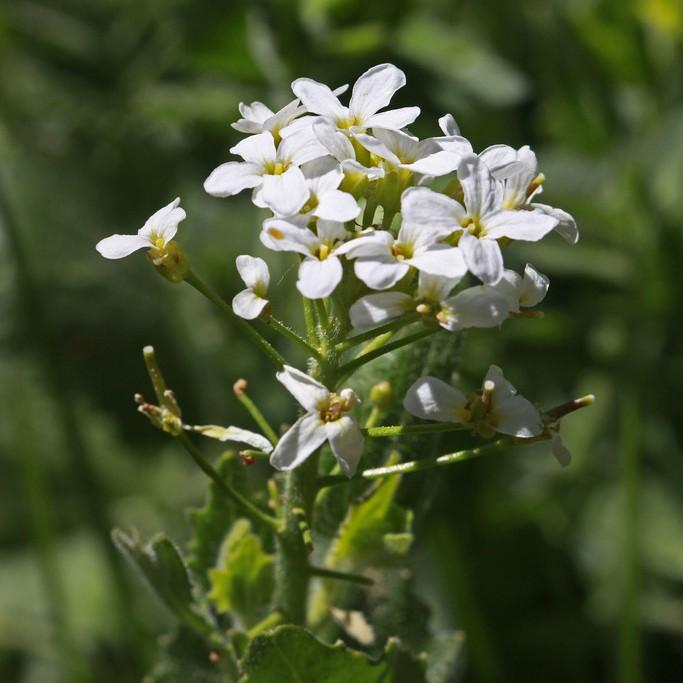
Heart Leaved Bittercress
Cardamine cordifolia
Overview
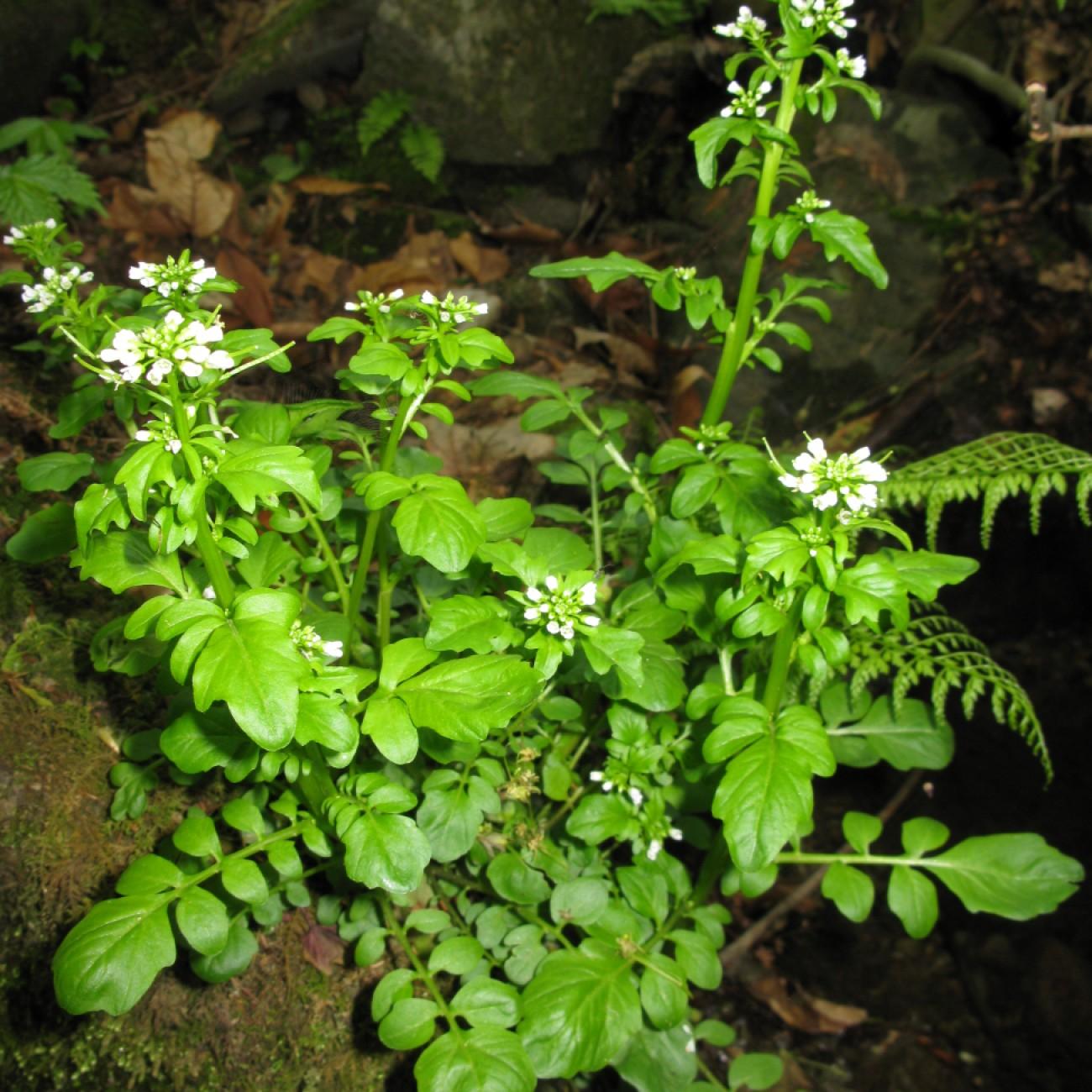
Heart leaved bittercress is a herbaceous perennial in the mustard family, distinguished by its broad, heart-shaped basal leaves and slender, upright stems that bear clusters of tiny, four-petaled white flowers in late spring to mid summer. It naturally thrives in wet, shaded habitats including stream banks, wet meadows, and damp forest understories across mountainous regions of western North America. The entire plant has a sharp, peppery flavor similar to arugula or watercress, making it a popular wild edible for foragers.
Care Guide
Watering
Heart leaved bittercress requires consistently moist, even wet soil to thrive, and should never be allowed to dry out completely. In garden settings, water deeply and frequently, especially during periods of low rainfall, to maintain saturated soil conditions comparable to its native riparian habitat. Avoid overhead watering to reduce the risk of foliar fungal issues, targeting water directly at the root zone instead.
Light
This species grows best in partial to full shade, mimicking the dappled light of its native forest and stream-side habitats. It can tolerate brief periods of morning sun, but prolonged direct afternoon sunlight will scorch its leaves and cause excessive moisture loss. When grown indoors, place it in a location with bright, indirect light, such as a north-facing window.
Soil
Heart leaved bittercress prefers nutrient-rich, loamy or silty soil with a high organic matter content and a neutral to slightly acidic pH between 6.0 and 7.0. The soil must have excellent water retention while still allowing for minimal drainage to avoid stagnant, oxygen-poor conditions. Adding well-rotted compost or leaf mold to the planting site will improve both moisture retention and nutrient availability for optimal growth.
Fertilizer
This plant is not a heavy feeder, and will generally thrive with a single application of balanced, slow-release 10-10-10 fertilizer in early spring as new growth emerges. If grown in poor soil, a diluted liquid all-purpose fertilizer can be applied once monthly during the active growing season to support foliage development. Avoid over-fertilizing, as this can lead to leggy growth and a reduction in the characteristic peppery flavor of the leaves.
Temperature
Heart leaved bittercress prefers cool temperatures between 50-75°F (10-24°C), and is hardy in USDA zones 3 through 7. It can tolerate light frosts, and will die back to the ground in winter, re-emerging from its root system the following spring. High temperatures above 80°F (27°C) will cause the plant to go dormant prematurely, so it may require extra shade and moisture during summer heatwaves.
Pruning
Prune away any yellowed, damaged, or diseased leaves throughout the growing season to encourage fresh, healthy foliage growth. After flowering finishes in mid summer, you can cut back the spent flower stalks to prevent unwanted self-seeding if you wish to control spread, or leave them in place to support local pollinators and allow natural reseeding. At the end of the growing season, cut back all dead above-ground growth to the soil level to prepare the plant for winter dormancy.
Propagation
Heart leaved bittercress is most easily propagated by seed, which can be sown directly outdoors in late fall or early spring, as the seeds require a period of cold stratification to germinate. It can also be propagated by division in early spring before new growth begins, by carefully digging up the root clump and separating it into smaller sections, each with healthy roots and foliage, before replanting. Cuttings taken from young, non-flowering stems in late spring can also root successfully when placed in consistently moist potting mix.
Humidity
This species thrives in high humidity levels between 60-80%, typical of its native wetland and mountain habitats. In dry indoor environments, regular misting, placing the plant on a pebble tray filled with water, or using a room humidifier will help maintain adequate humidity levels. Low humidity will cause leaf edges to brown and crisp, so monitor moisture levels closely during dry winter months.
Repotting
When grown in containers, heart leaved bittercress should be repotted every 1-2 years in early spring, before new growth emerges. Choose a pot with drainage holes and use a moisture-retentive, organic-rich potting mix to support its high water needs. Gently loosen the root ball when repotting to encourage new root growth, and water thoroughly after transplanting to settle the soil around the roots.
Uses & Symbolism
The leaves, stems, flowers, and young seed pods of heart leaved bittercress are all edible, with a zesty, peppery flavor that adds a sharp kick to salads, sandwiches, pesto, and soups, and can be used as a substitute for arugula or watercress. It is also planted in native pollinator gardens to support bees, butterflies, and other beneficial insects that feed on its nectar and pollen. In traditional indigenous medicine, it has been used as a mild diuretic and a source of vitamin C to prevent scurvy.
Diseases & Pests
Heart leaved bittercress is relatively pest and disease resistant, but can be susceptible to fungal issues including downy mildew and powdery mildew when grown in poorly ventilated, overly humid conditions with constant wet foliage. Aphids and whiteflies may occasionally feed on the undersides of leaves, which can be controlled with a strong spray of water or applications of insecticidal soap. Snails and slugs are also attracted to its tender foliage, especially in damp, shaded locations, and can be managed with bait, copper barriers, or hand-picking.
Related plants
Other plants you might like if you grow Heart Leaved Bittercress.