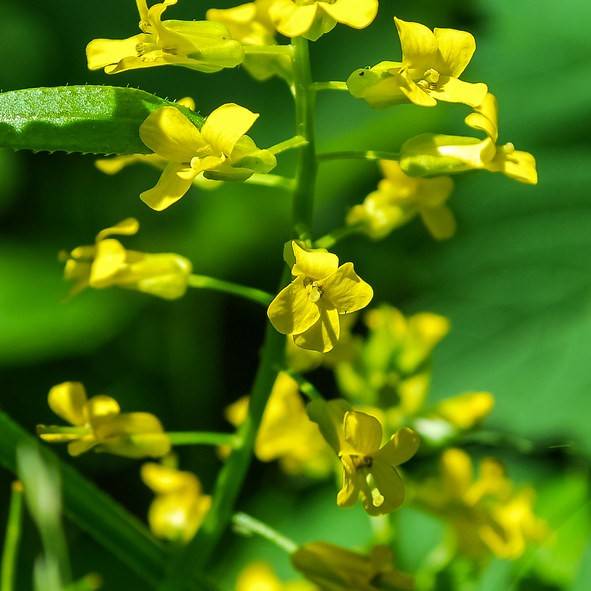
Garden Yellowrocket
Barbarea vulgaris
Overview
Garden yellowrocket, also called bittercress or wintercress, is a cold-tolerant biennial that forms a low rosette of glossy, lobed leaves in its first year before sending up upright flowering stalks in its second season. It thrives in disturbed soils, meadows, and garden edges, and is often valued for its ability to attract beneficial pollinators while repelling common brassica pests like cabbage moths. While sometimes considered a weed in unmanaged landscapes, it is intentionally cultivated in edible and permaculture gardens for its versatile, nutrient-dense foliage.
Care Guide
Watering
Garden yellowrocket prefers consistently moist, well-drained soil, and benefits from regular watering during dry spells to prevent leaf wilting and excessive bitterness. Avoid overwatering or waterlogged conditions, which can cause root rot, especially in heavy clay soils. Established plants have moderate drought tolerance, but consistent moisture yields the most tender, palatable leaves.
Light
This plant grows best in full sun, which encourages robust leaf growth and abundant flowering in its second year. It can tolerate partial shade, particularly in hot summer climates, though growth may be slower and flower production reduced. Full sun also helps minimize the risk of fungal foliage diseases by improving air circulation around the plant.
Soil
Garden yellowrocket adapts to a wide range of soil types, including sandy, loam, and clay soils, as long as drainage is adequate. It prefers a neutral to slightly alkaline pH between 6.0 and 7.5, but can tolerate mildly acidic conditions as well. It is well-suited to poor, disturbed soils, and does not require highly fertile growing conditions to thrive.
Fertilizer
This low-maintenance plant generally does not require regular fertilization, especially if grown in moderately fertile garden soil. For optimal leaf production, a light application of balanced, all-purpose organic fertilizer can be applied in early spring of its first growing season. Over-fertilization will lead to lush, overly tender foliage that is more prone to pest damage and less flavorful.
Temperature
Garden yellowrocket is extremely cold-hardy, surviving winter temperatures as low as -30°F (-34°C) in USDA hardiness zones 3 through 9. It grows best in cool temperatures between 50-75°F (10-24°C), and will bolt and produce flower stalks once temperatures consistently rise above 80°F (27°C) in its second year. Young rosettes can be overwintered outdoors with minimal protection in most temperate climates.
Pruning
Prune back flower stalks after blooming if you wish to prevent self-seeding and aggressive spread in garden beds. Harvest outer leaves regularly during the first growing season to encourage new, tender foliage growth and keep the rosette compact. Remove any yellowed or damaged leaves throughout the growing season to reduce the risk of fungal disease.
Propagation
Garden yellowrocket is most easily propagated from seed, which can be sown directly outdoors in early spring or late fall. Seeds require no stratification, and will germinate in 7-14 days when kept moist and exposed to temperatures between 55-70°F (13-21°C). It readily self-seeds in favorable conditions, so volunteer seedlings can be transplanted to desired locations in early spring.
Humidity
This adaptable plant tolerates a wide range of humidity levels, thriving in both the moderate humidity of temperate regions and the drier conditions of continental climates. High humidity combined with poor air circulation can increase the risk of powdery mildew and downy mildew on foliage, so space plants 12-18 inches apart to promote airflow. It has no special humidity requirements when grown outdoors in its preferred hardiness zones.
Repotting
Garden yellowrocket is almost exclusively grown outdoors in garden beds, so repotting is rarely necessary. If grown in containers, repot young rosettes into a slightly larger pot with fresh, well-draining potting mix once roots begin to emerge from the drainage holes, typically once per growing season. Second-year plants will bolt and die after flowering, so they do not require repotting after their first season.
Uses & Symbolism
The young, tender leaves of garden yellowrocket are edible, with a peppery, slightly bitter flavor similar to arugula, and can be used raw in salads, sautéed as a green, or added to soups and stir-fries. It is a popular companion plant in vegetable gardens, as it repels cabbage moths and aphids, and attracts beneficial pollinators like bees and predatory wasps that control common garden pests. Historically, it has been used in herbal medicine to treat coughs, wounds, and digestive issues, though modern medicinal use is limited.
Diseases & Pests
Garden yellowrocket is relatively pest and disease resistant, but can occasionally be affected by common brassica diseases including downy mildew, powdery mildew, and white rust, particularly in wet, poorly ventilated conditions. It may attract minor pests like flea beetles and aphids, though its strong scent generally deters most serious brassica pests such as cabbage loopers and diamondback moths. Overly wet soil can lead to root rot, so ensuring proper drainage is the best preventive measure against fungal root diseases.
Related plants
Other plants you might like if you grow Garden Yellowrocket.