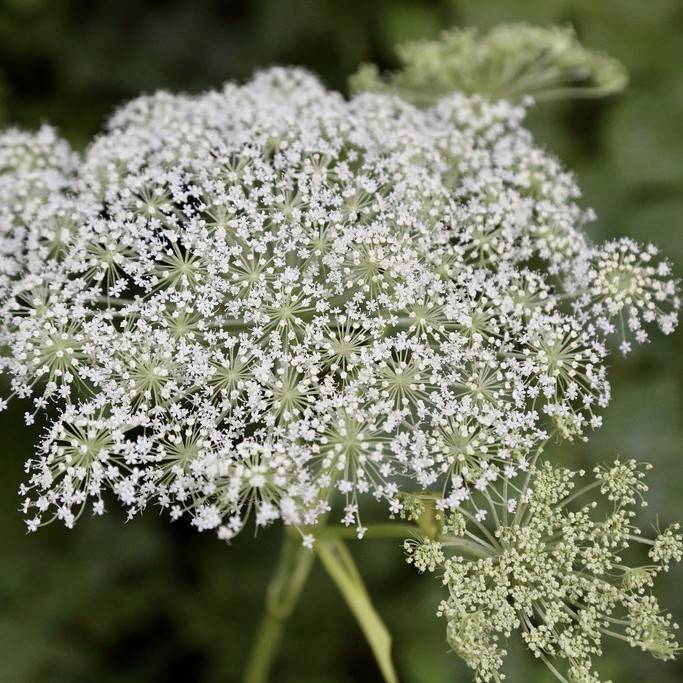
Kneeling Angelica
Angelica genuflexa
Overview
Kneeling Angelica gets its common name from its characteristic bent, geniculate lower stem nodes that give the plant a subtly 'kneeling' growth habit. It thrives in riparian zones, wet meadows, and mountain streambanks across its native Pacific Northwest range, where it supports a range of native pollinators. Its fern-like, pinnately compound leaves and tall, branching flower stalks create a lush, textural presence in rain gardens and native plant landscapes.
Care Guide
Watering
Kneeling Angelica requires consistently moist, never waterlogged soil, and should be watered frequently to maintain even moisture levels, especially during periods of drought. It is well adapted to temporarily saturated soils, making it ideal for rain gardens or low-lying landscape areas that hold moisture after precipitation. Allow the top 1 inch of soil to dry slightly between waterings only in cooler, overcast conditions to avoid root rot.
Light
This species performs best in partial shade, mimicking the dappled sunlight of its native streambank and forest edge habitats. It can tolerate full sun in cooler northern climates if provided with ample consistent moisture, but will scorch easily in hot, direct afternoon sun in warmer regions. Too much deep shade will reduce flowering and lead to leggy, weak stem growth.
Soil
Kneeling Angelica prefers rich, loamy, humus-heavy soil with a slightly acidic to neutral pH range of 5.5 to 7.0. The soil must have high water retention capacity but still offer good drainage to prevent prolonged standing water around the root system. Amending planting sites with well-rotted leaf mold or compost will improve both nutrient content and moisture retention for optimal growth.
Fertilizer
Feed Kneeling Angelica once in early spring with a balanced, slow-release organic fertilizer, such as 10-10-10, to support new seasonal growth. Avoid high-nitrogen fertilizers, as these can encourage excessive leaf growth at the expense of flower production and lead to weak, floppy stems. A light topdressing of compost in late fall will provide additional nutrients as it breaks down over the winter.
Temperature
This cool-climate perennial is hardy in USDA zones 4 through 8, tolerating winter temperatures as low as -30°F (-34°C) when dormant. It prefers summer temperatures between 60°F and 75°F (15°C to 24°C), and will suffer stress and leaf drop if exposed to sustained temperatures above 85°F (29°C) without adequate shade and moisture. In warmer parts of its range, it requires a cool, shaded planting location to avoid heat damage.
Pruning
Prune away spent flower heads after blooming if you wish to prevent self-seeding, as Kneeling Angelica can spread readily in ideal moist growing conditions. Cut back dead, yellowed foliage to the ground in late fall after the first frost to tidy the planting area and reduce overwintering sites for pests and pathogens. Remove any damaged or diseased stems as soon as they appear to maintain the plant’s health and appearance.
Propagation
Kneeling Angelica is most easily propagated from fresh seed sown directly outdoors in late fall, as the seeds require a period of cold stratification to germinate successfully. Seeds can also be started indoors after 6 to 8 weeks of refrigeration in moist sand, sown 1/8 inch deep in seed starting mix and kept consistently moist until germination. Division of mature clumps can be done in early spring before new growth emerges, though the plant’s deep taproot makes division more challenging than seed propagation.
Humidity
This species thrives in moderate to high humidity levels between 50% and 70%, consistent with its native riparian and wetland habitat. It will struggle in very dry indoor or arid outdoor conditions, requiring regular misting or placement near a water feature if grown in low-humidity areas. Good air circulation around the foliage is important to prevent fungal leaf diseases even in high-humidity environments.
Repotting
Kneeling Angelica is rarely grown in containers due to its large size and deep taproot, but if potted, it will need repotting every 2 to 3 years in early spring before new growth begins. Use a deep, wide container to accommodate the long taproot, and refresh the potting mix with plenty of organic matter to support moisture retention during repotting. Avoid disturbing the taproot as much as possible during the process to prevent transplant shock.
Uses & Symbolism
Kneeling Angelica is a popular choice for native plant rain gardens, riparian restoration projects, and pollinator gardens, as its abundant white flower clusters attract native bees, butterflies, and beneficial predatory wasps. Indigenous communities of the Pacific Northwest have traditionally used parts of the plant for medicinal purposes, including treating colds and digestive ailments, and its young edible shoots are sometimes harvested as a wild green. Its tall, architectural growth and lacy foliage also make it a useful textural accent in shaded, moist perennial borders.
Diseases & Pests
Kneeling Angelica is susceptible to common Apiaceae fungal diseases including powdery mildew, leaf spot, and root rot, especially when grown in poorly drained soil or conditions with insufficient air circulation. Common pests include aphids, which cluster on new growth and flower stalks, and carrot rust flies, which can damage the plant’s taproot if grown near other Apiaceae family crops like carrots or parsnips. Foliar slug damage is also common in very moist, shaded planting sites, so regular monitoring and slug control measures may be needed in high-risk areas.
Related plants
Other plants you might like if you grow Kneeling Angelica.