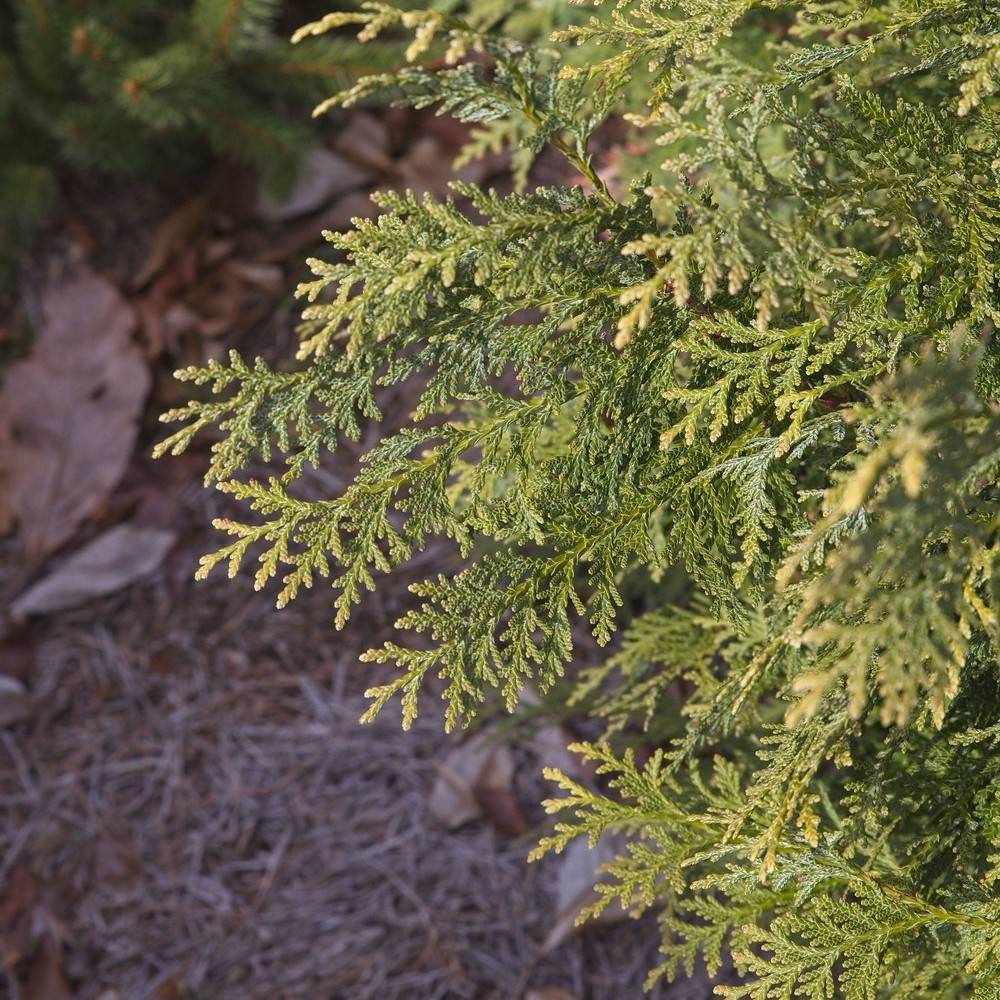
Korean Arborvitae
Thuja koraiensis
Overview
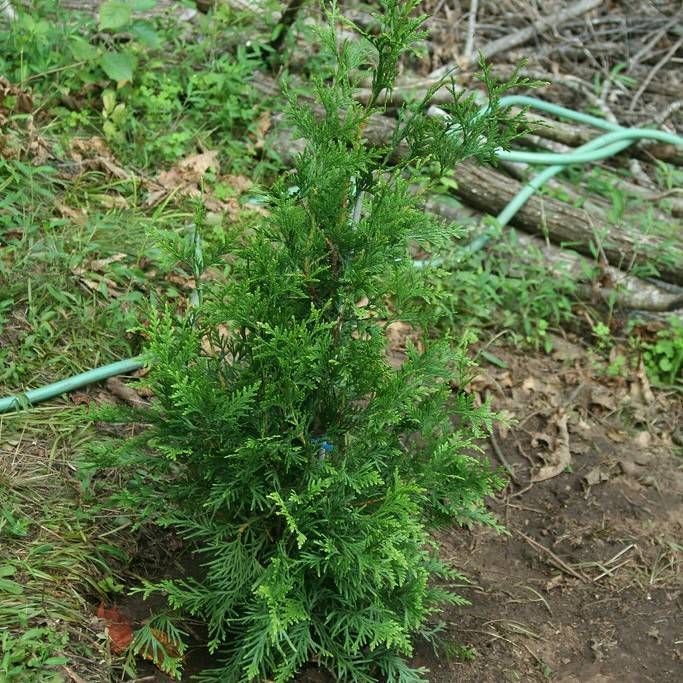
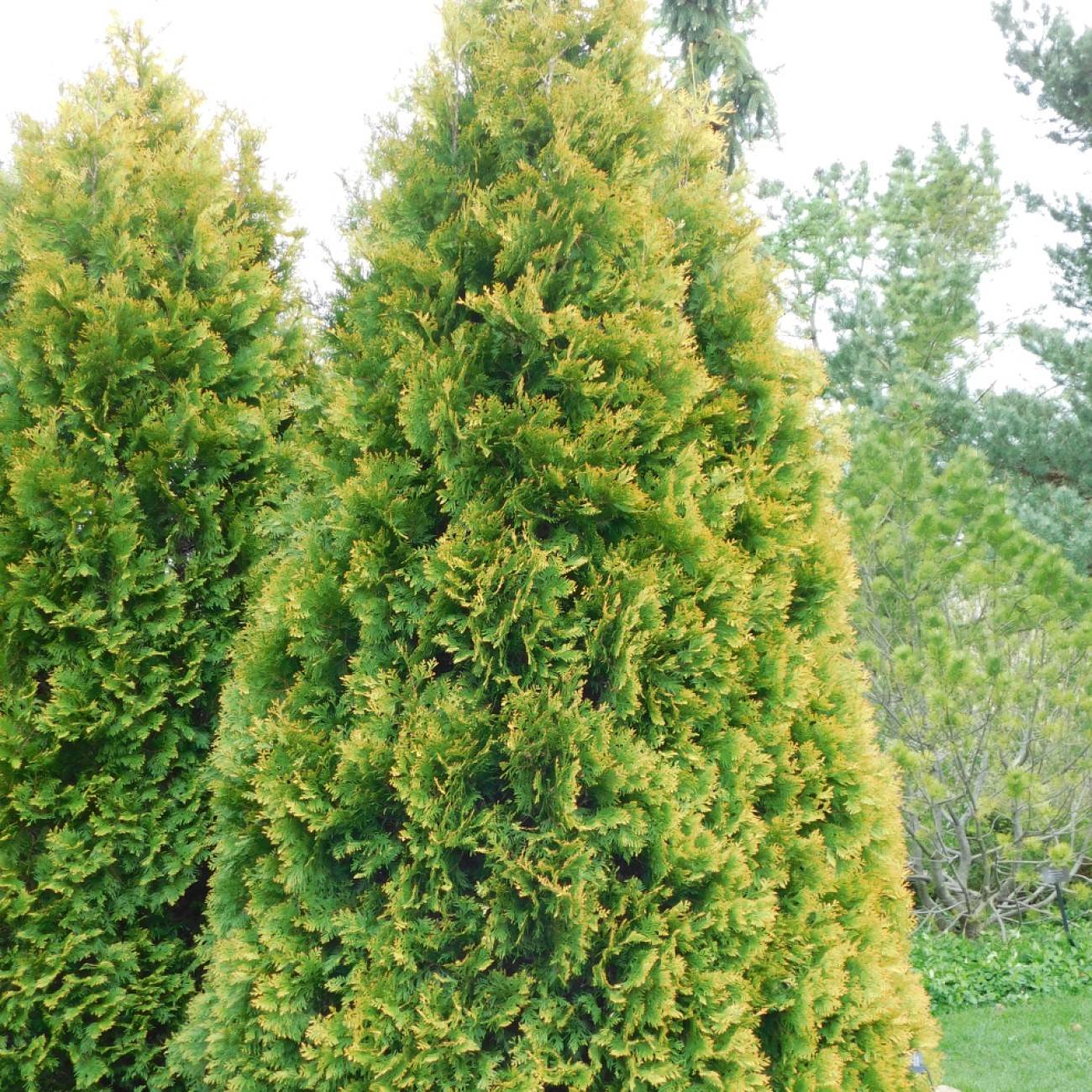
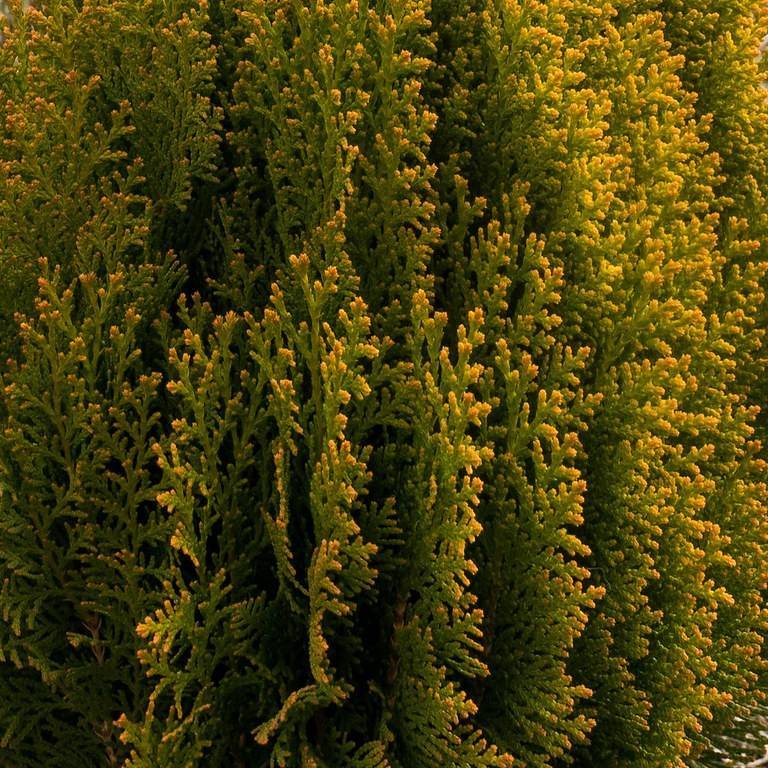
Korean Arborvitae is a compact evergreen conifer distinguished by its flat, lacy sprays of bright green foliage that develops subtle bronze tints in cold winter weather, with a pleasant cedar-like scent when crushed. Native to mountainous regions of Korea and northeastern China, it is far more cold-tolerant and resistant to common arborvitae pests than many related Thuja species. Its naturally neat, pyramidal form requires minimal shaping, making it a popular low-maintenance choice for temperate and cool climate landscapes.
Care Guide
Watering
Water newly planted Korean Arborvitae deeply once or twice per week for the first growing season to establish a robust root system, allowing the top 2 inches of soil to dry out between waterings. Mature, established plants are moderately drought-tolerant, only requiring supplemental irrigation during extended periods of hot, dry weather to prevent foliage browning. Avoid overwatering or planting in waterlogged sites, as this can quickly lead to root rot and fungal damage.
Light
Thrives in full sun, receiving at least 6 hours of direct unfiltered sunlight daily, which promotes dense, compact growth and vibrant foliage color. It can tolerate partial shade, though extended low light conditions will cause sparse, leggy growth and reduce its natural cold hardiness. In regions with extremely hot, intense afternoon sun, light dappled shade during the hottest part of the day can prevent foliage scorch.
Soil
Grows best in moist, well-drained loamy soil with a slightly acidic to neutral pH range of 5.5 to 7.0, though it adapts well to sandy or clay soils as long as drainage is adequate. It does not tolerate heavy, saturated soils that hold standing water for more than 48 hours after rainfall or irrigation. Amending planting sites with organic matter such as compost or well-rotted leaf mold will improve soil structure and nutrient content for optimal growth.
Fertilizer
Apply a balanced, slow-release evergreen fertilizer with an N-P-K ratio of 10-10-10 in early spring before new growth emerges, distributing it evenly around the root zone and watering thoroughly to activate the nutrients. Avoid fertilizing in late summer or fall, as this can stimulate tender new growth that will be damaged by upcoming winter cold. Mature, established plants only require fertilization once every 2 to 3 years if growing in nutrient-poor soils.
Temperature
Cold hardy to USDA zone 4, tolerating winter temperatures as low as -30°F (-34°C) without significant foliage damage, making it suitable for cool temperate and northern climates. It prefers average summer temperatures between 60°F and 80°F (15°C to 27°C), and may exhibit temporary foliage browning in extended heat above 90°F (32°C) without adequate moisture. Protect young plants from harsh, drying winter winds to prevent desiccation and tip burn.
Pruning
Prune only to maintain desired shape, remove dead, damaged, or diseased branches, or thin out overcrowded growth, performing all pruning in early spring before new foliage emerges. Avoid cutting back into old, bare wood, as Korean Arborvitae has very limited ability to produce new growth from heavily pruned mature wood. Light shearing of the outer foliage can be done in late spring to encourage denser, more compact growth if a formal hedge shape is desired.
Propagation
Most commonly propagated via semi-hardwood cuttings taken in late summer or early fall, selecting 4-6 inch healthy stem tips, stripping the lower foliage, dipping the cut end in rooting hormone, and planting in a well-drained perlite and peat moss mix under consistent moisture and indirect light. Seed propagation is possible but less common, as seeds require 30 to 90 days of cold stratification to break dormancy, and seed-grown plants often do not retain the exact growth characteristics of the parent plant. Rooted cuttings typically take 1 to 2 years to develop a strong enough root system for transplanting into the landscape.
Humidity
Adaptable to a wide range of humidity levels, thriving in average outdoor humidity between 40% and 70%, which is typical of its native mountain habitat. It tolerates low humidity conditions better than many other arborvitae species, though very dry air combined with high winds can cause foliage desiccation. Extra watering during periods of extremely low humidity will help prevent leaf tip browning and stress.
Repotting
Korean Arborvitae is almost exclusively grown as an outdoor landscape plant, so repotting is only required for young specimens being grown in containers before permanent planting. Repot container-grown plants every 2 to 3 years in early spring, moving to a pot 2 to 3 inches larger than the current one, using a well-drained potting mix formulated for evergreen trees and shrubs. Ensure containers have adequate drainage holes to prevent water accumulation around the root zone.
Uses & Symbolism
Widely used in landscape design as a low-maintenance privacy hedge, screen, windbreak, or specimen plant, valued for its compact size, cold hardiness, and year-round evergreen foliage. Its fragrant, rot-resistant wood is occasionally used for small woodworking projects, fence posts, and craft applications in its native range. It is also planted in restoration projects for erosion control on mountain slopes, as its dense root system stabilizes soil effectively.
Diseases & Pests
The most common disease affecting Korean Arborvitae is root rot, caused by overwatering or poorly drained soils, which leads to yellowing foliage, wilting, and eventual plant death if not corrected. Leaf blight and tip blight fungal infections may occur in warm, humid conditions, causing brown, dead tips on foliage sprays that can spread if left untreated. It is significantly more resistant to common arborvitae diseases such as cedar apple rust and cercospora leaf spot than many other Thuja species.
Related plants
Other plants you might like if you grow Korean Arborvitae.