Foster Holly
Ilex × attenuata 'Fosteri'
Overview
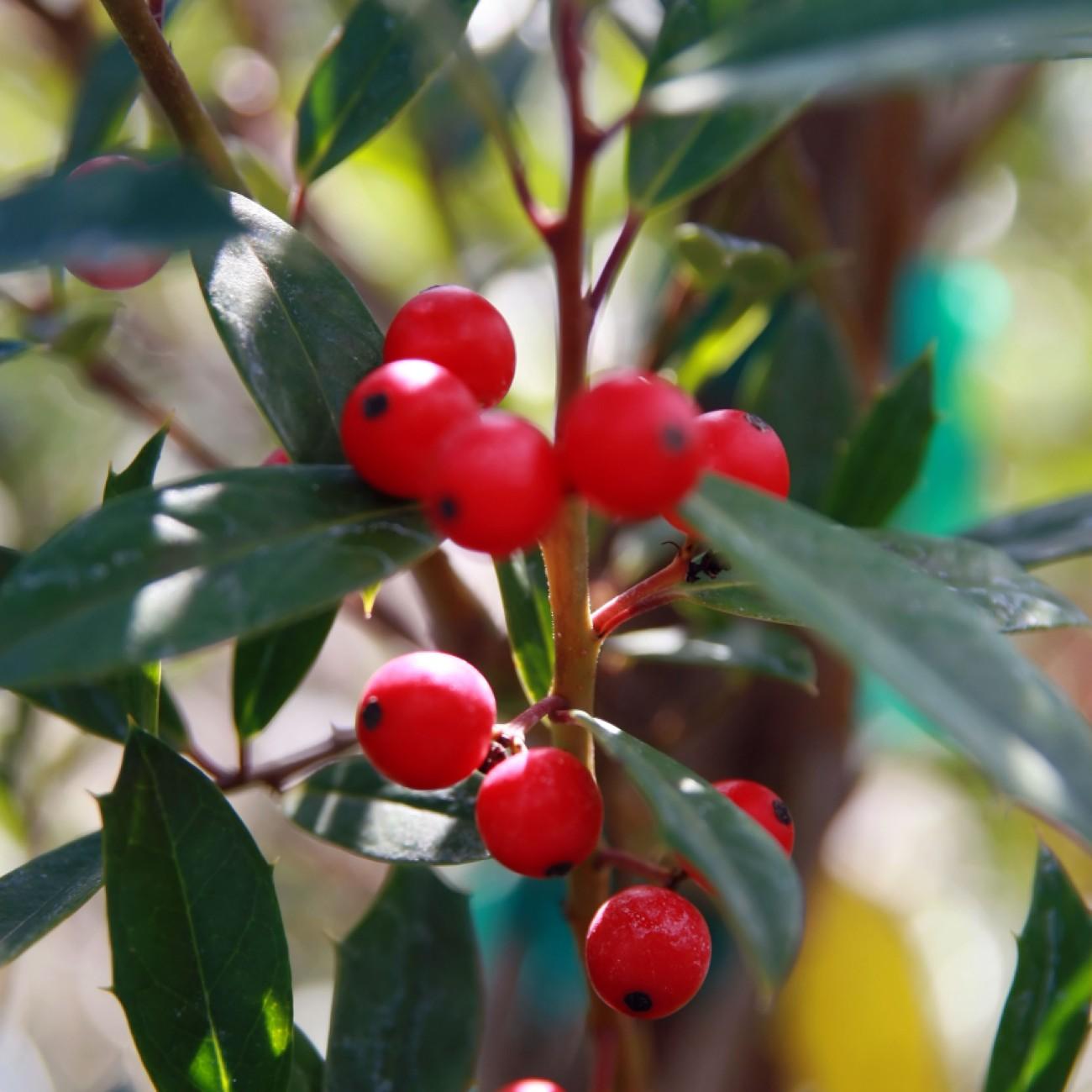
Foster Holly is a popular man-made hybrid holly developed in the early 20th century in the U.S. Southeast, combining the drought tolerance of dahoon holly and the cold hardiness of American holly. Unlike many holly cultivars, Foster #2, the most common clone, is self-fruiting and produces abundant clusters of glossy red berries in fall that persist through winter, providing critical food for native birds. Its naturally pyramidal growth habit and dense, deep green foliage make it a low-maintenance choice for formal and naturalized landscapes alike.
Care Guide
Watering
Water newly planted Foster Holly deeply once or twice per week for the first growing season to establish a robust root system, keeping soil consistently moist but not waterlogged. Once established, it is highly drought-tolerant, requiring supplemental watering only during extended periods of extreme heat or no rainfall for more than three weeks. Avoid overwatering, as saturated soil can lead to root rot and fungal disease.
Light
Foster Holly thrives in full sun to partial shade, with at least four hours of direct sunlight daily to support dense foliage growth and maximum berry production. It can tolerate deeper shade, though growth will become sparser and berry yields will be significantly reduced. In hot southern climates, it benefits from light afternoon shade to prevent leaf scorch during peak summer heat.
Soil
This holly adapts to a wide range of soil types, including sandy, loam, and clay soils, as long as the site offers good drainage. It prefers slightly acidic soil with a pH between 5.0 and 6.5; alkaline soils can cause iron chlorosis, leading to yellowing leaves and stunted growth. Amending planting holes with peat moss or compost can improve soil structure and adjust pH for optimal growth.
Fertilizer
Apply a slow-release, acidic fertilizer formulated for evergreens or azaleas in early spring before new growth emerges, following package dosage instructions to avoid over-fertilization, which can burn roots and damage foliage. A second light application in mid-summer can support healthy growth in poor soils, but avoid fertilizing after late summer, as new growth may be damaged by early fall frost. Established plants rarely need more than one fertilizer application per year.
Temperature
Foster Holly is cold hardy in USDA zones 6 through 9, tolerating winter temperatures as low as -10°F (-23°C) without significant damage. Young plants may benefit from a layer of mulch around the base and a burlap wrap in their first 2-3 winters in zone 6 to protect against cold wind burn. It can tolerate high summer temperatures up to 100°F (38°C) as long as it has adequate moisture.
Pruning
Foster Holly requires minimal pruning to maintain its natural pyramidal shape, though light trimming can be done in late winter before new growth starts to shape the plant or remove dead, damaged, or crossing branches. Avoid heavy pruning, as this can reduce berry production for the current season and leave bare spots that are slow to fill in. Always use sharp, sterilized pruning tools to prevent the spread of disease between cuts.
Propagation
Foster Holly is most commonly propagated via semi-hardwood cuttings taken in late summer or early fall, as seeds from the hybrid will not grow true to the parent cultivar. Cuttings should be 4-6 inches long, with lower leaves removed, dipped in rooting hormone, and planted in a well-draining, sterile potting mix kept consistently moist under bright, indirect light until roots form in 2-3 months. Seed propagation is not recommended for home gardeners, as seeds require 1-2 years of cold stratification to germinate and produce highly variable offspring.
Humidity
Foster Holly adapts well to a wide range of humidity levels, thriving in the moderate to high humidity of its native southeastern U.S. range while also tolerating the drier conditions of inland zones as long as it has adequate soil moisture. It does not require supplemental humidity when grown outdoors, and its thick, waxy leaves prevent moisture loss even in dry air. Very low humidity paired with high heat may cause minor leaf browning at the edges, which can be remedied with occasional deep watering.
Repotting
Foster Holly is almost exclusively grown as an outdoor landscape plant and does not require repotting when planted directly in the ground. If grown in a container, repot every 2-3 years in early spring before new growth emerges, using a slightly larger pot with drainage holes and an acidic, well-draining potting mix. After repotting, water thoroughly and keep the plant in partial shade for 1-2 weeks to reduce transplant shock.
Uses & Symbolism
Foster Holly is widely used in residential and commercial landscaping as a privacy screen, hedge, specimen plant, or foundation planting, thanks to its year-round evergreen foliage and attractive winter berries. Its persistent red berries and glossy leaves make it a popular choice for cut holiday arrangements, wreaths, and seasonal decor. It also provides excellent shelter and winter food for native songbirds, making it a valuable addition to pollinator and wildlife gardens.
Diseases & Pests
Foster Holly is relatively pest and disease resistant, though it can be susceptible to holly leaf miner, spider mites, and scale insects, which can be controlled with horticultural oil or insecticidal soap applied in early spring. Fungal diseases such as leaf spot, tar spot, and root rot can occur in poorly drained, overly wet soil, so proper site selection and avoiding overwatering are key preventative measures. Chlorosis, or yellowing of leaves, is a common issue in alkaline soils, which can be corrected by amending the soil with sulfur to lower pH.
Related plants
Other plants you might like if you grow Foster Holly.