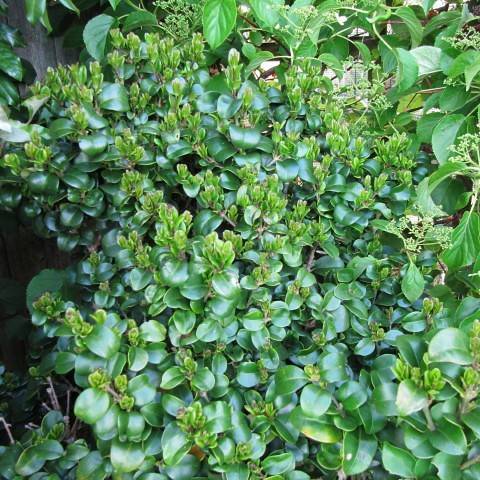
Japanese Privet
Ligustrum japonicum
Overview
Japanese Privet is a hardy, fast-growing evergreen shrub valued for its dense, uniform growth habit and tolerance of heavy pruning. It produces clusters of small, fragrant white flowers in late spring to early summer, which mature into dark purple-black berries that persist through fall and winter, providing food for wild birds. While often grown as a formal hedge or screen, it can also be trained into a small ornamental tree for garden focal points.
Care Guide
Watering
Water newly planted Japanese Privet regularly to keep soil consistently moist for the first growing season as it establishes a deep root system. Once established, it is highly drought-tolerant, requiring supplemental water only during extended periods of extreme heat or dryness. Avoid overwatering or allowing roots to sit in saturated soil, as this can lead to root rot.
Light
Thrives in full sun to partial shade, with the most dense, lush growth occurring in locations that receive at least 4-6 hours of direct sunlight daily. It can tolerate full shade, though growth may become sparser and flowering may be reduced. Indoor specimens require bright, indirect light to maintain healthy foliage.
Soil
Adaptable to a wide range of soil types, including sandy, loam, and clay soils, as long as the site provides good drainage. It tolerates both acidic and alkaline pH levels, and can even withstand occasional compacted or poor-quality soils common in urban landscapes. For optimal growth, amend heavy clay or sandy soils with organic matter at planting time.
Fertilizer
Feed established plants in early spring before new growth emerges with a balanced, slow-release shrub fertilizer to support healthy foliage and flowering. Avoid fertilizing late in the growing season, as this can stimulate tender new growth that is vulnerable to damage from cold winter temperatures. Potted specimens benefit from a diluted liquid fertilizer applied once per month during the active growing season.
Temperature
Hardy in USDA zones 7 to 10, tolerating winter temperatures as low as 0°F (-18°C) once fully established. It can tolerate occasional light frost, but prolonged freezing temperatures may cause leaf burn or dieback of young branches. Hot summer temperatures are well-tolerated, as long as plants receive adequate moisture during extreme heat events.
Pruning
Prune in late winter or early spring before new growth appears to shape hedges or maintain desired size, as it tolerates very heavy pruning and shearing exceptionally well. Remove any dead, damaged, or crossing branches first to improve air circulation through the canopy. Light trimming can be done throughout the growing season to keep formal hedges neat, but avoid trimming after early fall to prevent stimulating cold-sensitive new growth.
Propagation
Most commonly propagated from semi-hardwood cuttings taken in mid to late summer, from stems that have partially hardened off from the current year's growth. Dip cuttings in rooting hormone, place in a well-draining propagating medium, and keep moist and warm until roots develop, typically within 4-6 weeks. It can also be grown from seed, though seeds require cold stratification to germinate and may take several years to reach mature size.
Humidity
Tolerates a wide range of humidity levels, thriving in the moderate humidity of its native range as well as drier conditions common in temperate landscapes. It can tolerate occasional high humidity, though good air circulation is recommended in very humid climates to prevent fungal leaf spot issues. Indoor specimens do not require extra humidity, adapting well to average household humidity levels.
Repotting
Potted Japanese Privet should be repotted every 2-3 years in early spring before new growth starts, moving to a container one size larger with fresh, well-draining potting mix. Prune back up to one-third of the root ball during repotting to control size if keeping the plant in the same container. Ensure the new pot has ample drainage holes to prevent waterlogging of the root system.
Uses & Symbolism
Widely planted as a formal or informal hedge, privacy screen, or windbreak in residential and commercial landscapes due to its dense growth and pruning tolerance. It is also grown as a specimen ornamental tree, or trained into topiary shapes for decorative garden features. Its fragrant flowers attract pollinators, while its persistent berries provide a food source for native bird species in fall and winter.
Diseases & Pests
Common pests include aphids, scale insects, spider mites, and whiteflies, which can be controlled with horticultural oil or insecticidal soap sprays when infestations are detected. Fungal diseases such as leaf spot, powdery mildew, and root rot may occur in conditions of poor air circulation, excessive moisture, or poorly draining soil. Prevent most disease issues by planting in well-draining soil, spacing plants to allow air flow, and avoiding overhead watering that keeps foliage wet for extended periods.
Related plants
Other plants you might like if you grow Japanese Privet.