Elecampane
Inula helenium
Overview
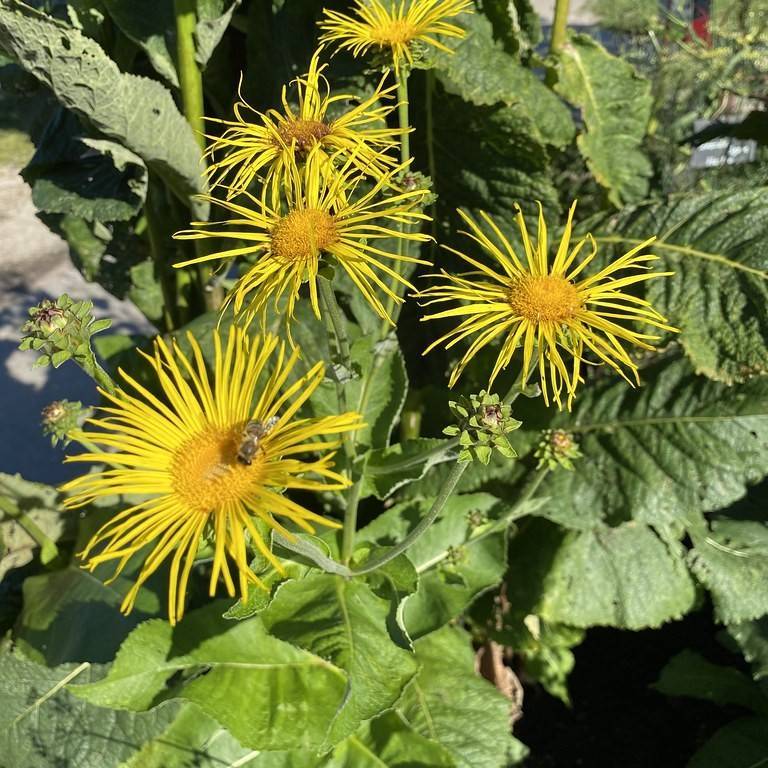
Elecampane is a robust, clump-forming herb that produces broad, fuzzy, dark green basal leaves and tall, upright stems topped with 2-4 inch wide yellow composite flowers from mid to late summer. Native to damp meadows, roadsides, and woodland edges across Eurasia, it has naturalized in parts of North America after being introduced for medicinal and ornamental use. Its thick, branching rhizomes have a distinct camphor-like scent and have been harvested for centuries for their therapeutic properties.
Care Guide
Watering
Elecampane prefers consistently moist, well-drained soil and should be watered deeply whenever the top 1-2 inches of soil feel dry, especially during prolonged dry spells to support its large root system. Avoid overwatering or allowing the soil to become waterlogged, as this can cause rhizome rot, particularly in heavy clay soils. Once established, it has moderate drought tolerance, though regular moisture will produce more vigorous growth and larger blooms.
Light
This plant thrives in full sun, requiring at least 6 hours of direct sunlight daily to produce strong stems and abundant flowering. It can tolerate partial shade, especially in regions with very hot, intense summer sun, but shaded plants may become leggy, produce fewer flowers, and be more prone to stem flopping. For indoor cultivation, place it in a south-facing window or under grow lights that provide full-spectrum light for 10-12 hours per day.
Soil
Elecampane adapts to a wide range of soil types but grows best in fertile, loamy, slightly alkaline to neutral soil with a pH between 6.0 and 7.5. The soil should be deep and well-aerated to accommodate its long, thick rhizomes; amend heavy clay soils with compost or sand to improve drainage before planting. It can tolerate poor, rocky soils as long as drainage is adequate, though growth will be slower and less robust.
Fertilizer
Apply a balanced, all-purpose granular fertilizer in early spring as new growth emerges, working it into the top layer of soil around the base of the plant to support strong root and foliage development. Avoid over-fertilizing with high-nitrogen formulas, as this can encourage excessive leaf growth at the expense of flower production and reduce the concentration of active compounds in the roots. For plants grown for medicinal harvest, top-dress with well-rotted compost annually instead of synthetic fertilizers to maintain organic soil quality.
Temperature
Elecampane is cold-hardy in USDA zones 3 to 7, tolerating winter temperatures as low as -40°F (-40°C) when its roots are established. It prefers mild summer temperatures between 60-80°F (15-27°C), though it can tolerate brief periods of heat up to 90°F (32°C) if provided with adequate moisture. In regions with very warm winters, it may not receive enough cold dormancy to thrive, so it is not recommended for zones 8 and above.
Pruning
Remove spent flower heads throughout the blooming season to encourage additional flowering and prevent self-seeding, as elecampane can spread aggressively in optimal growing conditions. Cut back the entire plant to 3-4 inches above the soil line in late fall after the foliage has died back, to reduce overwintering pest habitat and tidy the planting area. If growing for root harvest, cut off flower buds as they appear in the first year to direct the plant’s energy into root development rather than blooming.
Propagation
Elecampane is most commonly propagated by root division in early spring before new growth emerges or in late fall after foliage dies back; dig up mature clumps, split the rhizomes into sections with at least one healthy bud each, and replant 18-24 inches apart at the same depth they were growing. It can also be grown from seed sown directly outdoors in fall or early spring, as the seeds require a period of cold stratification to germinate; surface-sow seeds, as they need light to sprout, and keep moist until germination occurs in 14-21 days. Seed-grown plants typically do not flower until their second year, while divided rhizomes will often bloom in their first growing season.
Humidity
Elecampane tolerates a wide range of humidity levels, thriving in the moderate humidity typical of its native temperate meadow habitats, between 40% and 70% relative humidity. It can tolerate drier air as long as soil moisture is adequate, though very high humidity combined with poor air circulation may increase the risk of fungal leaf diseases. Indoor-grown plants benefit from occasional misting if the air is excessively dry, especially during winter heating months.
Repotting
Elecampane is rarely grown in containers long-term due to its large size and deep root system, but if potted, use a large, deep container at least 12 inches wide and deep to accommodate root growth. Repot container-grown plants every 2-3 years in early spring, gently dividing overcrowded rhizomes and refreshing the potting mix to maintain drainage and fertility. Ensure containers have ample drainage holes to prevent waterlogging, which is a common cause of root rot in potted elecampane.
Uses & Symbolism
Elecampane has a long history of use in traditional herbal medicine, with its roots used to make teas, tinctures, and syrups to support respiratory health and soothe digestive discomfort. Its large, showy yellow flowers make it an attractive addition to cottage gardens, wildflower meadows, and pollinator plantings, as it attracts bees, butterflies, and other beneficial insects. The dried root has also been used as a flavoring agent for liqueurs, confections, and herbal bitters in European culinary traditions.
Diseases & Pests
Elecampane is relatively pest and disease resistant, but it can be susceptible to powdery mildew, which appears as a white, powdery coating on leaves in humid, poorly ventilated conditions; prevent this by spacing plants appropriately to encourage air flow and avoid overhead watering. Aphids and leaf miners may occasionally feed on the foliage, though infestations are usually mild and can be controlled with insecticidal soap or by encouraging natural predators like ladybugs. Rhizome rot can occur in poorly drained, waterlogged soil, so ensure planting sites have good drainage to avoid this potentially fatal issue.
Related plants
Other plants you might like if you grow Elecampane.