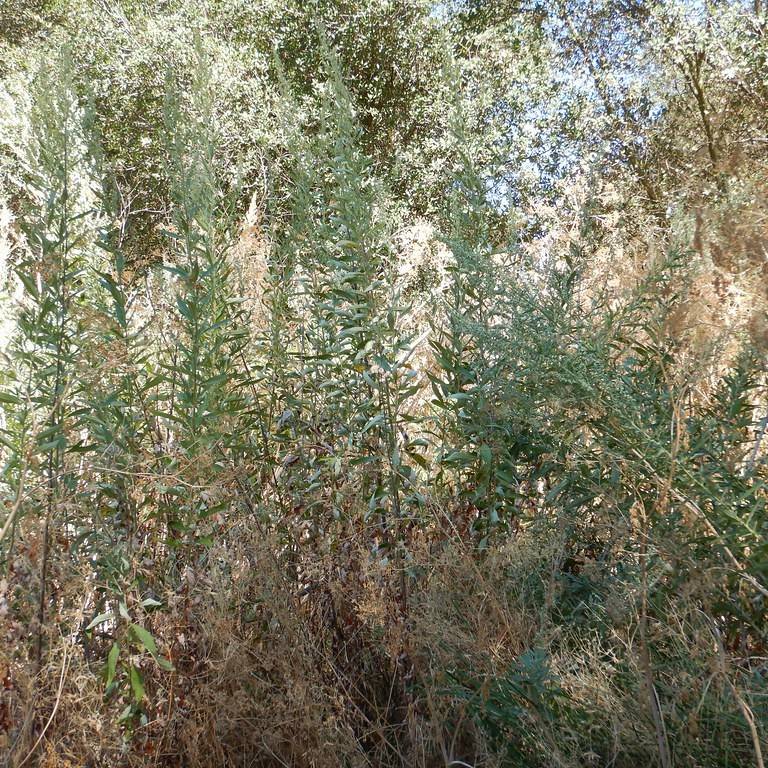
Douglas Wormwood
Artemisia douglasiana
Overview
Douglas Wormwood, also called mugwort or sagewort, is a robust herbaceous perennial native to riparian zones, meadows, and disturbed slopes across western North America. Its soft, lobed, silvery-green foliage emits a distinctive camphor-like scent when crushed, and it produces small, inconspicuous yellowish-green flower clusters in late summer. It spreads aggressively via rhizomes, forming dense colonies that provide valuable habitat for native pollinators and wildlife.
Care Guide
Watering
Drought-tolerant once established, requiring only occasional deep watering during extended dry periods. Avoid overwatering, as soggy soil can quickly cause root rot. Newly planted specimens need regular, light watering to support root development for the first 1-2 growing seasons.
Light
Thrives in full sun, which promotes compact, dense growth and the strongest aromatic foliage. It can tolerate partial shade, but plants will become leggy, produce fewer flowers, and may be more susceptible to foliar diseases in low-light conditions.
Soil
Adaptable to a wide range of soil types, including sandy, loamy, clay, and poor, rocky soils, as long as drainage is excellent. It tolerates neutral to slightly alkaline pH levels, and even grows in mildly saline soils near coastal areas. Avoid heavy, waterlogged soils that hold moisture for long periods.
Fertilizer
Requires very little fertilization, as it is adapted to low-nutrient wild soils. An annual light application of balanced, slow-release fertilizer in early spring is sufficient for garden-grown plants. Over-fertilization will cause excessive, floppy growth and reduce the concentration of aromatic oils in foliage.
Temperature
Hardy in USDA zones 4 to 9, tolerating winter temperatures as low as -30°F (-34°C) when established. It thrives in warm, dry summer climates common to its native range, and can withstand short periods of extreme heat above 100°F (38°C) with minimal supplemental water. Young plants may need light frost protection during their first winter in colder zones.
Pruning
Cut back entire stems to 2-3 inches above the soil line in late winter or early spring to encourage fresh, bushy new growth. Deadhead spent flower clusters in fall if you wish to prevent self-seeding, though the small flowers are a valuable food source for late-season pollinators. Thin out crowded colonies every 2-3 years to improve air circulation and reduce the risk of foliar fungal issues.
Propagation
Most easily propagated by dividing mature rhizome clumps in early spring or late fall, with each division requiring at least one growing bud and a section of healthy root. Stem cuttings taken from new, soft growth in late spring or early summer root readily in moist, well-draining potting mix within 3-4 weeks. It can also be grown from seed, which requires cold stratification for 30-60 days to germinate consistently.
Humidity
Adaptable to a wide range of humidity levels, thriving in the dry to moderate humidity of its native western North American range. It tolerates high humidity as long as soil drainage is excellent and foliage has plenty of air circulation to prevent fungal growth. Avoid misting the foliage, as prolonged moisture on leaves can trigger powdery mildew.
Repotting
Rarely grown in containers due to its aggressive rhizomatous spreading habit, but if potted, use a deep, wide container with ample drainage holes. Repot every 1-2 years in early spring, trimming back overgrown rhizomes and refreshing the potting mix to prevent the plant from becoming root-bound. Use a fast-draining, sandy potting mix to reduce the risk of root rot in containers.
Uses & Symbolism
Douglas Wormwood has a long history of use in Indigenous traditional medicine, for treating colds, headaches, skin irritations, and as a ceremonial smudge herb. Its dense, spreading growth makes it an excellent choice for erosion control on slopes and disturbed sites, and it is a popular addition to native pollinator gardens, supporting bees, butterflies, and beneficial insects. The aromatic foliage is sometimes used in dried floral arrangements, or planted as a natural deer repellent in landscape borders.
Diseases & Pests
Generally resistant to most pests and diseases, but may develop powdery mildew or rust in humid, poorly ventilated conditions with prolonged foliage moisture. Aphids and spider mites may occasionally infest stressed plants, especially those grown in overly shaded or waterlogged conditions. Root rot is the most serious issue, occurring almost exclusively in heavy, poorly drained soils that stay saturated for long periods.
Related plants
Other plants you might like if you grow Douglas Wormwood.