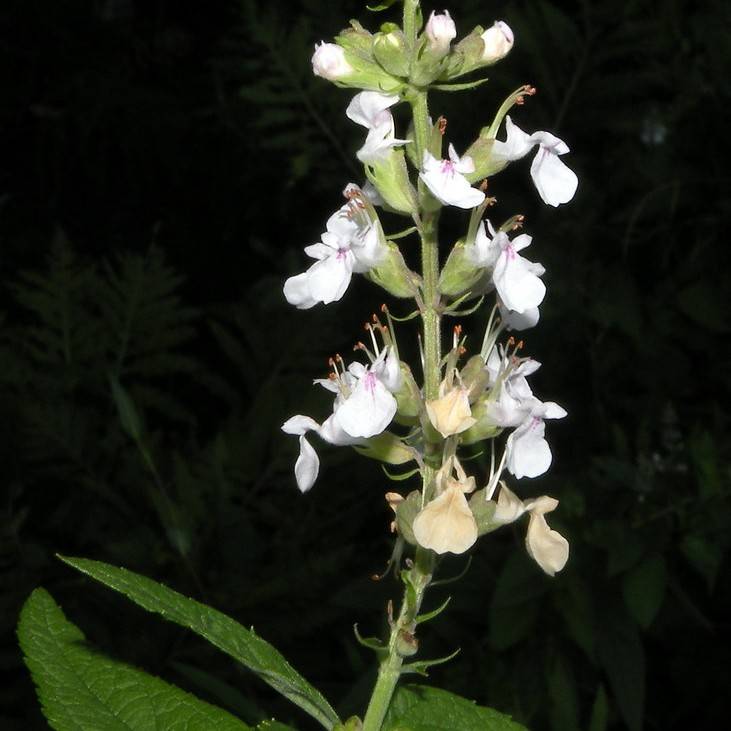
American Germander
Teucrium canadense
Overview
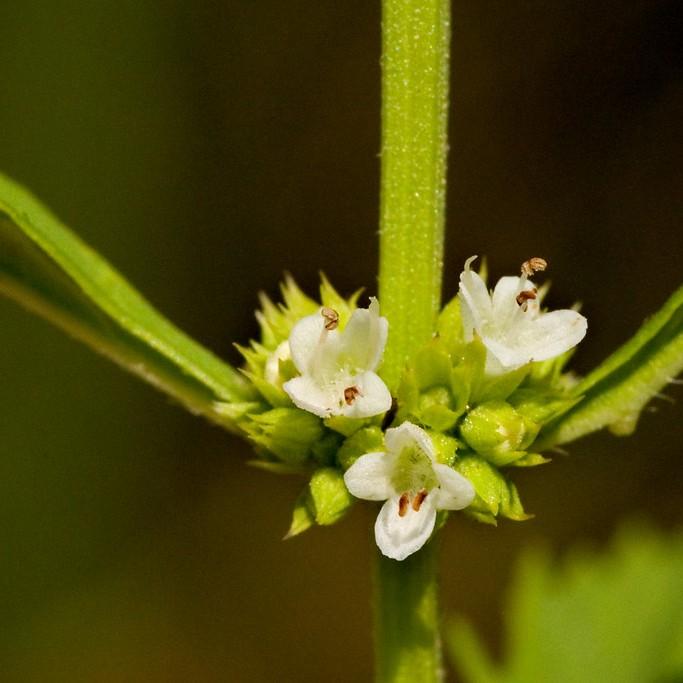
American Germander, also called Canada Germander, is a clumping herbaceous perennial that thrives in moist, sunny habitats such as meadows, stream banks, and open woodlands. It produces upright, square stems lined with toothed, aromatic gray-green leaves, and dense terminal spikes of two-lipped, pale lavender to white flowers that bloom from mid to late summer. The plant spreads slowly via rhizomes to form small colonies, making it a low-maintenance choice for native plant gardens and rain gardens.
Care Guide
Watering
American Germander prefers consistently moist, well-drained soil, and tolerates temporary flooding better than drought; water deeply once per week during dry spells to keep the root zone evenly damp. Reduce watering frequency in late fall and winter as the plant goes dormant, only watering if the top 3 inches of soil become completely dry. Avoid overwatering in heavy, poorly drained soils to prevent root rot.
Light
This species grows best in full sun, which encourages robust flowering and compact growth; it tolerates partial shade, though stems may become leggy and flower production will be reduced. In extremely hot southern climates, provide light afternoon shade to prevent leaf scorch and reduce moisture stress.
Soil
American Germander adapts to a wide range of soil types, including sandy loam, clay, and silty soils, as long as moisture retention is adequate. It prefers a neutral to slightly alkaline pH between 6.0 and 7.5, but tolerates mildly acidic conditions as well. Amend poor, sandy soils with compost or well-rotted manure to improve moisture holding capacity.
Fertilizer
This low-maintenance perennial rarely needs supplemental fertilizer when grown in average garden soil; an annual topdressing of 1 inch of compost in early spring provides sufficient nutrients for the growing season. Avoid high-nitrogen fertilizers, which can promote excessive leaf growth at the expense of flowers and lead to floppy stems. If growing in very poor, nutrient-depleted soil, apply a balanced, slow-release 10-10-10 fertilizer once per year in early spring at half the recommended rate.
Temperature
American Germander is cold hardy in USDA zones 3 through 9, tolerating winter temperatures as low as -40°F (-40°C) once established. It thrives in summer temperatures between 65°F and 85°F (18°C to 29°C), and tolerates short periods of heat above 90°F (32°C) if soil moisture is sufficient. Cut back dead stems after the first hard frost to prepare the plant for winter dormancy.
Pruning
Prune back dead, winter-killed stems to 2 inches above the soil line in early spring before new growth emerges to encourage fresh, vigorous shoots. Pinch back the tips of young stems in late spring if you desire a more compact, bushier growth habit, though this is not required for healthy plants. Deadhead spent flower spikes in late summer if you want to prevent self-seeding, or leave them in place to provide food for seed-eating birds and allow natural spread.
Propagation
American Germander is most easily propagated by dividing mature clumps in early spring or late fall, when the plant is dormant; dig up the entire clump, split it into sections with at least 2-3 growing points each, and replant immediately at the same depth as the original plant. It can also be grown from seed sown directly outdoors in fall, or cold stratified for 30 days and sown indoors 6-8 weeks before the last spring frost. Stem cuttings taken from soft, new growth in early summer root readily in moist potting mix with bottom heat.
Humidity
This species tolerates a wide range of humidity levels, from dry continental climates to humid subtropical regions, as long as soil moisture needs are met. It has no special humidity requirements when grown outdoors, and is not suitable for indoor growing due to its size and high light needs.
Repotting
American Germander is almost exclusively grown outdoors in garden beds, so repotting is rarely necessary. If growing in a large container, repot every 2-3 years in early spring before new growth emerges, using a rich, moisture-retentive potting mix and upgrading the pot size by 2 inches if roots are densely bound. Ensure containers have ample drainage holes to prevent waterlogged soil.
Uses & Symbolism
American Germander is a popular addition to native pollinator gardens, rain gardens, and meadow plantings, where its nectar-rich flowers attract bumblebees, honeybees, butterflies, and hummingbirds throughout the summer. It has a long history of use in traditional Indigenous and folk medicine as a diuretic, diaphoretic, and tonic for treating fevers, respiratory issues, and digestive complaints. Its rhizomatous spread also makes it useful for erosion control along stream banks and in areas with periodic flooding.
Diseases & Pests
American Germander is largely pest and disease resistant, though it may be susceptible to powdery mildew in very humid, shaded conditions with poor air circulation. Root rot can occur in heavy, waterlogged soils with insufficient drainage, especially during winter dormancy. Aphids and spider mites may occasionally infest stressed plants, and can be controlled with a strong spray of water or insecticidal soap.
Related plants
Other plants you might like if you grow American Germander.