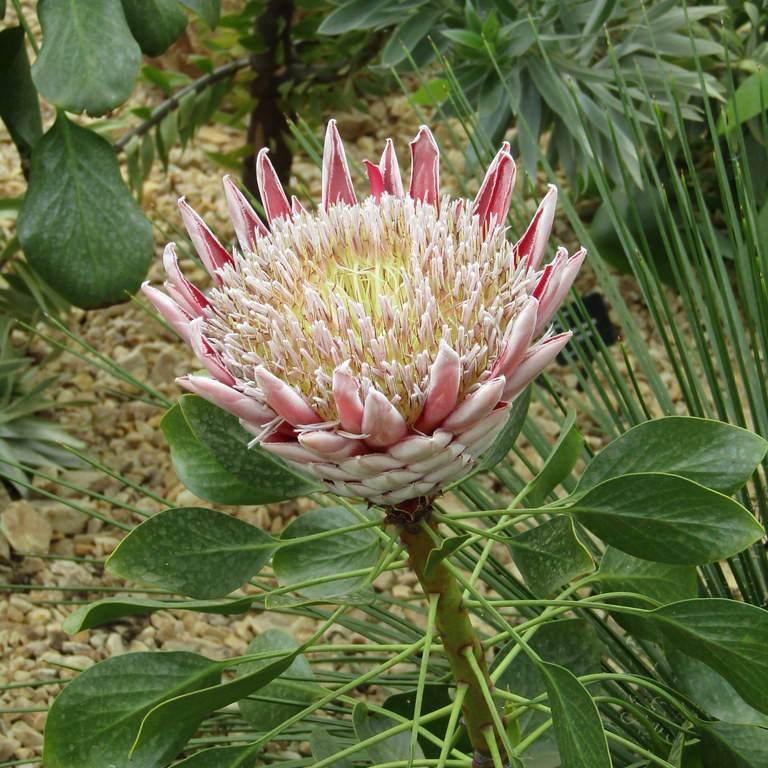
King Protea
Protea cynaroides
Overview
The king protea is the largest species in the Protea genus, recognizable by its enormous, artichoke-like flower heads that can reach 12 inches (30 cm) in diameter, surrounded by stiff, colorful bracts in shades of pink, red, cream, or white. It is adapted to the nutrient-poor, well-drained soils and frequent fires of its native fynbos habitat, with a thick, woody rootstock that resprouts after burns. As the national flower of South Africa, it is a globally iconic ornamental plant, widely grown for cut flower production and landscape use in Mediterranean climates.
Care Guide
Watering
King proteas are extremely drought-tolerant once established, requiring only occasional deep watering during extended dry periods; overwatering is the most common cause of plant death, so allow soil to dry completely between waterings. Avoid wetting the foliage or crown when watering to reduce fungal disease risk, and reduce watering significantly during the cool, dormant winter months. Newly planted specimens need regular, light watering for the first 1-2 years to encourage root development, but never let them sit in saturated soil.
Light
King proteas require full, direct sunlight for a minimum of 6 hours per day to produce abundant blooms and maintain healthy, compact growth. They will not thrive in partial or full shade, where they become leggy, produce few to no flowers, and are more susceptible to root rot. In very hot, arid climates, a small amount of afternoon shade may be beneficial to prevent leaf scorch, but avoid extended shaded periods.
Soil
This species requires extremely well-drained, acidic (pH 4.5 to 6.5), nutrient-poor soil, ideally a sandy or gravelly loam with high organic matter content but low phosphorus levels. Heavy clay soils are unsuitable, as they retain too much moisture and will quickly cause root rot; raised beds or mounds are recommended for planting in areas with heavy soil. For container growing, use a coarse, acidic potting mix formulated for native Australian or South African plants, with added perlite or pumice to improve drainage.
Fertilizer
King proteas have very low nutrient requirements and are highly sensitive to phosphorus, so avoid standard fertilizers that contain high levels of this mineral. If fertilization is necessary, use a slow-release, low-phosphorus fertilizer formulated for proteas or native Australian plants, applied sparingly once per year in early spring at half the recommended rate. Never apply manure or high-nitrogen fertilizers, as these can damage the plant’s fine, sensitive root system and lead to decline.
Temperature
King proteas thrive in mild, Mediterranean climates, with ideal daytime temperatures between 60-80°F (15-27°C) and cool nighttime temperatures between 40-50°F (4-10°C). They are moderately frost-tolerant, able to withstand brief dips down to 25°F (-4°C) once mature, but young plants require protection from frost to prevent damage. In areas with harsh winters, grow king proteas in containers that can be moved to a cool, bright indoor space during the coldest months.
Pruning
Prune king proteas immediately after flowering to encourage bushier growth and more abundant blooms the following season, cutting back spent flower stems to just above a set of healthy leaves. Remove any dead, damaged, or crossing branches throughout the year to improve air circulation and reduce fungal disease risk. Avoid heavy pruning into old, woody growth, as this can damage the plant’s rootstock and reduce its ability to resprout.
Propagation
King proteas are most commonly propagated from semi-hardwood cuttings taken in late summer or early autumn, using 4-6 inch (10-15 cm) stem tips from healthy, disease-free plants, treated with rooting hormone and placed in a coarse, well-drained propagation mix under high humidity. Propagation from seed is also possible, but seeds require smoke treatment or stratification to break dormancy, and germination can take 1-3 months with a low success rate. Grafting onto more vigorous, disease-resistant rootstock is often used for commercial production to improve performance in heavier soils.
Humidity
King proteas prefer low to moderate humidity levels between 30-50%, and are well-adapted to dry air conditions. High humidity, especially combined with poor air circulation, increases the risk of fungal leaf spots and root rot, so ensure plants are spaced properly and have constant air flow. In humid climates, avoid overhead watering and plant in a location with good exposure to wind to reduce moisture buildup on foliage.
Repotting
Container-grown king proteas require repotting every 2-3 years in early spring, before new growth begins, to refresh the potting mix and prevent root binding. Handle the root system very carefully during repotting, as protea roots are fragile and easily damaged; avoid disturbing the root ball more than necessary, and do not plant deeper than the previous soil level. Use a container only 1-2 inches larger than the previous one, as overly large pots hold excess moisture that can lead to root rot.
Uses & Symbolism
King proteas are one of the most popular cut flowers globally, with blooms that last up to 3 weeks in a vase and are widely used in floral arrangements, wedding bouquets, and dried flower crafts. They are a striking landscape plant for Mediterranean-climate gardens, planted as specimen shrubs or in drought-tolerant, native plant gardens to attract pollinators including bees, beetles, and sunbirds. In their native South Africa, they have cultural significance as a symbol of resilience and beauty, and are featured on national emblems and used in traditional medicine to treat chest ailments and diarrhea.
Diseases & Pests
The most common issue affecting king proteas is root rot caused by overwatering or poorly draining soil, a fungal disease that causes yellowing foliage, wilting, and eventual plant death, and is often fatal once symptoms appear. Fungal leaf spots and stem cankers can occur in high humidity or with poor air circulation, which can be treated by removing affected foliage, improving air flow, and applying a copper-based fungicide if necessary. Common pests include protea beetles, which feed on flower buds, and scale insects, which suck sap from stems and leaves; these can be controlled with insecticidal soap or horticultural oil, applied carefully to avoid damaging the plant’s sensitive foliage.
Related plants
Other plants you might like if you grow King Protea.