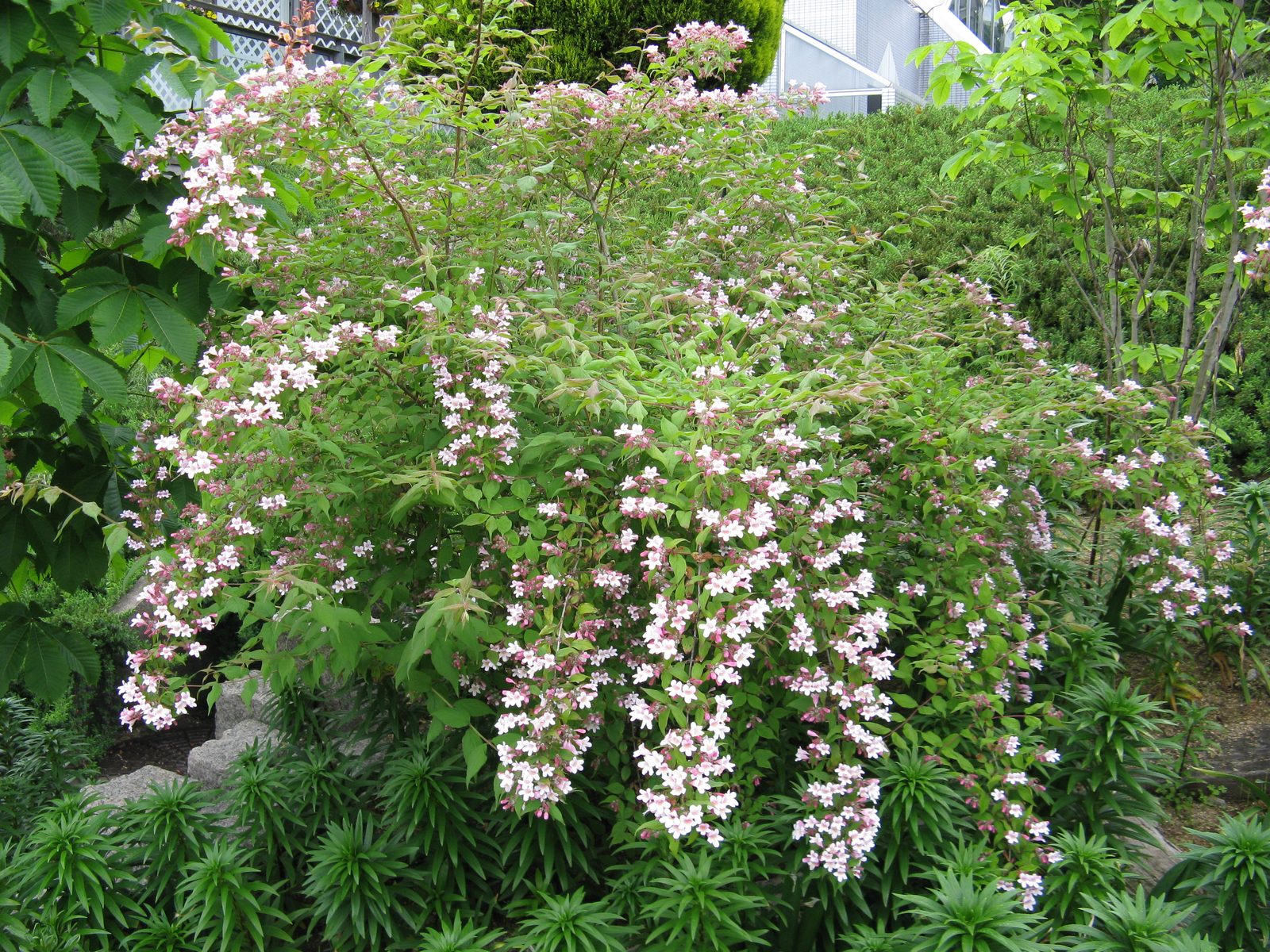
Beauty Bush
Kolkwitzia amabilis
Overview
Beauty bush is a deciduous, arching shrub introduced to Western horticulture in the early 1900s by plant explorer Ernest Wilson, quickly gaining popularity for its prolific, eye-catching spring floral display. As it matures, its peeling, light brown bark adds winter interest, while its dense, dark green foliage turns a muted yellow before dropping in autumn. It is a low-maintenance, hardy landscape plant that thrives in temperate regions, with few pest or disease issues to detract from its ornamental value.
Care Guide
Watering
Water young beauty bush plants regularly to keep the soil consistently moist but not waterlogged for the first 1-2 years as they establish a robust root system. Once established, the shrub is highly drought tolerant, only requiring supplemental watering during prolonged periods of hot, dry weather to prevent foliage wilting. Avoid overwatering, as saturated soil can lead to root rot and other fungal issues.
Light
Beauty bush flowers most abundantly when grown in full sun, which is defined as a minimum of 6 hours of direct, unfiltered sunlight per day. It can tolerate partial shade, though too much shade will result in sparser blooms, leggy growth, and a more open, less attractive overall shape. In regions with extremely hot, intense summer sun, a small amount of afternoon dappled shade can prevent leaf scorch without impacting flowering.
Soil
This adaptable shrub grows well in a wide range of soil types, including loam, sand, and clay, as long as the site has good drainage to prevent root rot. It prefers a slightly acidic to neutral soil pH between 6.0 and 7.5, but can tolerate mildly alkaline conditions without significant adverse effects. Amending heavy or poor soils with organic matter such as compost or well-rotted manure at planting time will improve structure, nutrient content, and drainage for optimal growth.
Fertilizer
Beauty bush has low to moderate nutrient needs, and typically only requires fertilization once per year in early spring before new growth emerges. Apply a balanced, slow-release granular fertilizer formulated for woody shrubs, or a 2-inch layer of well-rotted compost around the base of the plant as a natural, slow-release alternative. Avoid overfertilizing, especially with high-nitrogen products, as this can lead to excessive leafy growth at the expense of flowering and weak stems that are prone to breakage.
Temperature
Beauty bush is hardy in USDA zones 4 through 9, tolerating winter temperatures as low as -30°F (-34°C) without significant cold damage once established. It prefers moderate summer temperatures between 60°F and 80°F (15°C to 27°C), but can tolerate short periods of heat above 90°F (32°C) if provided with adequate moisture. In the coldest parts of its range, a 3-inch layer of mulch around the base in late fall can help protect shallow roots from freeze-thaw cycles and extreme temperature fluctuations.
Pruning
Prune beauty bush immediately after it finishes flowering in late spring or early summer, as it produces blooms on old wood from the previous year’s growth, so pruning later in the season will remove the next year’s flower buds. For mature, overgrown shrubs, perform renewal pruning every 3-5 years by cutting up to one-third of the oldest, thickest stems all the way to the ground to encourage vigorous new growth and maintain an open, airy shape. Regularly remove dead, diseased, or crossing branches to improve air circulation, reduce disease risk, and keep the shrub looking neat and well-maintained.
Propagation
The most reliable method for propagating beauty bush is through softwood cuttings taken in early summer, after the current year’s growth has started to mature but has not yet become woody. Take 4-6 inch cuttings from healthy, non-flowering stems, remove the lower leaves, dip the cut end in rooting hormone, and plant in a well-draining soilless mix kept consistently moist and warm until roots form, which typically takes 4-6 weeks. Beauty bush can also be propagated from seed, but seeds require a 3-month period of cold stratification to break dormancy, and seedlings may not retain the exact characteristics of the parent plant.
Humidity
Beauty bush adapts well to a wide range of humidity levels, thriving in the moderate humidity typical of most temperate regions where it is commonly grown. It can tolerate low humidity conditions as well as periods of high humidity, as long as the plant is sited in an area with good air circulation to prevent fungal leaf diseases. No additional humidity adjustments are required for this hardy shrub, even when grown in drier inland climates.
Repotting
Beauty bush is almost exclusively grown as an outdoor landscape plant, so repotting is rarely necessary unless it is being temporarily grown in a container before transplanting to a permanent garden location. If grown in a container, repot every 2-3 years in early spring before new growth begins, using a high-quality, well-draining potting mix and selecting a pot that is 2-3 inches larger in diameter than the current container to accommodate root growth. Once transplanted to the landscape, the shrub will establish itself in the native soil and no longer require repotting.
Uses & Symbolism
Beauty bush is primarily grown as an ornamental landscape specimen, used in shrub borders, foundation plantings, informal hedges, or as a standalone focal point to add spring color to residential and public gardens. Its arching growth habit makes it well suited for planting on slopes or banks for erosion control, while its dense foliage provides shelter and nesting sites for small birds and beneficial pollinators. In cut flower arrangements, its long, bloom-covered stems add a soft, romantic touch and last for up to a week in a vase with regular water changes.
Diseases & Pests
Beauty bush is highly resistant to most common pests and diseases, though it can occasionally develop powdery mildew on foliage in areas with poor air circulation, high humidity, and excessive shade, which appears as a white, powdery coating on leaves. Aphids and spider mites may infest new growth during prolonged dry, hot weather, sucking sap from leaves and causing stunted growth or leaf yellowing, which can be controlled with a strong spray of water or insecticidal soap. Root rot can occur in poorly draining, consistently saturated soil, leading to wilting, yellowing foliage, and eventual plant death, which is best prevented by planting in a well-drained site and avoiding overwatering.
Related plants
Other plants you might like if you grow Beauty Bush.
%22%2F%3E%0A%20%20%20%20%20%20%3Ccircle%20cx%3D%22920%22%20cy%3D%22180%22%20r%3D%2290%22%20fill%3D%22%23cfe8d5%22%2F%3E%0A%20%20%20%20%20%20%3Cpath%20d%3D%22M600%20590c-90-180-215-255-310-280%200%20165%20118%20296%20270%20296h40z%22%20fill%3D%22%2379b88e%22%2F%3E%0A%20%20%20%20%20%20%3Cpath%20d%3D%22M600%20590c80-150%20198-212%20302-228-8%20142-123%20255-270%20255h-32z%22%20fill%3D%22%235c9f73%22%2F%3E%0A%20%20%20%20%20%20%3Cpath%20d%3D%22M600%20610V360%22%20stroke%3D%22%234f8c64%22%20stroke-width%3D%2218%22%20stroke-linecap%3D%22round%22%2F%3E%0A%20%20%20%20%20%20%3Ctext%20x%3D%22600%22%20y%3D%22700%22%20text-anchor%3D%22middle%22%20font-family%3D%22Arial%2C%20sans-serif%22%20font-size%3D%2244%22%20fill%3D%22%23365c45%22%3E%0A%20%20%20%20%20%20%20%20Plant%20image%20coming%20soon%0A%20%20%20%20%20%20%3C%2Ftext%3E%0A%20%20%20%20%3C%2Fsvg%3E%0A%20%20)