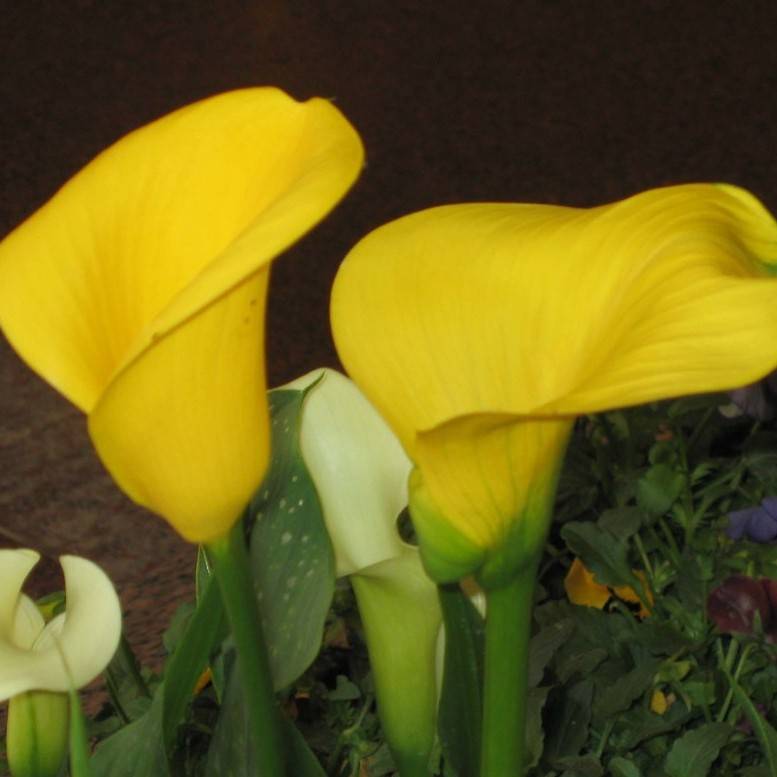
Golden Calla
Zantedeschia elliottiana
Overview
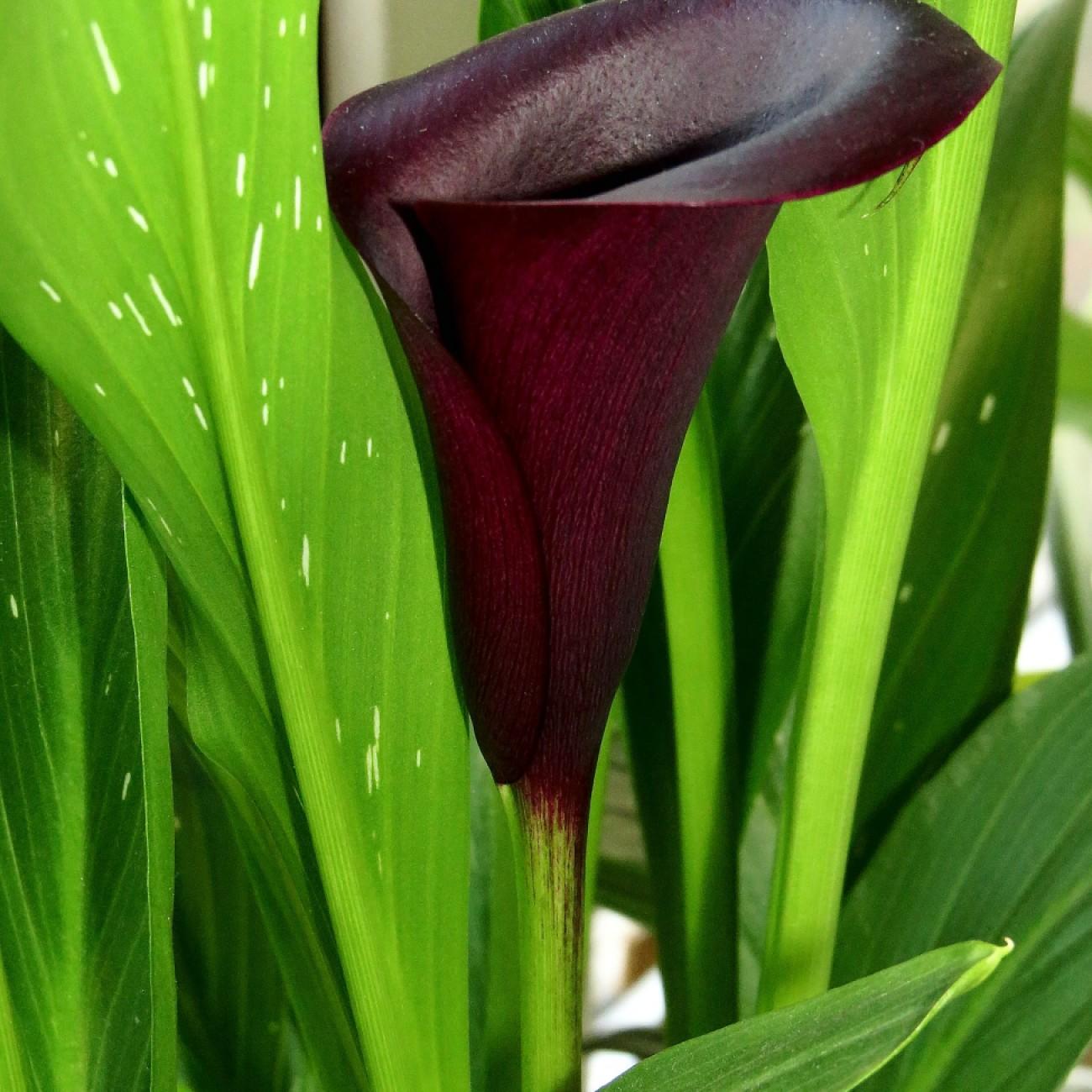
Golden Calla, also called Elliott's calla lily, is a herbaceous perennial grown for its showy, funnel-shaped bright yellow spathes that surround a central, fragrant yellow spadix. Its large, dark green, heart-shaped leaves often have subtle white speckling, adding visual interest even when the plant is not in bloom. Native to South African grasslands and wetland edges, it thrives in warm, moist conditions and is widely cultivated for both garden display and the cut flower industry.
Care Guide
Watering
Keep soil consistently moist but not waterlogged during active growth in spring and summer, watering whenever the top 1 inch of soil feels dry. Reduce watering gradually after flowering ends as foliage begins to yellow, and keep tubers almost completely dry during their winter dormant period to prevent rot. Avoid watering directly into the center of the leaf rosette to minimize the risk of crown rot.
Light
Grow in partial shade or bright, indirect light for best flowering and foliage health. Full sun is tolerated only in cooler climates with consistent moisture; intense direct sunlight in warmer regions will scorch leaves and fade spathe color. Indoor plants should be placed near a bright east or west-facing window filtered by a sheer curtain to avoid leaf burn.
Soil
Plant in rich, well-draining, loamy soil with a high organic matter content and a slightly acidic to neutral pH between 6.0 and 7.0. For container growing, use a high-quality potting mix amended with compost or well-rotted manure to improve nutrient content and moisture retention. Heavy clay soils should be amended with perlite or coarse sand to improve drainage and prevent tuber rot.
Fertilizer
Feed with a balanced, water-soluble 10-10-10 fertilizer every 2-3 weeks during active growth and the flowering period. Stop fertilizing once flowers fade and foliage begins to die back, as the plant enters dormancy and does not require extra nutrients. Over-fertilization can lead to excessive leaf growth at the expense of flowering, so avoid applying more than the recommended dosage.
Temperature
Thrives in daytime temperatures between 65-75°F (18-24°C) and nighttime temperatures no lower than 55°F (13°C) during active growth. Tubers will not survive frost, so in zones colder than USDA hardiness zone 8, dig up tubers in fall after the first light frost and store them indoors in a cool, dry location at 45-55°F (7-13°C) over winter. Prolonged temperatures above 80°F (27°C) can cause premature flower drop and reduce bloom duration.
Pruning
Remove spent flower stems at the base once the spathes fade and begin to brown to encourage additional blooms during the growing season. Cut back yellowing or damaged leaves at the base to maintain a tidy appearance and improve air circulation around the plant. Once foliage dies back completely at the start of dormancy, remove all dead above-ground growth before storing tubers or leaving them in the ground for winter in warm climates.
Propagation
Most commonly propagated by dividing mature tubers in late winter or early spring before new growth begins, ensuring each divided section has at least one visible growing eye (bud). Allow cut surfaces of divided tubers to dry and callous over for 1-2 days before planting to prevent rot. It can also be grown from seed, though seed-grown plants may take 2-3 years to reach flowering maturity and may not retain the exact characteristics of the parent plant.
Humidity
Prefers moderate to high humidity levels between 50-70% for optimal growth. Indoor plants benefit from regular misting of the surrounding air (avoiding the leaves directly to prevent fungal spots) or placement on a pebble tray filled with water to raise local humidity. Avoid placing golden calla near heating or air conditioning vents, which can create dry air that causes leaf tip browning.
Repotting
Container-grown plants should be repotted annually in late winter during dormancy, before new growth emerges. Use a pot that is 1-2 inches larger in diameter than the previous one, and plant tubers 2-3 inches deep with the growing eyes facing upward. After repotting, water lightly once and resume regular watering once new shoots emerge to avoid rotting the dormant tuber.
Uses & Symbolism
Widely grown as a cut flower, with its long-lasting, bright yellow blooms popular in bridal bouquets, floral arrangements, and fresh cut displays for the home. It is also a popular ornamental plant for garden borders, container displays, and water feature edges in warm climates, adding a pop of vibrant color to partial shade garden spots. In traditional South African medicine, preparations of the plant have been used topically to treat minor wounds, though internal consumption is unsafe due to its toxic properties.
Diseases & Pests
Susceptible to fungal diseases including root rot, crown rot, and botrytis blight, which are typically caused by overwatering, poor drainage, or excessive moisture on foliage. Common pests include aphids, spider mites, and thrips, which feed on sap from leaves and flowers and can spread viral diseases such as calla lily mosaic virus, which causes yellow mottling of leaves and stunted growth. Proper air circulation, avoiding overhead watering, and regular inspection for pests can prevent most common issues, with affected plants treatable with appropriate fungicides or insecticidal soaps.
Related plants
Other plants you might like if you grow Golden Calla.